

NOTE: While this piece is in partnership with Birkenstock, the framing in this article, along with the title and POV are mine; nothing was dictated by the brand.
I feel like there’s a version of every person’s style journey where they eventually come around to Birkenstock. Where, at some point, you put on a pair and realize, “oh, this is what a shoe is supposed to feel like.”
It’s one of those brands you discover through wearing, not through marketing. And once you get it, you kind of can’t go back.

They commissioned me to unpack the brand’s history, which is a fun full-circle moment for me, considering I’ve been wearing Birkies for well over a decade now, and the shape of my foot outlined in that cork footbed is a testament to just how loyal I’ve been.
But when I think about what keeps pulling me deeper into the brand, it goes far beyond how the product looks.
The foundation
The Birkenstock family has been making shoes since 1774, which is a flex in its own right.
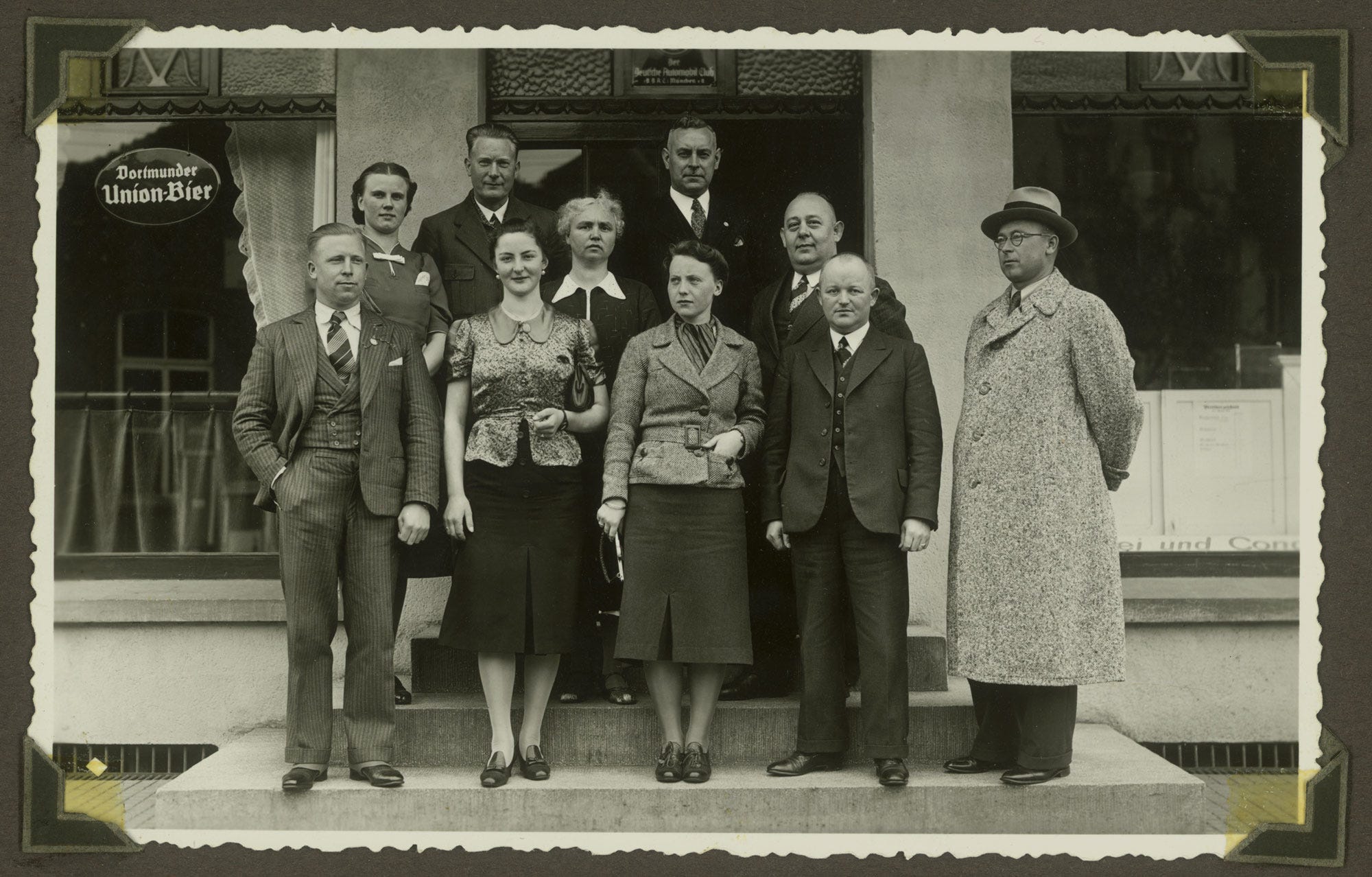
That’s 250 years of studying how the human foot actually moves, but the real turning point came in 1902, when Konrad Birkenstock invented the first contoured, flexible footbed, essentially the blueprint for how we think about arch support and weight distribution today.
He literally coined the term “Fussbett,” which the rest of the industry adopted. The idea was to replicate walking barefoot on natural ground, sand, grass, and soil in a world increasingly covered in concrete and hard floors.

But what’s wild is that same footbed is still the foundation of the products they sell. They didn’t abandon it, outsource it, or license their brand elsewhere.
Nope. Every footbed is still produced in their own German factories. Over 90% of their products are assembled across six owned facilities in Germany, with each shoe passing through more than 50 pairs of hands. If they can’t find the right machinery for a process, they design and build their own.
In an industry that’s outsourced nearly everything for generations, Birkenstock stayed put.
How culture found them
All of that context makes their rise into the culture more interesting to me.
They began to build a name and brand for themselves by making sandals, and in the late 60s, those sandals arrived in the US in the late 60s through a woman named Margot Fraser, who discovered them in Germany and started selling them through health food stores in California.
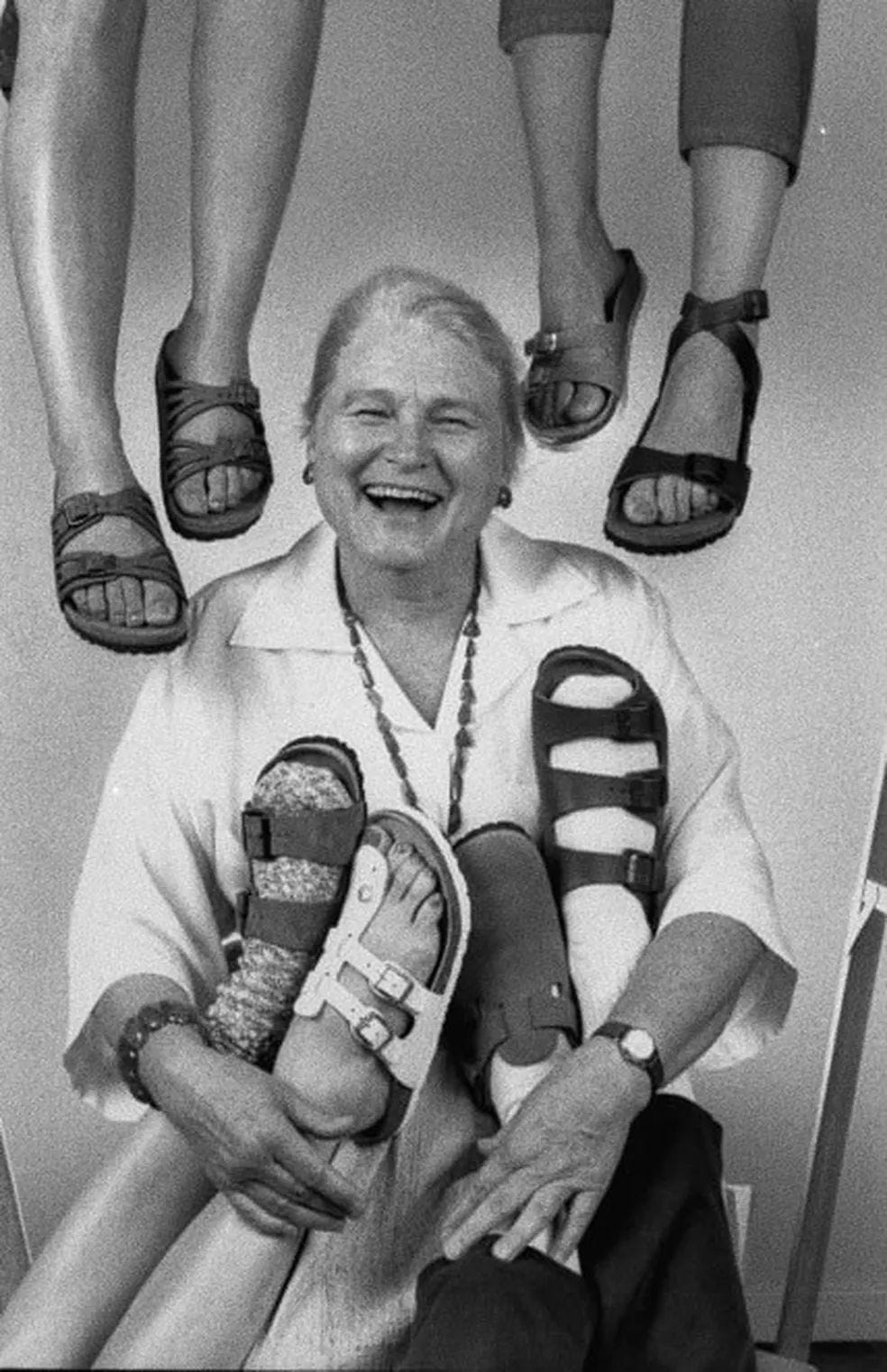
The counterculture picked them up immediately. By the 80s, the Boston clog, which turns 50 this year, had become a staple on college campuses across the Midwest.
Kate Moss wearing Birkenstocks in a 1990 editorial for The Face is still one of the most referenced images in fashion.
In ‘92, Marc Jacobs put altered Arizonas in his grunge collection for Perry Ellis, the show that got him fired and launched his career at the same time.
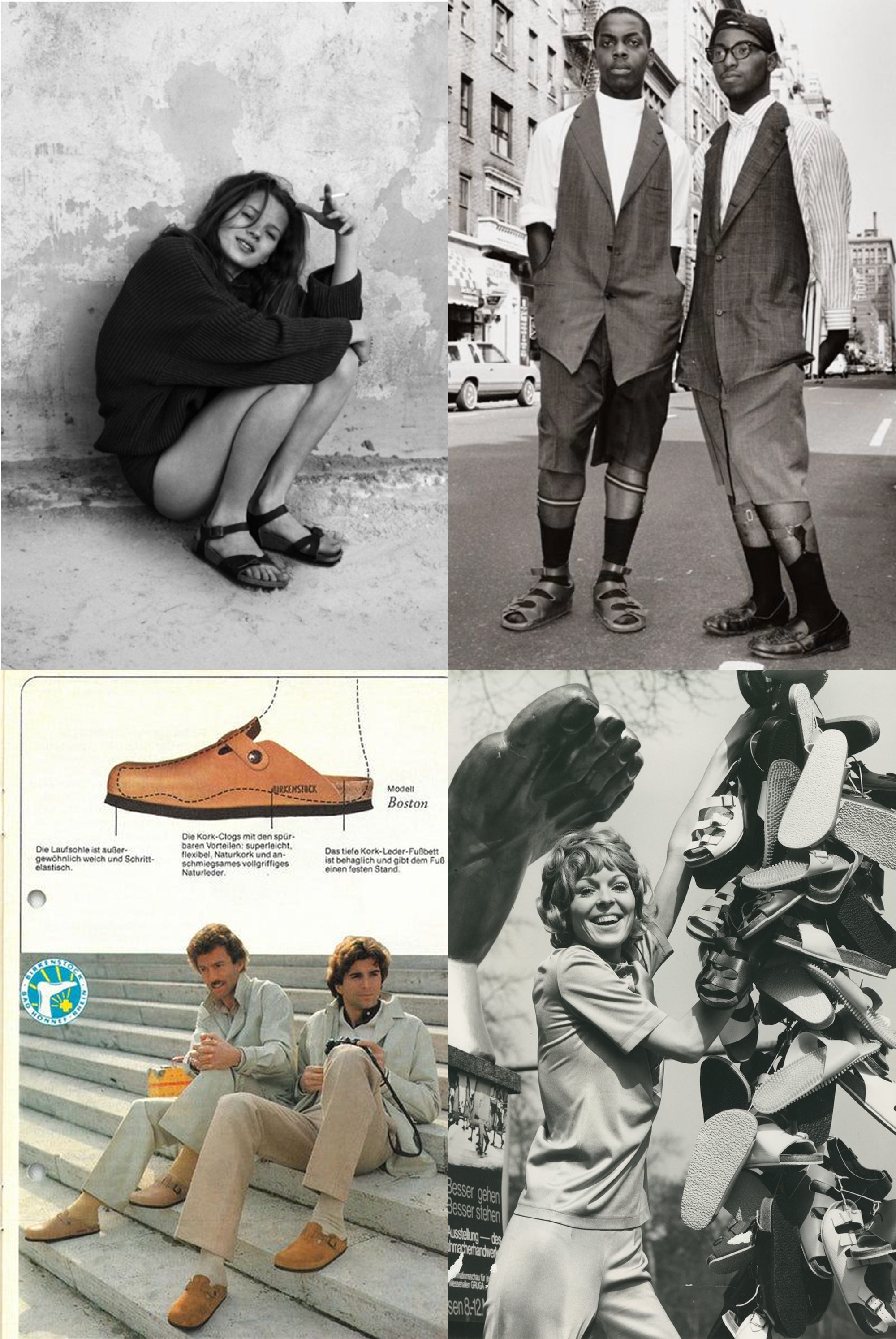
Every subculture that adopted Birkenstock did so on their own terms. Nobody was convinced. The shoe just worked, and people kept finding new ways to make it theirs.
The collaboration blueprint
This is where it gets genuinely impressive.
In 2018, Rick Owens made Birkenstocks a centerpiece of his runway show, a partnership that became the blueprint for what is now 1774, Birkenstock’s high-fashion division.
The 1774 team operates out of a Haussmann apartment in Paris, and since its founding, the collaboration list has become one of the most stacked in fashion: Dior, Valentino, Manolo Blahnik, Fear of God, Kith, BEAMS, Stüssy, Jil Sander, Proenza Schouler.

Last month, Etro debuted a Boston collaboration at Milan Fashion Week to celebrate the clog’s 50th anniversary. Birkenstock went public on the New York Stock Exchange in 2023.
Every single one of those collaborations, from Owens to Dior to the latest Etro drop, is still built on the same cork footbed, still assembled in the same German factories, still passing through the same hands.

The collaborators bring the expression, while Birkenstock provides the foundation, which is (in my view) one of the hallmarks of a truly great partnership when two entities collaborate.
Their chief product officer, Markus Baum, put it simply in a recent interview: “People bring their ideas, we come with our ideas. The final idea has to work in our own factories. It’s very down-to-earth, and we’re not trying too hard.”
What is the secret sauce?
I’m fascinated by this idea that Birkenstock, a publicly traded company that’s been in business for 250+ years, can maintain a balance between quality and quantity at scale.
Most brands in this space operate on trends and hype cycles. New silhouettes, new campaigns, new reasons to pay attention every quarter, whereas a brand like Birkenstock operates on conviction.
For them, the footbed is the thesis, and everything else is an expression of that thesis.
The collaborations don’t dilute it
The fashion co-signs don’t change it
The IPO didn’t redirect it
Because the product has always been the focus. And I think that’s the most honest definition of longevity in fashion: not that you reinvent yourself to stay relevant, but that you never had to in the first place.
This is so true. I came around to Boston Birenstocks this year and I had no idea what I was missing!
Love this kind of history fashion lessons :)