

A few months ago, I was at one of those trade shows and wandered into an exhibit for a brand that I’m a big fan of, and whose product I happened to be wearing that day. I was excited to see what they were offering and talk shop with the staff, but something felt off.
From the moment I stepped in, it felt awkward, and their responses to my questions were short, and they seemed to be annoyed by any question I asked.
At first I thought maybe I had done something wrong, but after thinking through the dozens of other brands I touched base with, this was the only one that felt sour.
Jeremy Smith knows that feeling intimately, not just as a business owner who has spent years trying to build the opposite of it, but as a customer who experienced it early and never forgot.
That experience is baked into everything Standard & Strange is and everything it isn’t.
The Origin of the name Standard & Strange
The name Standard & Strange comes from author & urban theorist Jane Jacobs, specifically from her book The Death and Life of Great American Cities.
“A healthy city is one where it’s mixed in every possible way. Somewhere to eat, places to shop, places to rest, a library. It’s safe because it’s alive…there’s always someone looking out, always people around.”
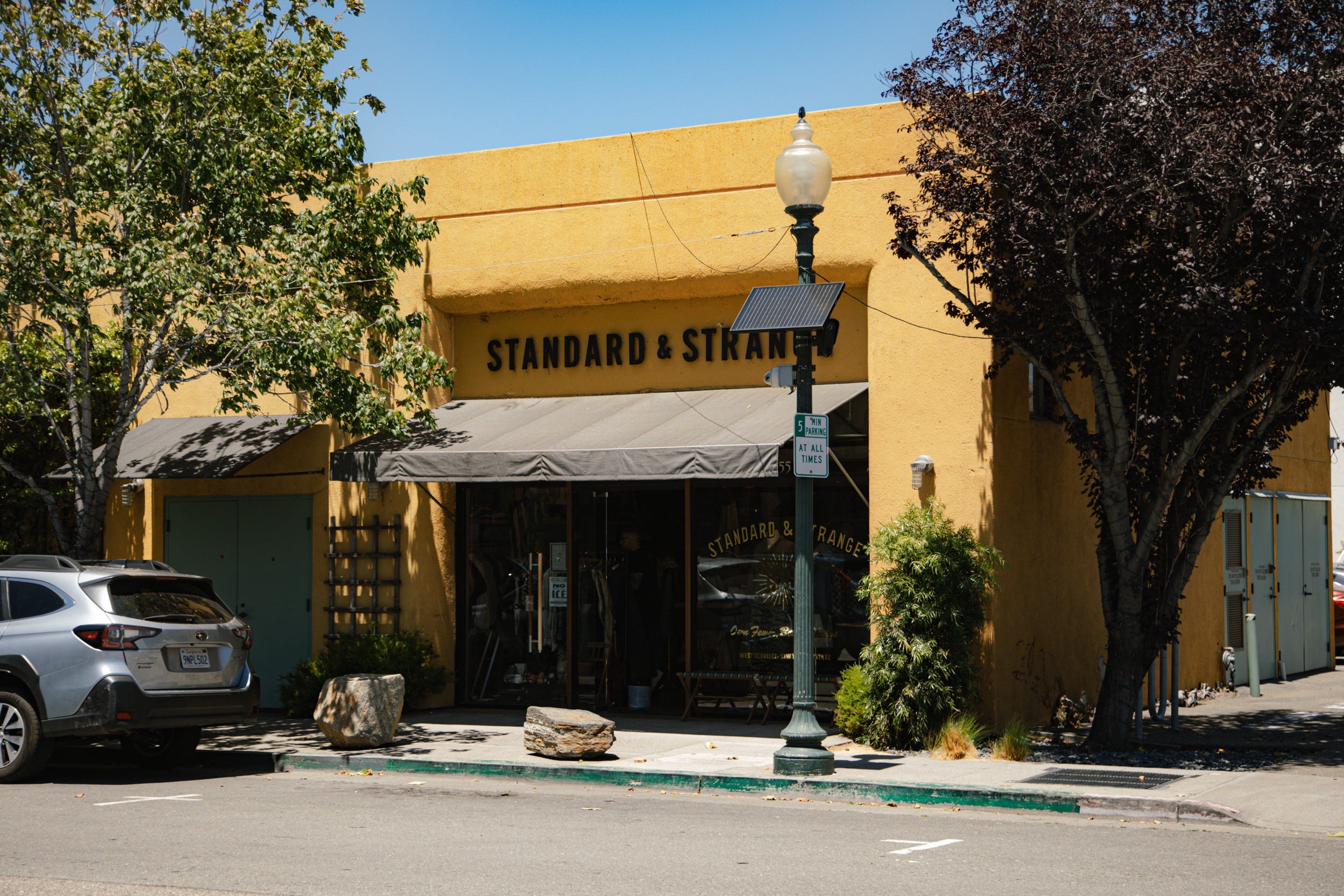
The first S&S store started in a horse stable that had been converted into storage lockers and then into retail. They were the new use for the old space. “No one blessed us to go start a retail store. No one told me I was allowed to go make my own garments. No one patted any of us on the head and said you can go ahead and be the expert in this industry.”
Jeremy tells me how Jane did the very same thing. “She [Jane Jacobs] didn’t go to school for it. She had no permission. She didn’t ask. She just showed up and took on Robert Moses with the expressways and everything. And I read it and thought: this is exactly the way I think.”
Jeremy knows that this comes with challenges, mainly having to be the ‘perpetual amateur,’ someone who has to work harder to be right because they don’t have credentials to coast on. “Doing it this way means I’ll work three times as hard to be right about every single point. And you see that in Jane Jacobs’ work. She knows she’s coming from behind, she knows she’s an underdog, and she’s just going to do it — kick the door down, not ask for permission or forgiveness, and just get it done.”
And now they’re proving how this works in three locations: Berkeley, Santa Fe, and New York City.
Visiting the New York Shop
A few months ago I got to visit the New York location on a quiet Monday afternoon and experienced a steady stream of people coming though: one customer was picking up an pair of jeans he had gotten hemmed, another happened to pop in after “walking past it every day for months,” and a guy who came in hoping to find sunglasses without any idea of what else they sold.
Nobody got a different experience.
“I want someone to walk in and have a good time. Maybe they can’t afford to buy our stuff, but at least they understand why it costs what it costs, where the money goes, what the value is. I don’t want them walking out feeling sour.”


That consistent experience came from years of visiting stores that treated customers like an inconvenience. Jeremy shares with me an experience at a prominent denim retailer that solidified everything he didn’t want Standard & Strange to be, a place with great product, zero warmth, and a sense that you only belonged in that shop if you’d passed some sort of invisible litmus test. “Their ‘just buy the cool shit and shut up’ attitude put me off more than going into the Ralph flagship in New York when I was twenty-one.”
The ‘Cool kid’ Issue in Menswear Today
I asked him where he thought the issue started. “The cool kid thing is a plague in the industry,” he says flatly. “Every single store in my category is in this together. We have to be respectful of the people that keep the doors open.”
The key for that at S&S is the hiring process. Nobody comes on (and nobody stays on) that isn’t willing to do the work of understanding a product, who made it, and why it deserves a spot in the store. Moving the product seems to be second priority.
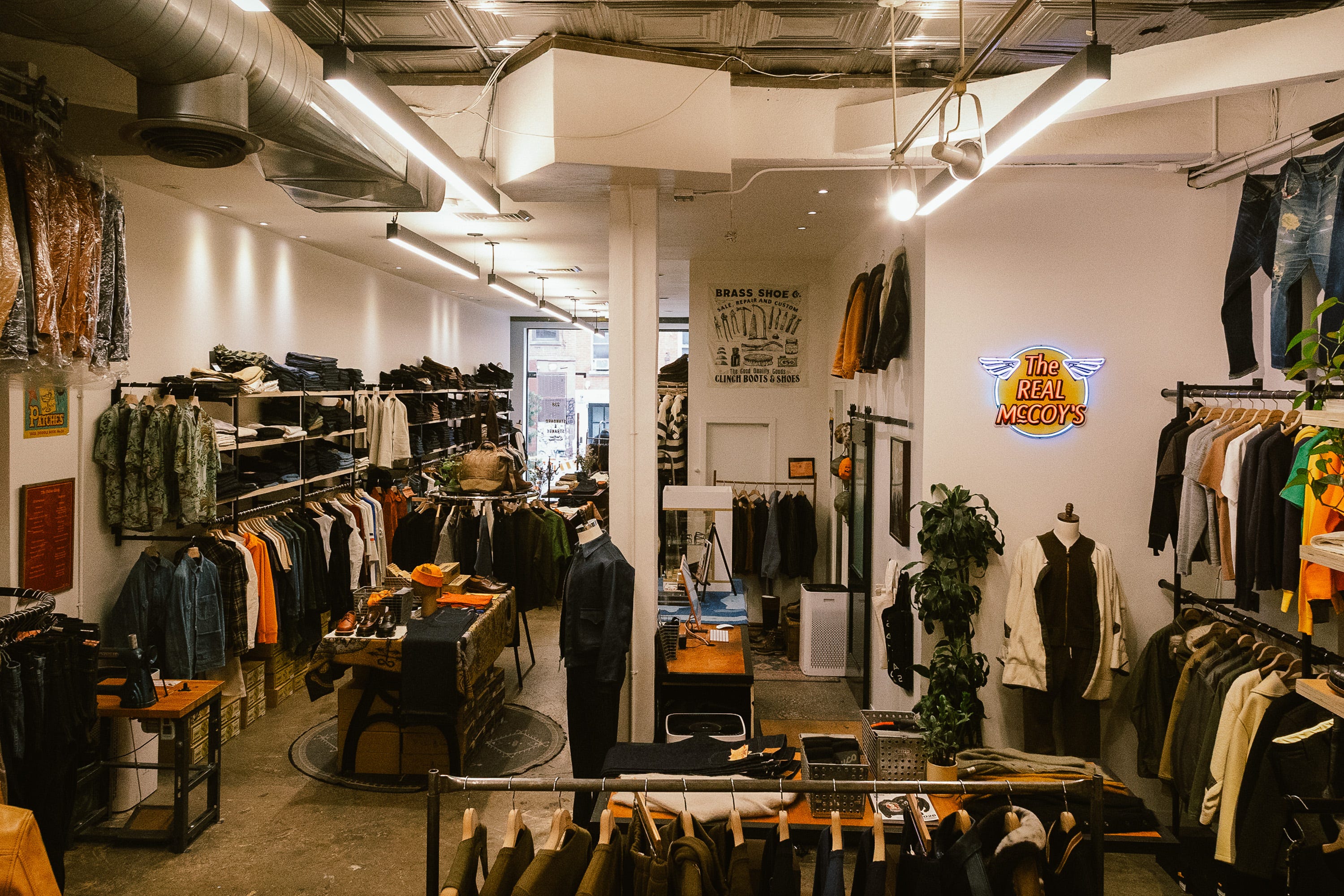
Kyle, the manager at the NY location, is a perfect example of this. As we talk, he tells me why a specific brand is stocked, about the factory, the fabric sourcing, the decision behind stocking it over something else, it’s the kind of depth that can’t be faked.
“After more time working with Japanese brands, going to Japan frequently and seeing that standard of excellence for how you treat a customer, that really made us double down on customer experience and being the opposite of what people expect from an expensive store.”
He adds something that was refreshingly honest to hear: “You can get good service, but it’ll be icy cold. Nordstrom, good service, still kind of icy. We allow our staff to all be who they are. No dress code. No music instructions for the stores. I want everyone’s personality to come out. I want it to feel like people work there.”


The S&S crew are, by his own admission, people who know what it’s like to be on the outside looking in. “Almost everyone who works for me has been deeply, absolutely uncool — not a shred of social credit to our names. We get what it feels like to be treated that way. And in response, rather than pushing people away, we’re saying: here’s how you do it. Here’s how you be welcoming.”
And they do it very, very well.
Putting People before Product
There’s a theoretical version of S&S that exists where Jeremy drives an expensive vintage truck and pays himself a lot more.
And he’s thought about it, not because he wants it, but because he understands how close the math gets. Sixteen employees with healthcare. A compensation structure where he doesn’t make more than twice what his lowest-paid staff member makes.
“If I made them pay their own healthcare premiums and took away a few bucks from everyone, I’d be making a few hundred grand a year. So I could be, you know, a watch collector, Porsche owner, a second house in California.” He sits with that for a second. “But where does that money come from exactly? Somewhere along the line, someone is getting fucked.”
The more I hear him talk, the clearer it becomes that this isn’t performative for the sake of the interview. This is the framework he’s built his business around. When he talks about the relationship his employees, he references it as a sort of social experiment where once you hire someone, you are responsible for them and their wellbeing.


“I’ve got sixteen people who can live off what they make in this business, which is nearly impossible. They live near where they work. They all have healthcare. That’s the best I can do. And going to my employee’s wedding and seeing everything that’s happened because of this business — the friendships, the people who met each other — that is a thousand times more valuable to me than a piece of metal on my wrist.”
In return, he expects there to be a depth and curiosity and willingness to learn about what’s on the floor. And not just what it is, but why it’s there. It’s the same standard he holds himself to, and it’s seen downward at every level of the store.
There Are No Shortcuts
Jeremy now lives in Japan, a move that allowed him to be more committed to understanding how things are made while being in proximity to the mills and factories that are doing the work. He tells me how a boot factory he works with is 40 minutes away, or how a fabric meeting in Hiroshima can happen on a 24-hours notice, something impossible to do when you’re stateside.
I’ve yet to meet anyone committed enough to their craft that they’d up and move their whole life to become more involved. He tells me about a breakfast he had a few weeks ago that helped me understand why this proximity to those people and mills mattered.
“What was supposed to be a chill breakfast last week turned into an eight-hour seminar on how to design denim fabric. I walked away with homework. I’ve got a bag of denim scraps in my bedroom that I’m taking apart meticulously — looking at twist, slub, fiber length. I’m all in on everything I do.” He pauses and chooses his next words carefully. “I don’t see most other people doing this. There are brands that talk a big game and don’t follow up. They’re spending too much time trying to appear cool and not enough time pushing themselves to be better.”
The more he talks about it, the more I’m understanding that as much as he cares about the product, he cares about the people who are going to wear it just as much. “I couldn’t just send drawings and files around the world to make product. I’m making very personal items for people that are going to live on their body. I need to go see where they’re being made.”


We talk about the his hobbies and how they parallel to his work, and there’s a clear pattern here. Running, woodworking, sewing, reading — everything he does for fun seems to require a commitment to a long arc and avoids any possibility of taken a shortcut. “You start at zero, and you don’t have a choice other than starting at zero.”
It is about this point in the interview where I developed a really…reverent appreciation for how Jeremy lives his life with integrity, both in his work and out of it. It’s the thing that stuck with me the most since our conversation, and its a thought that has challenged me in my own life as well.
Coming Soon: In-House Denim
S&S will soon be launching its own in-house denim, a decision that I thought might seem counterintuitive for a store that already carries some of the best Japanese selvedge available anywhere. How do you (and why would you) compete with some of the best existing brands in the world…especially when they’re stocked alongside your own product?
“We could have made jeans a decade ago. Price would have been great. Could have gotten them under $200. But we didn’t have anything to say at the time.” The idea of having something to say vs. filling a rack is a theme that comes up over and over again, and it’s how Jeremy judges every in-house brand he’s seen succeed or fail.

In one of my favorite moments on the call, I mentioned a big retailer’s in-house line and before I knew it, Jeremy began to dissect it in real time. We found a t-shirt: an organic cotton jersey tee at $130, no knitting machine mentioned, no mill information. He called it ‘very expensive filler.’
“Whereas if you look at our T-shirt — it’s loop wheel. Long staple cotton. Pre-washed to reduce shrink. Everything about it is custom and very specific. And because of that, I sell thousands of them a year.” An impressive thing to say considering the shirts cost $95. I will say though, after feeling them myself it all made sense and I understood why someone would want to own a few of these.
“It needs a reason to exist. It can’t just be rack filler to get margin. That’s where you see a lot of stores fail — they’re just making filler for margin. None of it has a perspective or a point of view.”


The jeans follow the same logic. He’s using the same supply chains as the Japanese brands he stocks in store, with the fit emerging from the staff collectively giving input. “I believe in it. And I believe in it in ten years, in twenty years. Maybe you put it away if we all make the collective mistake of going skinny again — then you’ll take it back out, because you’ll be like, I want to be comfortable, and I want a rise a human can wear.” It’ll be out first in indigo, and then black, and should hit around $300, tariffs permitting.
He frames the house brand as an on-ramp to a world that a customer might not know exists. “It’s not about undercutting pricing on the same product…as soon as you get in that game, you’ve shot yourself in the foot, because no one wants that.” It’s a very approachable way to present the S&S standards while keeping their point of view intact. The goal is a product that will sit on the floor next to all these other legendary brands without needing to be justified.
Final Thoughts
“You do not have enough days in your life to enjoy what you’re buying if you buy too much of it. Every object you touch and bring into your life adds a lot of weight. Too much stuff is a curse.”
For a store that makes its living selling things, this is a really disarming position. When I poke at the idea a bit, Jeremy explains that he’d rather someone spend an hour at Standard & Strange talking, learning, leaving with nothing, and walking out better informed than have them make an anxiety purchase they’ll regret.


“Shopping doesn’t mean you have to buy something. Come in, hang out, talk, learn. Then it’s a social activity.” That is the version of the store that he’s building, and in a way, it’s the version of the store that has always been. A place where you don’t need to spend money to justify stopping in, a store where the staff is genuinely glad that you came in, whether or not you’re buying.
He acknowledges that it’s also just good business in the long run. The stores that treated him like an outsider early on didn’t earn his loyalty. Standard & Strange has spent over a decade earning it from thousands of people, one conversation at a time.
“Without the people,” he says, “none of this means anything to me. It’s just stuff you can make.”
The industry needs more of this!