

In the five years we’ve been running Sprezza, one of our favorite parts has been meeting people with real taste.
People who move through the world with a clear POV that’s shaped by their lives, their influences, and the world(s) they come from.
Tyrrell Winston is one of those people.
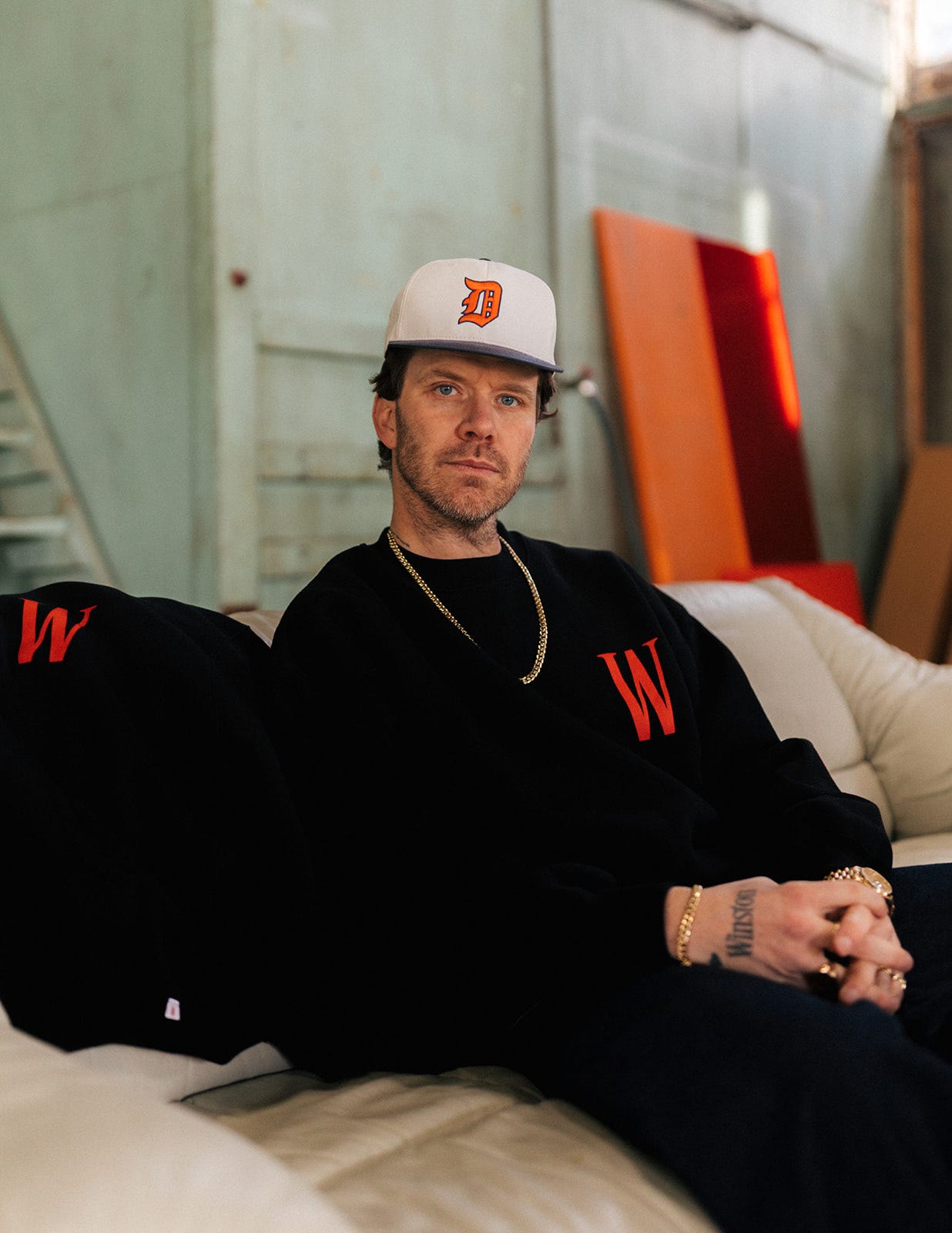
You’ve probably seen his work before, even if you didn’t realize it was his.
The stacked, scuffed-up basketball installations.
The cigarette-box flips.
The found objects with stories baked into them.
His work carries this mix of sports history, art history, and everyday ephemera that feels unmistakably American and unmistakably him.
We linked with Tyrrell recently and got to dive deeper into how he got here. From growing up in Orange County with a pastor dad and an art-teacher mom… to skateboarding, basketball, Slam Magazine, and Thrasher shaping his early sense of taste… to moving to New York at 21 and deciding (very matter-of-factly) that he was going to become an artist.
The way he talks about his practice is refreshing. Nothing is precious. Everything has embedded history.
It’s why his early work began with found materials like old newspapers, scraps of wood, and things pulled out of the gutter. It’s also why his pieces today feel alive in a way that’s hard to manufacture.
A few years back, he moved from New York to Detroit, a shift that gave him more space, clarity, and room to build. Two kids later, a dream studio, and a rhythm that feels right for the work he’s making.
Along the way, Tyrrell’s found his own lane with collaborations, working with everyone from Aimé Leon Dore, Reebok, ’47, and Akimbo Club. But he’s quick to say none of it happens without authenticity. No fake shit.
Now he’s gearing up to launch his own brand—WIN SPORT—a project that feels like the natural extension of everything he’s been building. Rooted in sport, but more nuanced than that.
Part message, part world-building, part re-contextualization of familiar iconography. It’s Tyrrell’s taste distilled into something wearable.
Our conversation with him was one of those easy ones—talking sports, art, taste, embedded history, the grind of trying to be the best, and building something of your own while raising young kids.
So, here’s our sit-down with Tyrrell.
PS — huge shouts to Luke Steppey for all the beautiful shots for this editorial.
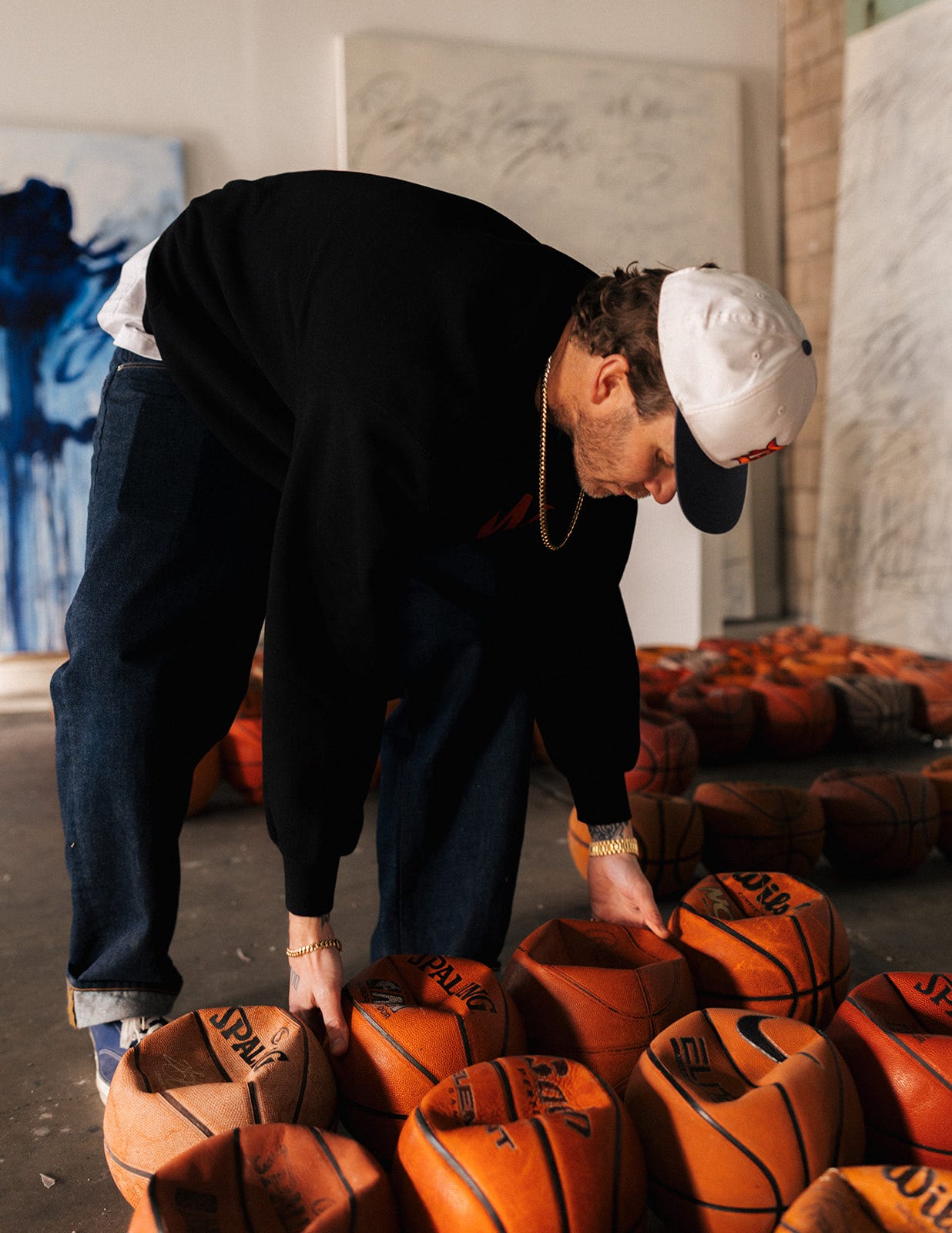
What was your background like growing up, and how did you first get into art?
I grew up in Orange County, California. My Dad is a pastor, and my Mom is a high school art teacher. My main interests growing up were skateboarding and playing basketball.
As an adolescent my taste developed thru a gamut of things including everything I absorbed through skateboarding (style in general, the way skateboarders I looked up to carried themselves, board and t-shirt graphics, partying, drinking, drugs), watching ESPN early in the morning before school, Slam Magazine, Thrasher, The Source, 411 Video Mail, and going to skate demos.
My sister and I were both encouraged to make art by our Mom from a very early age but it was something that I kept relatively private until my early 20s.

I didn’t grow up wanting to be an artist. I grew up wanting to be famous, a lot of people think that is gross but its just me — I’ve always known I would be a star (and for the record I’ve barely scratched the surface) — mind you when I was young I thought it would be through skateboarding or basketball, and in a strange way it is — these two sports have informed my art in ways that I am still uncovering.
Fast forward, I moved to New York City right after I turned 21. I needed to get out of Orange County, California. I felt stagnant. I found a small liberal arts school on Staten Island called Wagner College that I transferred to, and towards graduation, this was where I decided in a very matter-of-fact way that I was going to be an artist.
The decision was a bit of a slow burn — I majored in Arts Administration, which is a degree in the business side of art. It was interesting to see behind the curtain of the art world — meeting gallery directors, going to auction houses, but it was too stuffy to me — I was drawn to the artists.
I had a few professors who were passionate about contemporary art and what was happening in NYC at the time — they put me on to the first artists that I can say I fell in love with — Dash Snow, Dan Colen, and Nate Lowman.
This whole Post 9/11 art scene jolted me to my core. I took a deep dive into art history and started planning how I intended to make my name in the art world.
Where did the idea of turning found objects into art come from?
I graduated college in 2008, no one was hiring — I was working in real estate doing apartment rentals with Century21 in Midtown and working at Urban Outfitters on the Upper West Side.
All the while, I was making these very small and derivative Dash Snow/Dada-esque collages in those black and white Mead composition books you can get from CVS or Walgreens for a couple bucks.
My first collages always looked a little too polished to me as I was just cutting up magazines that I’d buy. I had no money for art supplies so I started sourcing materials — old newspapers, wood scraps, sheets of paper in gutters — anything that was free on the street.
I became obsessed with these found materials, they all had an embedded history, which is when nature/other people’s hands and energy become a part of the work.
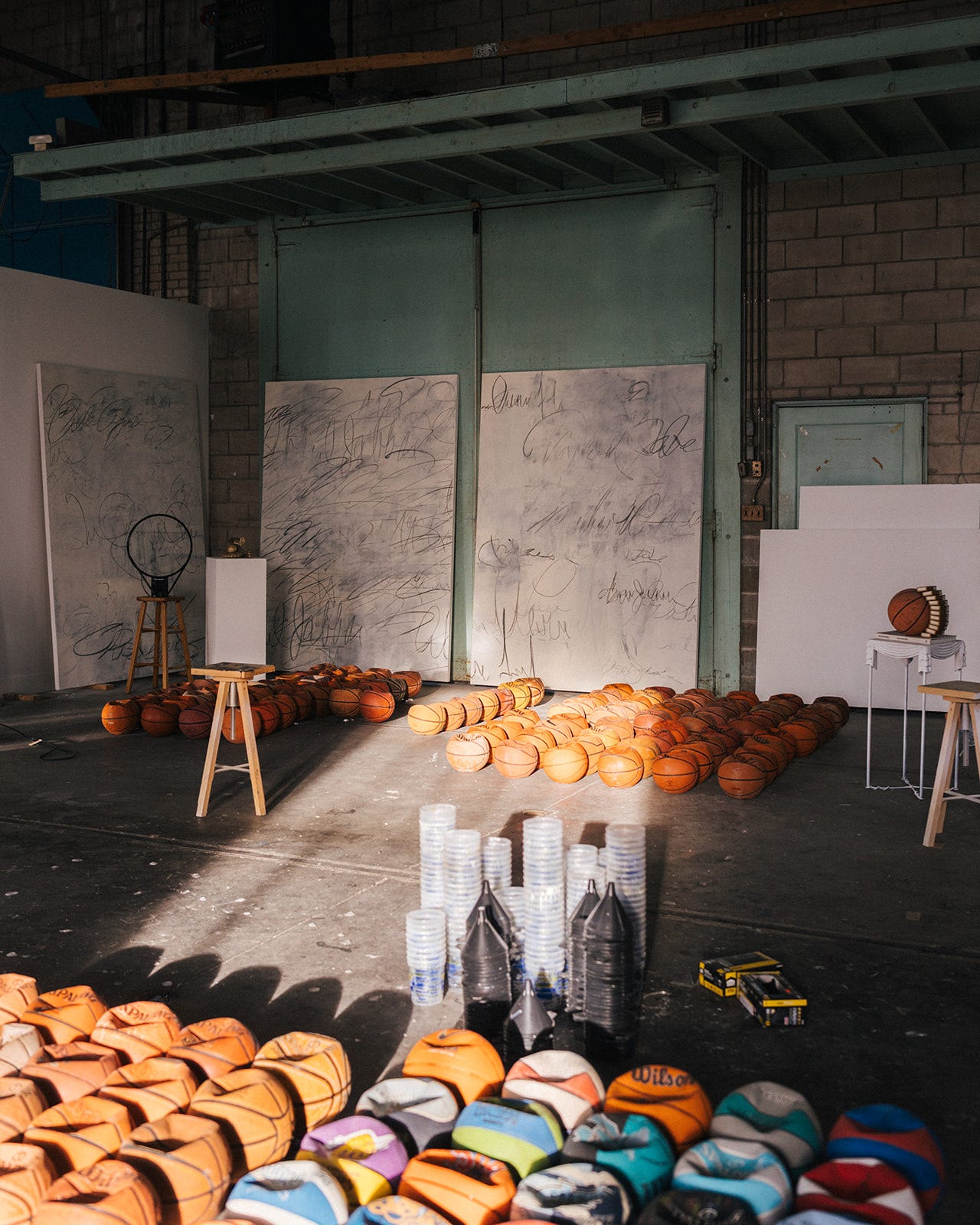
When you’re working with materials like acrylic on canvas (or used basketballs and plastic) how do you decide your approach for each piece?
It’s less about the approach to each piece and more about how all of the pieces from seemingly disparate bodies of work can work together and talk to each other.
Everything I work with or do revolves around the pillar of my practice embedded history.
Furthermore — I take art history, sports history and of the moment pop culture and through it, inject myself into these worlds.
Sports are clearly a constant in your art. What parallels do you see between sports and the creative process?
Practice, and the insane desire to be #1 — Champion of the Art World — Which is impossible! But I like the cat and mouse mind game of it all.
Making art and putting it out into the world over-and-over again is such a weird type of chasing the dragon high, it’s never enough but at the same time it is.
A few years ago, you made the move from New York to Detroit, to the rustbelt no less. How has that shift influenced your work, if at all? And how does Detroit’s art community compare to New York’s? What’s changed for you? What’s better?
In Detroit there is less noise and more space to work. The Detroit art world is less cutthroat (for better and worse), but I needed that. New York has yet to accept me in the way that I envision.
My work is too on the nose for a lot of New York art collectors with so much of it rooted in New York ephemera and history, but I have made peace with this.
We moved to Detroit when my daughter was 8 months old, she is now 4 and we have a son who’s almost 9 months old. I’m building a dream studio out here from the ground up, we bought a beautiful house, I work with an incredible gallery, Library Street Collective, who has facilitated so much growth for me and my family.
I feel more present for my wife, kids and self than I ever did in New York. At the same time I miss the place that was so formative to who I am today, but 24-48 hours there scratches my itch these days
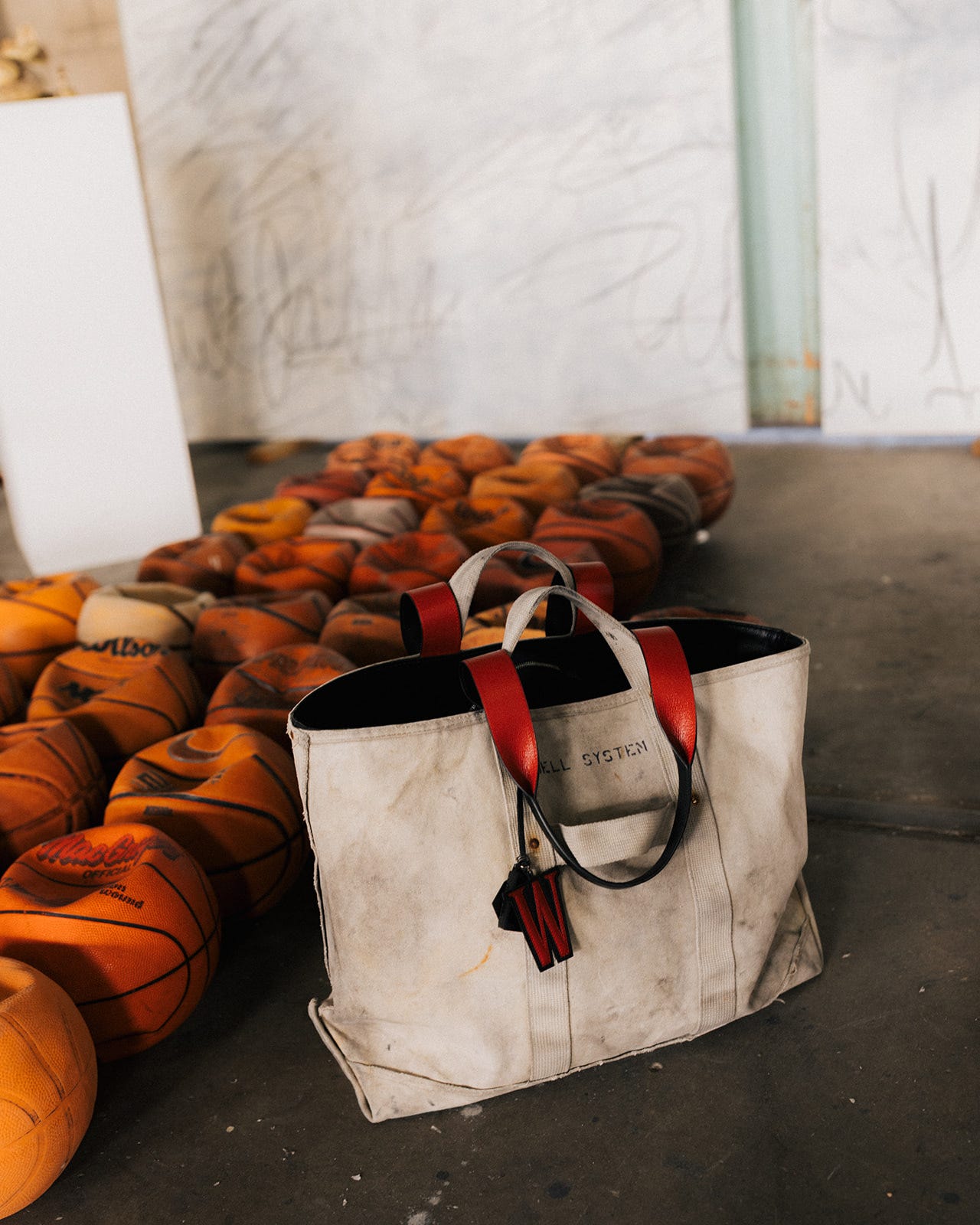
You’ve collaborated with Aimé Leon Dore, Akimbo Club, Reebok, and ‘47. How do you decide which partnerships feel authentic to your vision and personal taste?
All of these collaborations have started with personal relationships and the sincere desire to make something that I want to see in the world for myself and for my friends.
I will not lend my name/image/likeness to a brand I do not fuck with — no matter how much money is at stake.
I take a lot of pride in seeing people I love and admire or even just meet on the street wearing something that has my name attached to it.
My apparel collaborations are not art. They are an extension of the art that is incredibly important to me and help inform my work, simultaneously the work informs the collaborations.
The collaborations are a vehicle of participation and accessibility.
A lot more people can afford a $30 hat compared to a $30,000 basketball wall piece. The person who buys the hat gets to participate in what I’m doing at a much lower entry point. There is room for everyone.
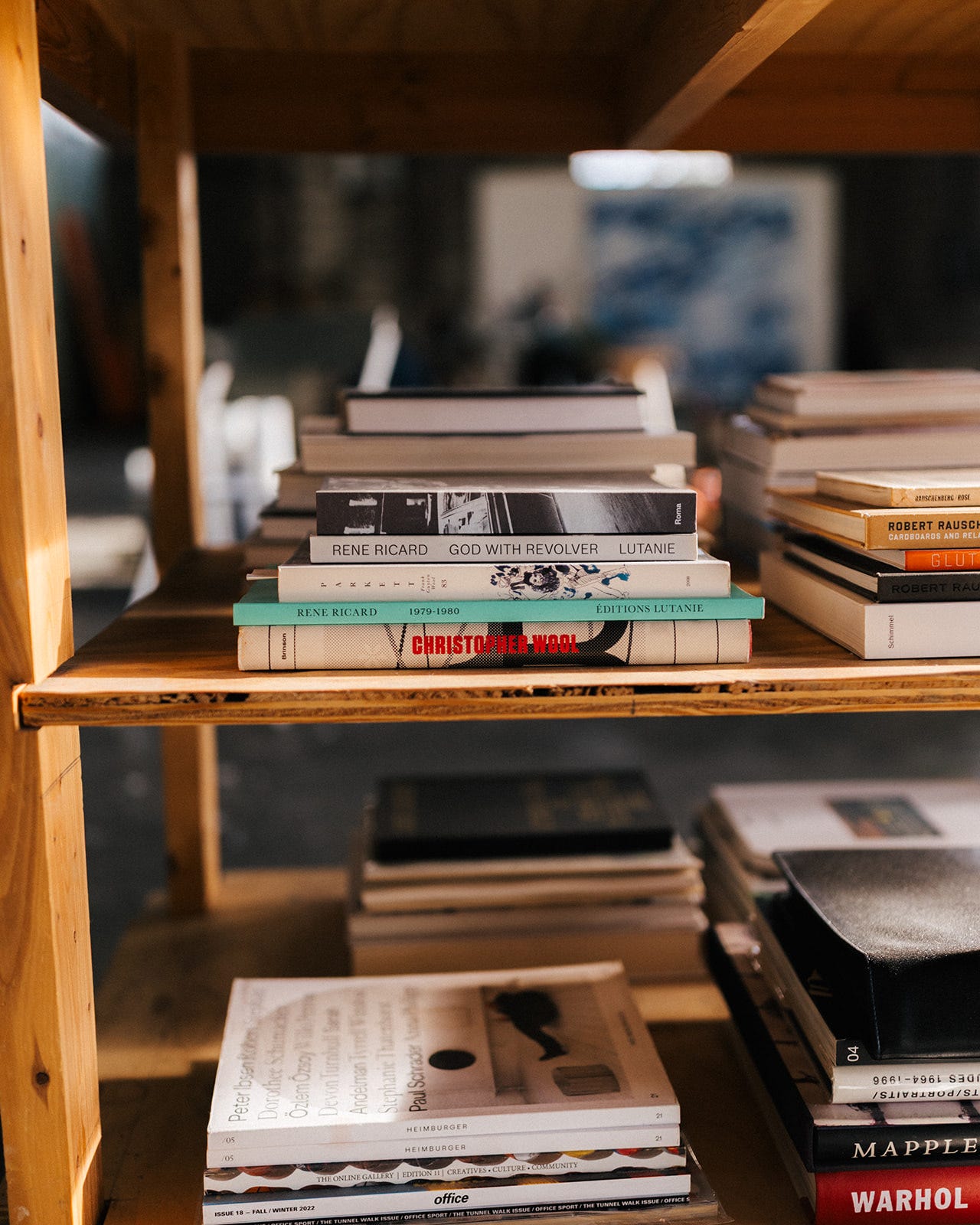
At the same time, some of the people participating in buying these collabs may have no idea who the artist Tyrrell Winston is and I think this is amazing, unconsciously participating in something because you’re drawn to it.
How do you balance staying true to your art while navigating the commercial side without feeling like you’re selling out? Do you have a guiding philosophy or set of ideas?
Art is always king and only work with people/brands that you have an authentic connection to.
With your brand set to launch soon. Can you tell us more about the vision for that?
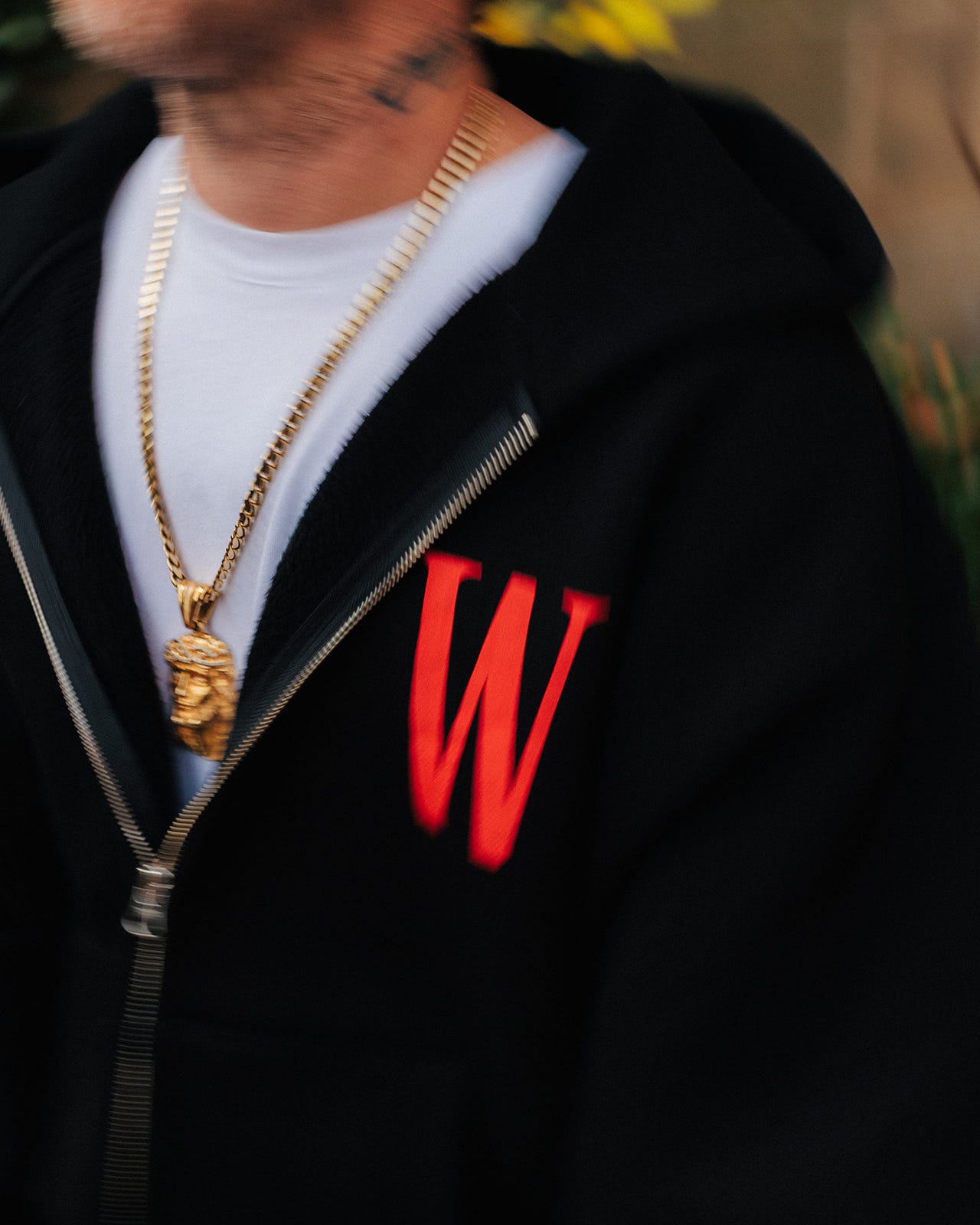
Win Sport, baby!
A deeply personal brand that is rooted in sport but nuanced, it is a message as much as it is a brand.
It started as a logo flip of Winston Cigarettes and an ode to myself (last name Winston)—originally tongue-in-cheek, but quickly became something removed from myself, more universal.
My Northstar is the Jumbotron above Michael Jordan during the Slam Dunk Contest of 1988 with Winston cigarettes ad prominently displayed.
It’s taking something recognizable and changing its context, making it our own — your own.
It is my embodiment of sport and art.
It’s a tertiary logo for teams/cities logos you love/root for/admire — without having to scream your admiration with a bad logo/typeface.

What made now feel like the right time to build something of your own? And what lessons from past collabs are you carrying into this next chapter?
I used to run something called Tyrrell Winston Product that was a vehicle for my collaborations and these type of one-off products that I’d release a few times a year, it was me in the shallow end of the pool getting my feet wet.
But the desire to build something that was my own kept nagging at me.
I had a big licensing deal fall through about a year ago. It left a very bad taste in my mouth.
A dear friend of mine encouraged me to make all of my product stuff more official and evergreen, not just one-offs.
Collabs are still important to me and my work but I like the level of control and consistency you have when doing your own thing.
Again, this comes back to making what I want to see in the world and wear. From sweatshirts to socks to jewelry, the list goes on. I have a very particular style and taste level and it is incredibly fulfilling to share that with the world.
Love seeing Tyrrell get his shine in this space
Using paper from street gutters brings a new meaning to starving artist. Truly inspiring.