Out of all the major mall brands still around today, I’ll always have the deepest reverence for Gap.
Growing up, it was what my parents put me in—elasticated, loose jeans, fleeces, and even a neon orange crossbody backpack I carried in elementary school. J.Crew was too expensive back then (and pretty pretentious in-store); I couldn’t see shit in A&F, and the half-naked guys out front were a bit, eh, predatory.
Gap always felt cool. I never felt like I needed to fit in when I wore it, and it allowed me to cultivate my own style throughout my early and later youth.
While in college, I worked at Gap (even filling in for shifts across the street at Banana Republic) and at an independent clothing boutique. It was cool to experience scalable corporate retail while also getting a look at more under-the-radar, emerging brands.
During our training videos at Gap, we learned about the brand’s original mission from its founders, Don and Doris Fisher, who started Gap in 1969 by selling Levi’s and albums in San Francisco, California (Pants and Discs was considered for names but never utilized for business).
The company’s name came from the idea of bridging the generational gap, a concept that still feels relevant today.
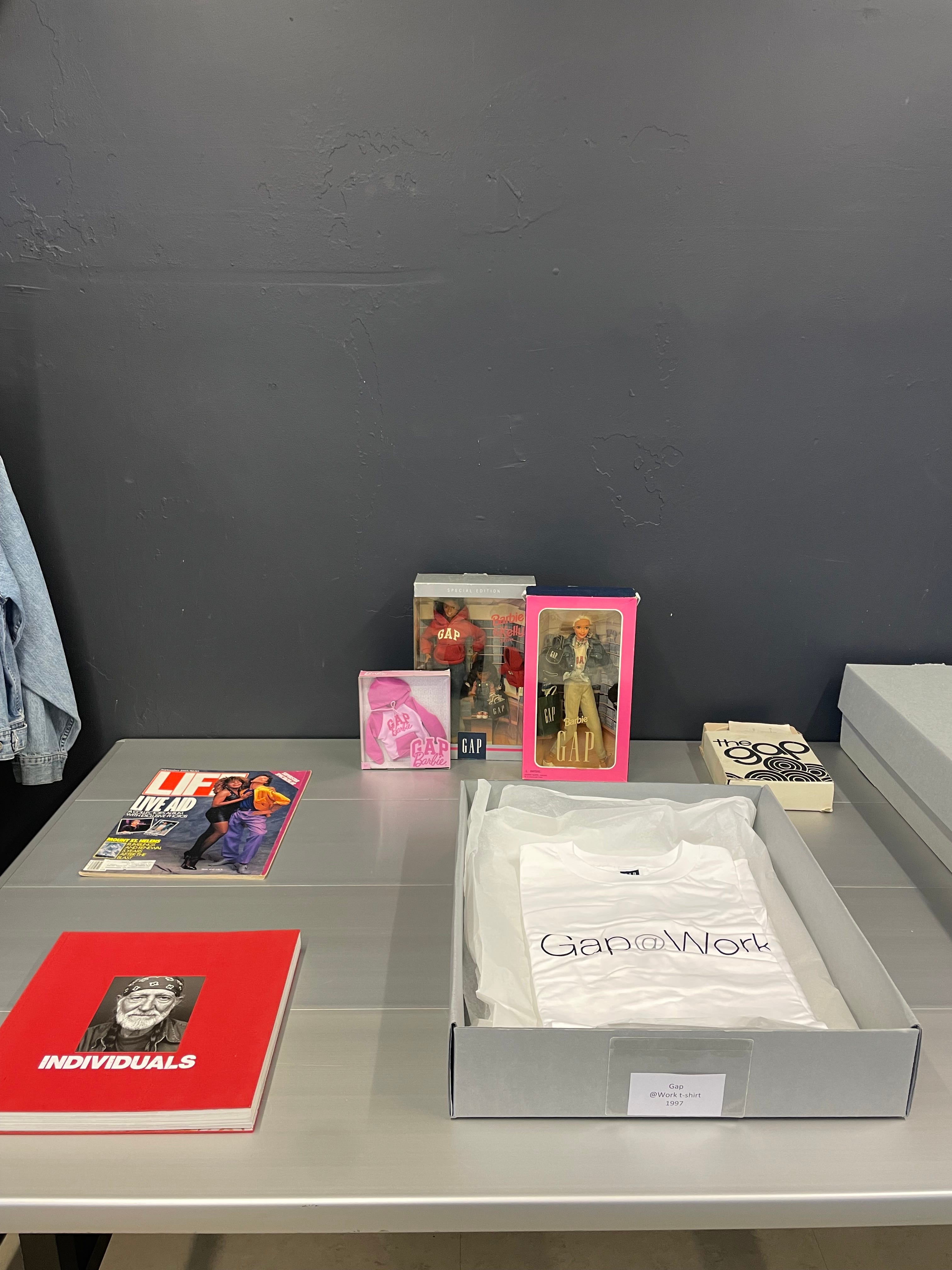
From iconic campaigns like Individuals of Style, shot by photographers Annie Leibovitz and Patrick Demarchelier, and Who Wore Khakis to its now-viral choreographed dances with Young Miko for Sweats Like This, collaborations with Awake NY, and memorable Gap playlists, the 57-year-old brand knows how to continually find its footing in culture without forcing any “moments.”
Back over the summer, while visiting the city, I had the privilege of popping into Gap’s archive in Tribeca, which is also home to its Old Navy and Banana Republic archives, with more recent additions from Athleta.
I saw everything from the brand’s earliest T-shirts to its first-ever logo hoodie, as well as a tee featuring a poem that inspired a song by Madonna. And I’d be remiss if I didn’t shoutout some of the most notable Gap archivists and vintage dealers, like Marcus Allen of The Society Archive and Chad Senzel, along with past drops they’ve done with Sean Wotherspoon.
Here’s a look at the brand’s history through some of its most famous products.
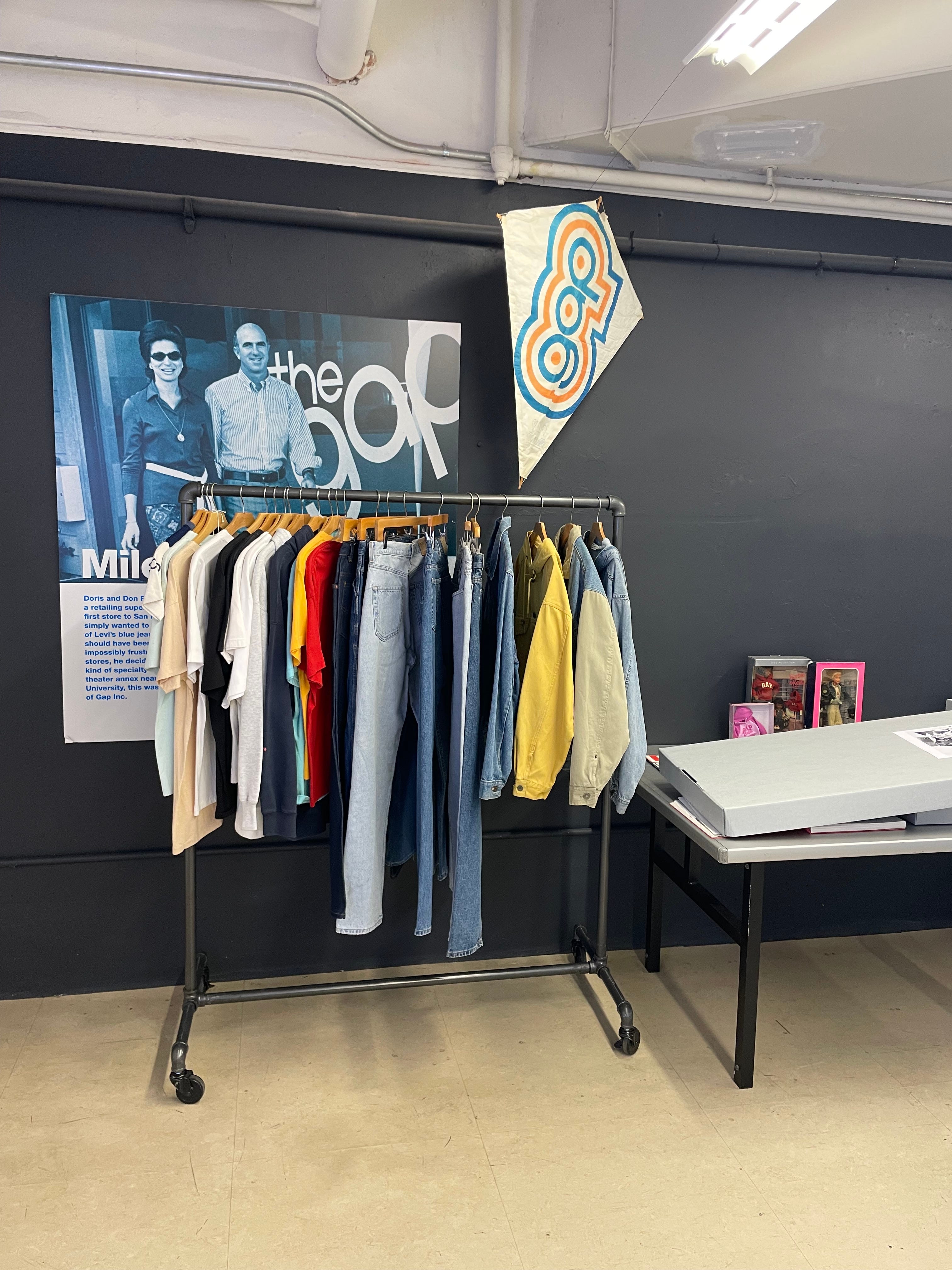
The Design Archives
Like most archives, Gap’s wasn’t something that was established when the brand was founded. Instead, it was kickstarted a few decades later by an employee contest.
It was the kind of thing where someone would say, “Hey, check and see what you still have. If you want to contribute any of that to this growing resource, you can.”
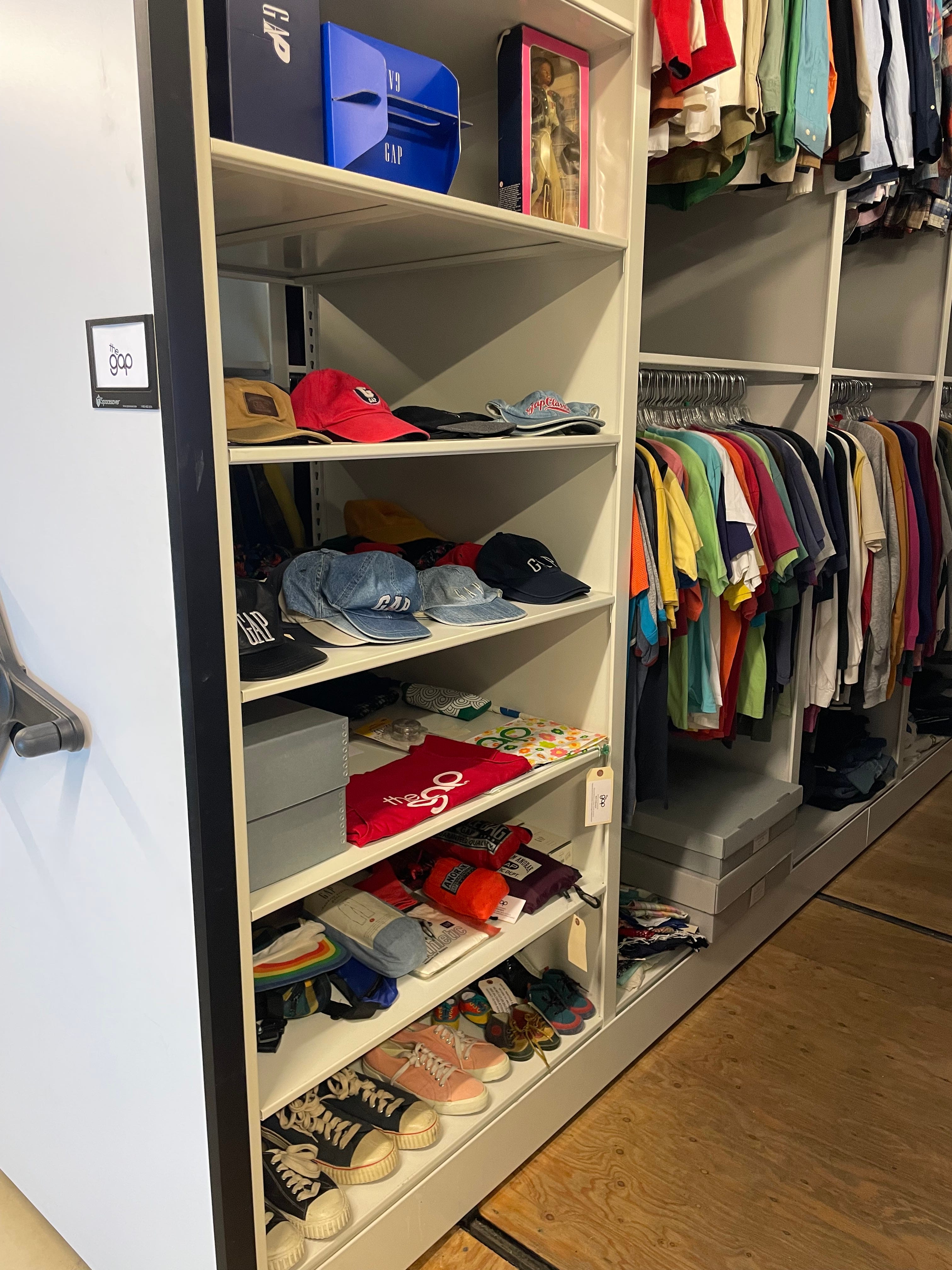
The archive manager who pulled some of the most historic garments for me to look at has been with the company for 13 years and has single-handedly collected much of what’s in the archive through the brand’s big eBay buyback mission.
Designers visit this basement area a few times a week to get inspired and really delve into the company’s visual culture and DNA.
Also worth noting: San Francisco is Gap’s main corporate hub, where there are more traditional corporate archives focused on business records and marketing materials—the kind of blue-board archives you might imagine.
Here in New York, it’s all about the garms, baby.
Historical Brand Milestones
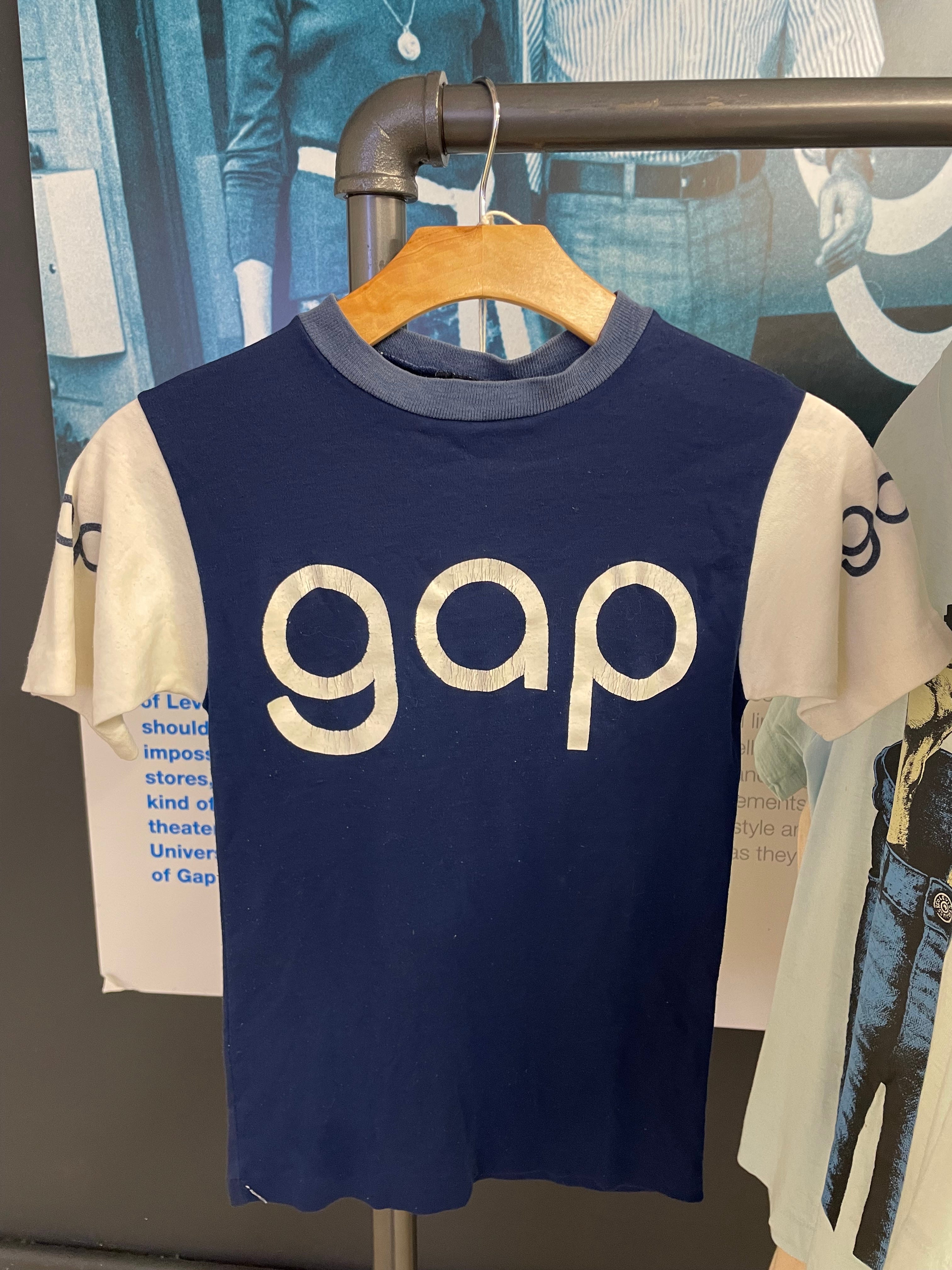
Gap’s inaugural branded tee came eight years after the company first opened its doors.
Debuting in 1977, the tight-fitting style captures how everyone, from kids to adults, was wearing their tops at the time.
The original logo with concentric circles was inspired by vinyl records, which makes sense given that the first store sold Levi’s, records, and tapes. Pulling from that history helped tie the design back to the brand’s origins.
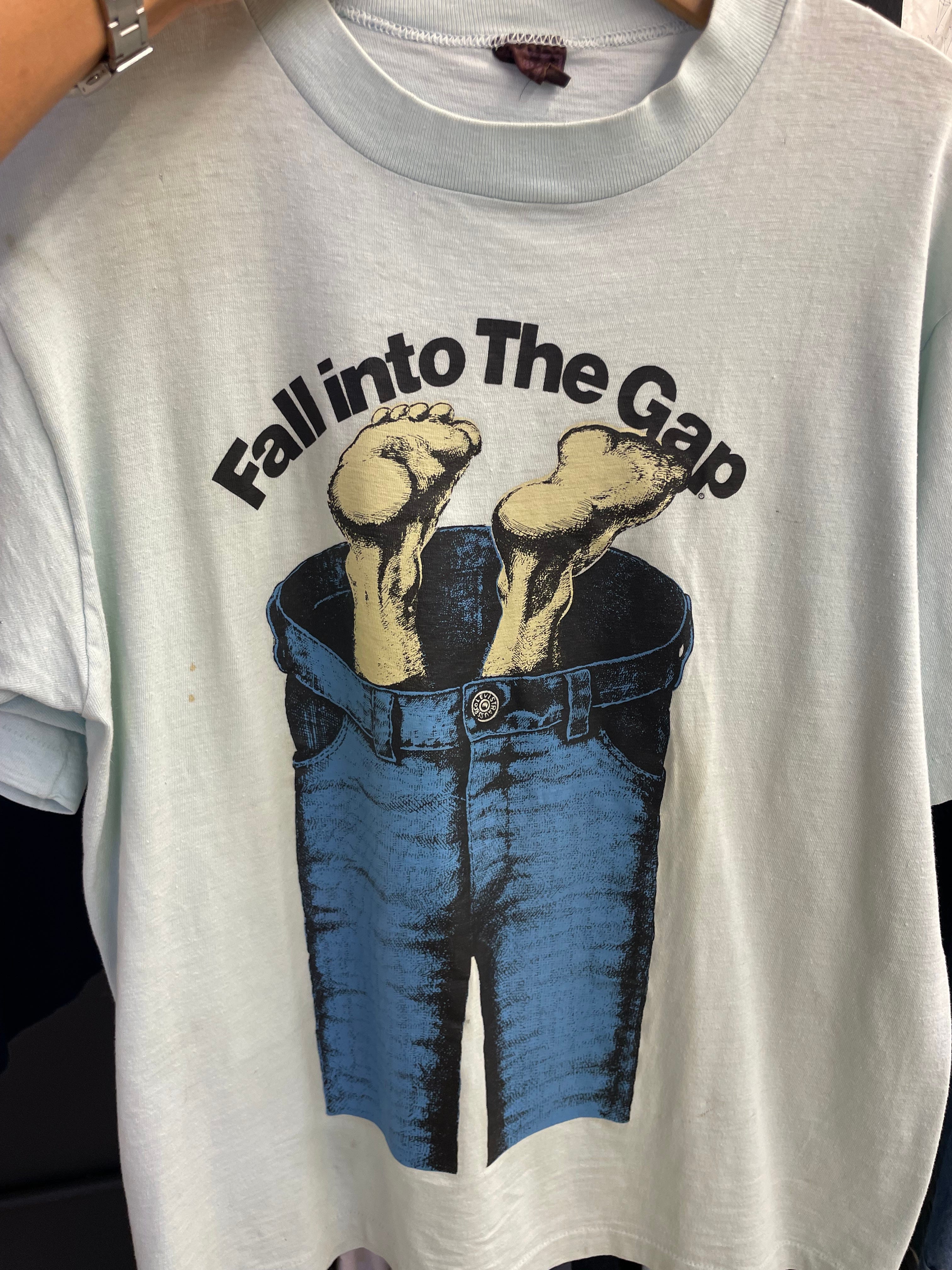
The company’s earliest tagline was “Fall Into the Gap.” Although this particular T-shirt was never sold, it was used more as a promotional item for employees.
Marketing mastermind Art Twain (also a genius creative director for Levi’s) was the creative director at the time. The tee featured the famous jingle that Gap would use for decades, hence the heavy Levi’s references.
In 1984, Gap launched its pocket tee in 12 colors, including the red version worn by Michael J. Fox in Back to the Future in 1985. At the time, that was a big deal for back-to-school shopping, and the company was experiencing a wave of new creative leadership, with Mickey Drexler having joined in 1983.
The blank tee assortment really allowed the company to dig its feet into the corporate retail landscape by saying, “Let’s do fewer things, but in better colors, and no synthetics.”
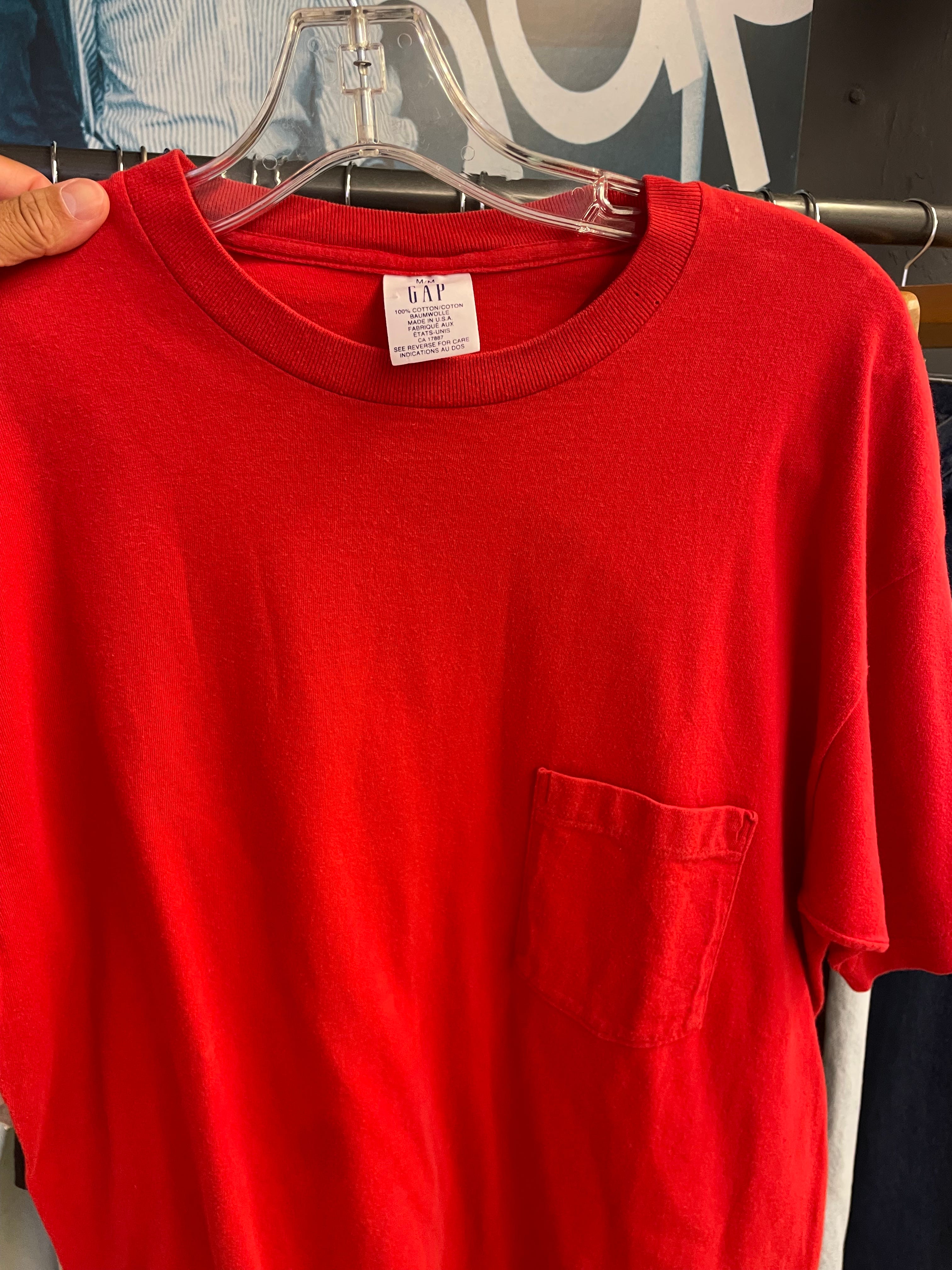
That year marked one of the biggest turning points in the company’s history. Gap began moving away from chasing fashion and silhouettes that would be outdated by the following season. Instead, the focus shifted to quality materials you could wash over and over, along with great colors.
Iconic Marketing and Cultural Moments
“For Every Generation, There’s a Gap.”
The company’s thesis was to bridge the cultural generational gap, and the brand’s “What Fits: Gap Denim” campaign featured a poem commissioned from British poet Max Blagg, titled “What Fits.”
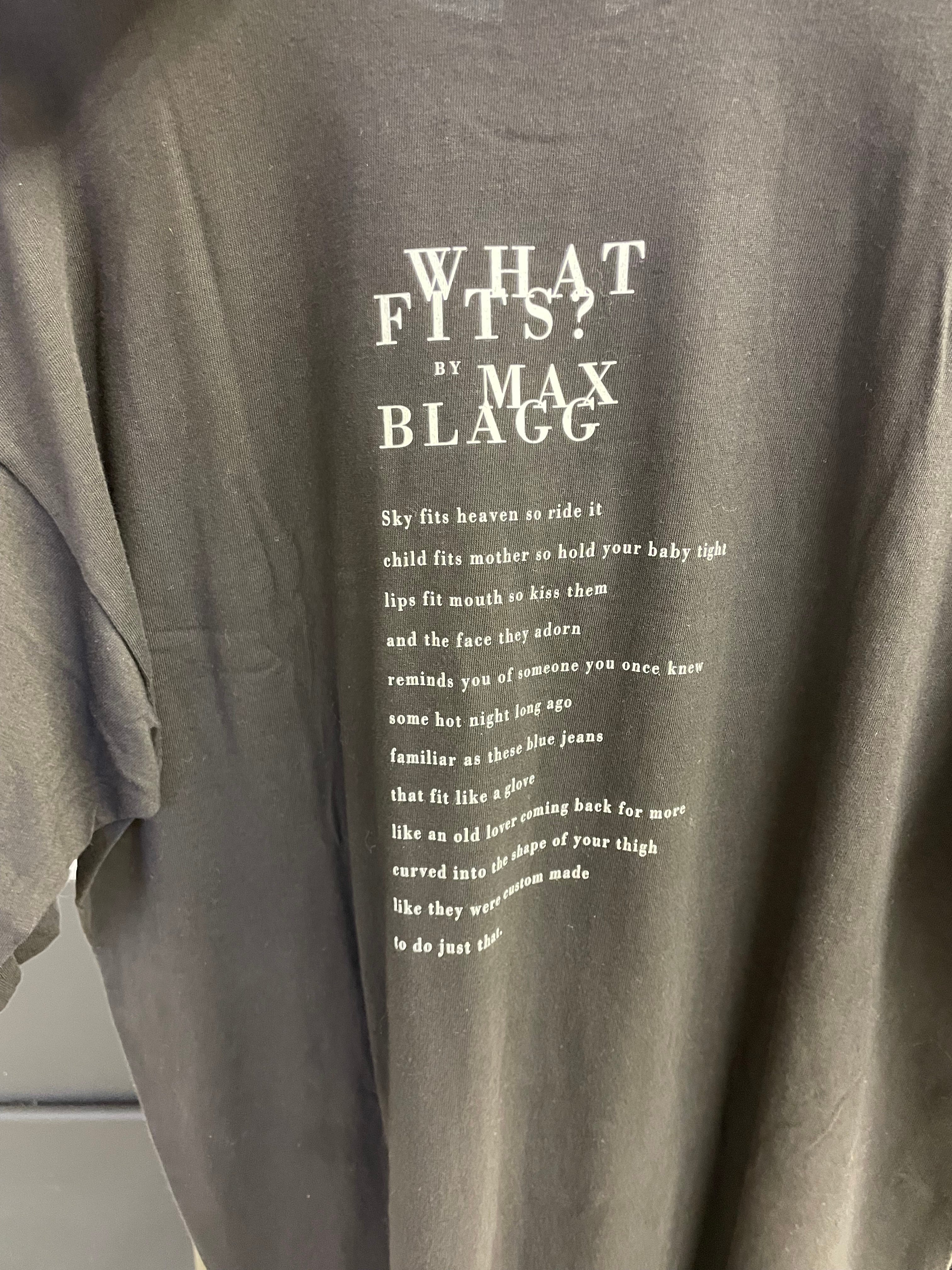
Part of Gap’s 1992 campaign, it was the kind of thing people thought was a bit pretentious at the time: a black-and-white TV commercial featuring Blagg delivering an almost spoken-word performance alongside a model wearing denim.
The best part of that particular story is that Madonna later used his lyrics in her song “The Sky Fits Heaven,” from the album Ray of Light. She was inspired by the Gap ad and ultimately received permission to use his poem.
Three years after that outside-the-box marketing campaign, another milestone arrived: the official launch of Gap’s now-iconic logo hoodie, debuting for babies only in the summer of 1995, then one season later that same year for men and kids. It’s hard to believe it originally debuted for babies, considering it’s now such a cultural collector’s item, with its appeal often tied to the year it was made and where it was produced.
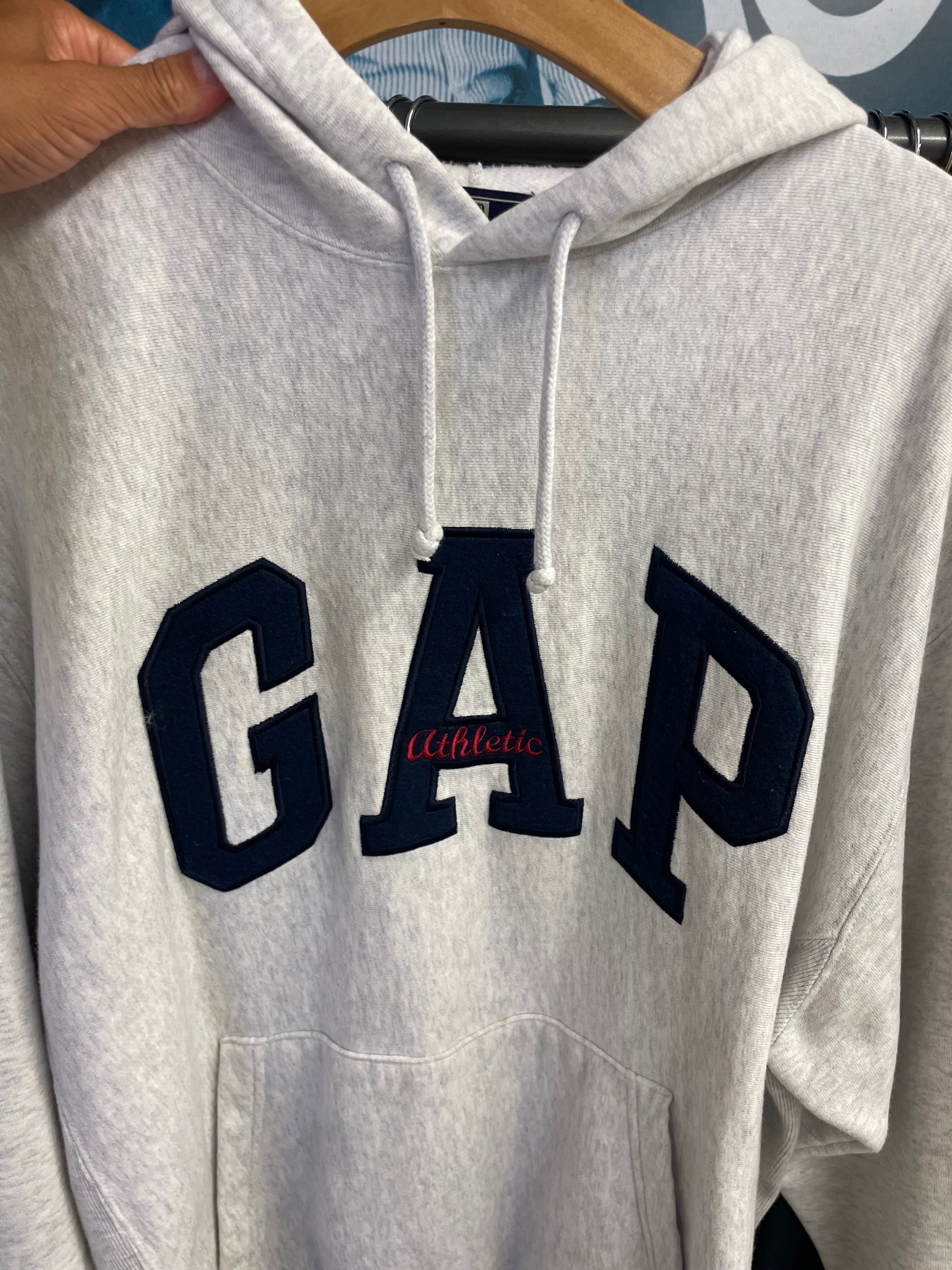
Another one of my favorite tees that I came across read, “Are You a Jean or a Khaki?” I just love the question and the font. Anyway, the campaign debuted in spring 2000 and first aired during the Academy Awards as a three-part commercial series.
Inspired by West Side Story, the campaign featured three segments: one with the jeans people, another with the khakis people, and a final piece where everyone came together for the mambo.
There were several memorable branded campaigns during the Y2K era, but what made this one particularly great was Gap’s use of the original West Side Story choreography. It was a culturally relevant way to promote both the jeans and khakis.
Denim and Product Evolution
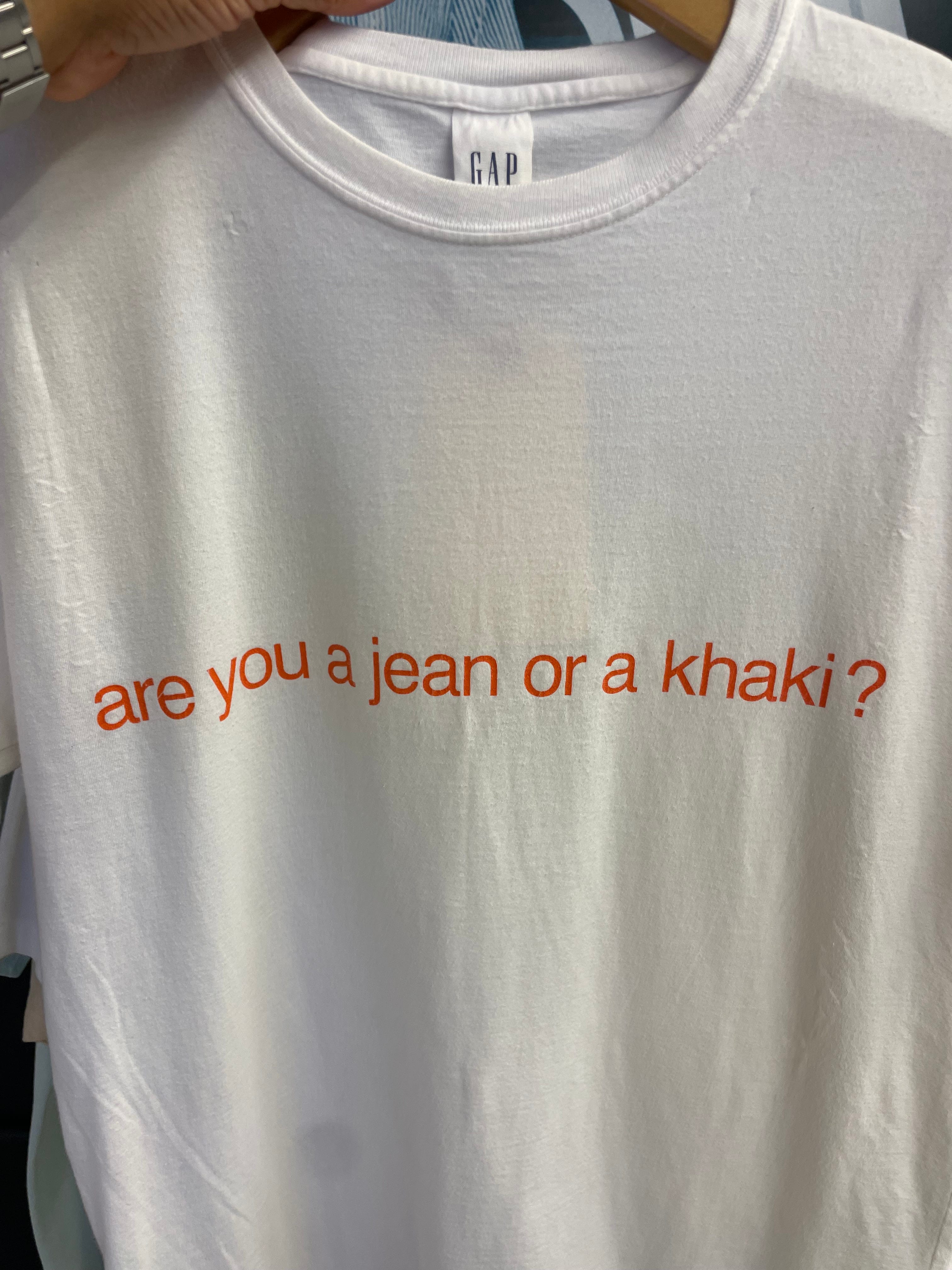
Gap had been selling denim since 1969 and, in 1974, launched its first private-label product. A shirting assortment that expanded into twill pants and pre-washed jeans. Four years later, in 1978, the company officially introduced its own label, Gap Pioneer.
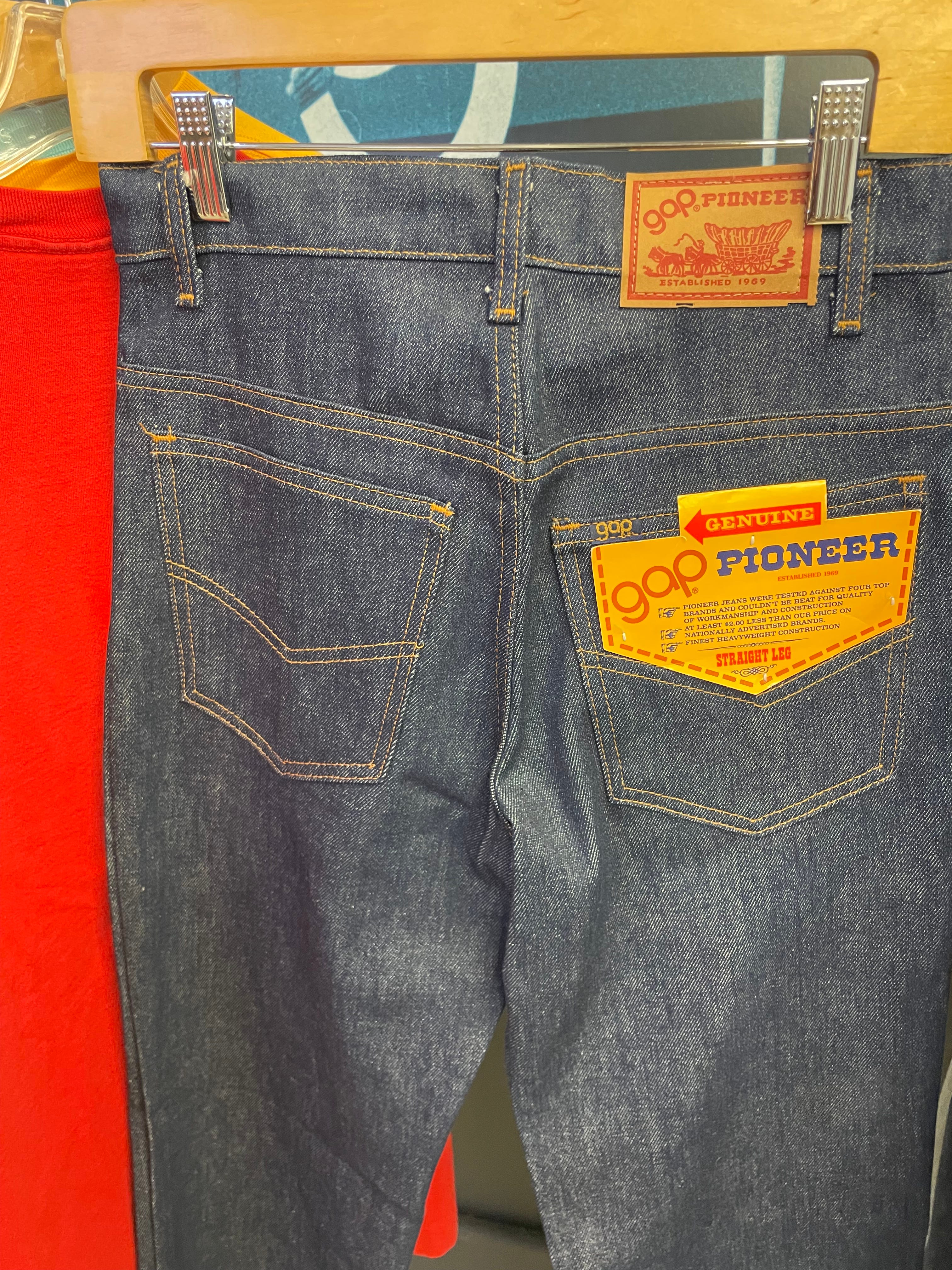
Eventually, Gap launched its own denim line to compete with Levi’s and offer a more competitive price point. The brand had been selling Levi’s for years and years, but then came the Gap Pioneer line.
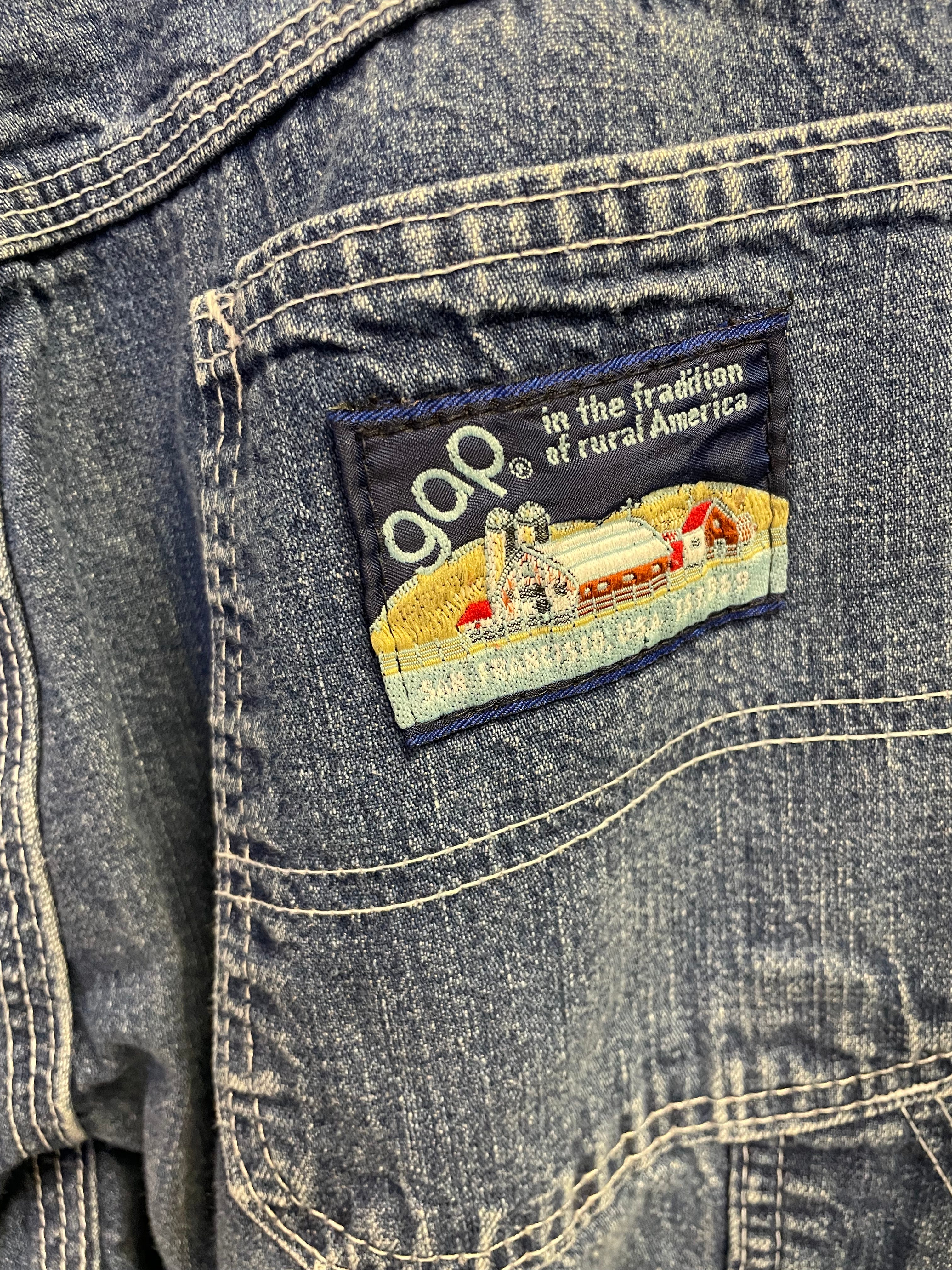
Most of the cuts back then were selvedge, straight-leg styles, complete with playful tags like “Gap: In the Tradition of Rural America.” The denim jacket I saw even had a similar feel and silhouette to a Lee 101 denim jacket.
Today’s Instant Classics
I’m super grateful to the team at Gap for taking the time to chat about the brand and walk me through more than a handful of legendary pieces that helped shape it into what it is today.
While I had a few spare moments, I walked the aisles (you could spend two full days in there, for real) and wanted to see some of the pieces that weren’t highlighted. I was especially interested in seeing where the brand’s identity comes through in its current assortment.
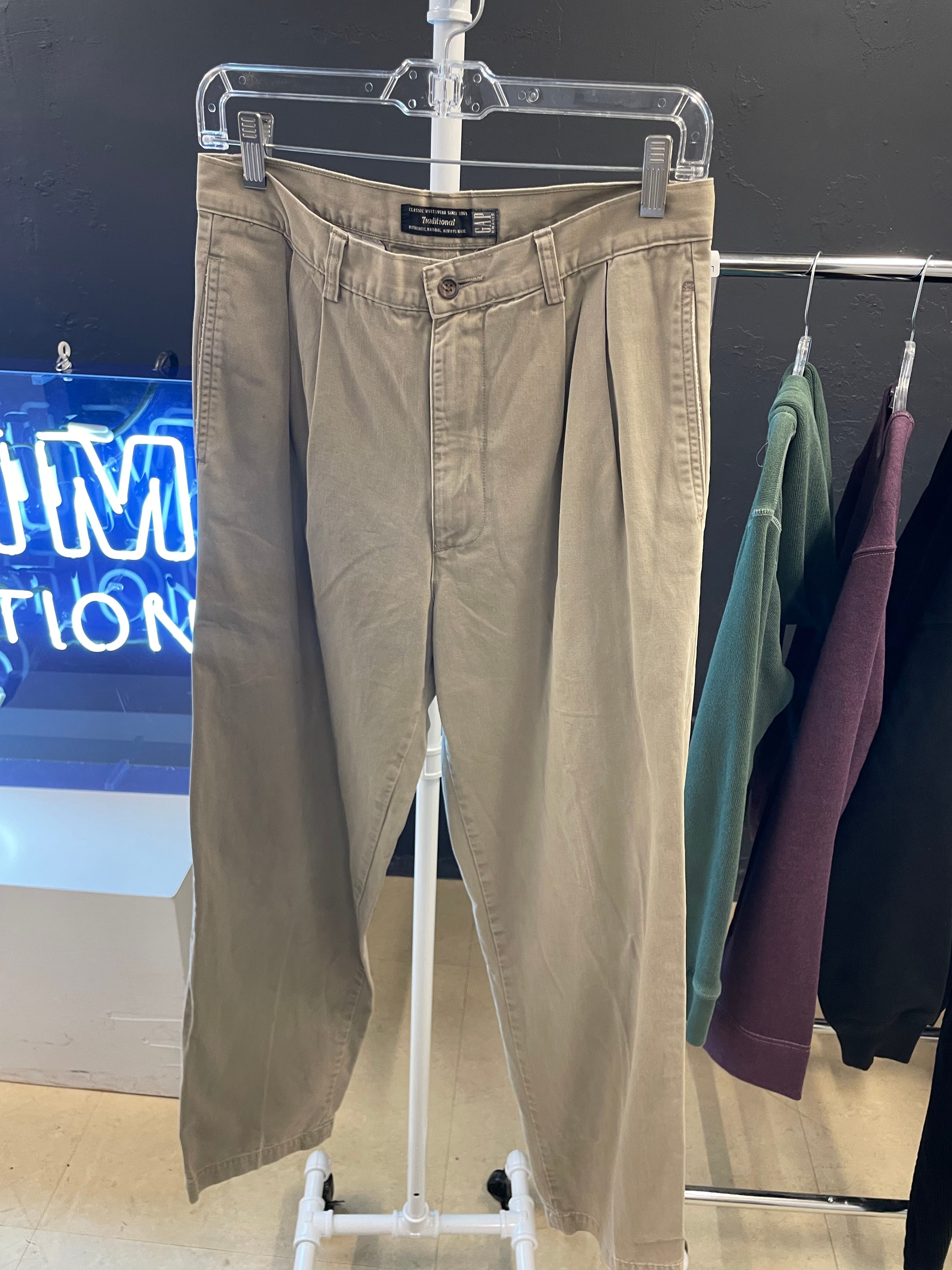
Relaxed pleated baggy chinos, fleeces, and more heavyweight hoodies. All of these are relevant to me because they’ve informed some of my favorite hits from Gap today.
Their pocket tees have always been a favorite because of their fit. And their latest heavyweight baggy khaki is better than J.Crew’s Giant-Fit Chino, in my opinion. The Gap version has more heft, and the leg openings don’t come pre-hemmed.
A couple of other instant hits caught my eye, too. The new brushed twill blazer feels like something you would’ve seen at The Hill-Side (IYKYK), while the half-zip fleece is just an insane bang for your buck.
Happy to see that I’ll be helping mend my family’s generational gap by dressing my kids in the brand, too. These are the kinds of pieces I’ll eventually be able to pass down to them.