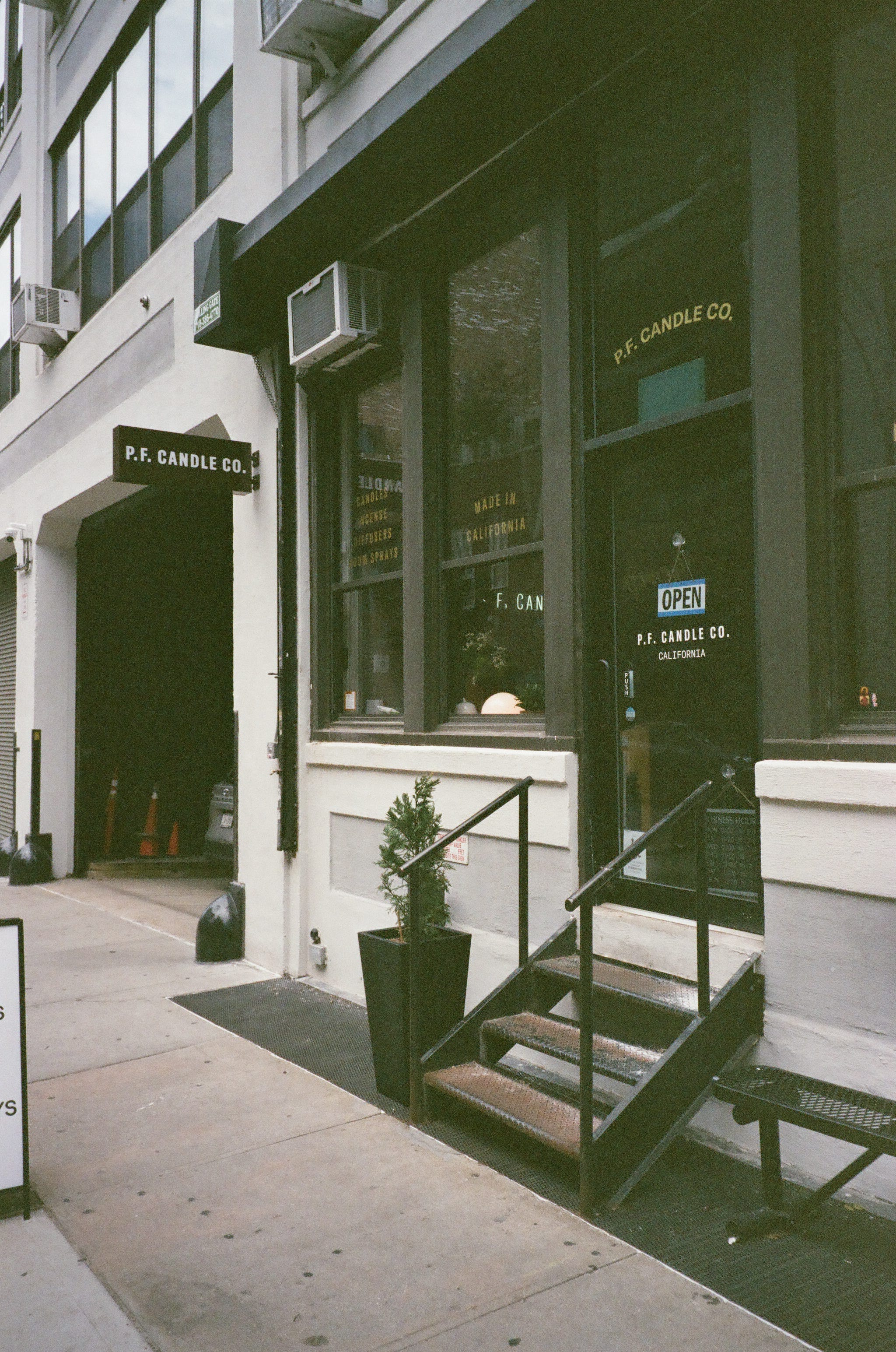
A lot of founders’ success stories begin with a breakdown before a breakthrough, and that’s how it started for Kristen Pumphrey, founder and co-owner, with her husband, Thomas Neuberger, of P.F. Candle CO.
Kristen was let go from her job in publishing during the recession and started making candles and selling them on Etsy in 2008. Fast-forward to now, and the company is almost 20 years old, with three brick-and-mortar shops in Brooklyn, Los Angeles, and San Francisco. I guess you can say the career pivot worked out.
I’ve been a fan of hers and the brand for a while, always having their Piñon candle lit in a corner of our home. I’m sure, like most millennials my age, P.F. Candle CO. was the first brand that introduced me to more earthy and spicy fragrances without the hefty price tag of Le Labo or Trudon. The amber-colored packaging and hand-stamped label never look out of place, whether they’re sitting next to another candle, on the mantle, or on a coffee table.
Of all the senses, smell has one of the most direct pathways to the emotional and memory parts of your brain, making a simple scent incredibly transportive. “It’s incredibly personal, and it speaks to the ritual of caring for your space and slowing down, even if it’s just for a second,” Pumphrey says.
I had a chance to speak with Kristen in July about how her job waiting tables inspired the candle vessel, how a huge order from West Elm solidified the business, what makes a collaboration worthwhile for the brand, her studio uniform, and her advice for entrepreneurs.
After losing your job in publishing and opening an Etsy shop, what made you land on candles? And what was the very first scent you ever sold?
I have to say, I think the first scent was probably Spiced Pumpkin, which is so funny now because it’s not what we’re known for. What we became known for is this unisex, very natural scent. So it’s ironic that the first scent was hyper-gourmand, sweet, and sugary.
But at the time, I really came into my side of the business through craft and through making things, and that’s just always been something I love to do. I spent my summers after school just making things. So this was basically when Etsy started taking off, and I thought, “I could do that. I want to do that. That sounds really exciting.”
So I came into it through candle making, and I already knew how to do that. I had my sister’s kit from when she was doing her home ec stuff. So I thought, “What? I can make candles. I already know how to do that. I already have some molds.” And I started pouring them.
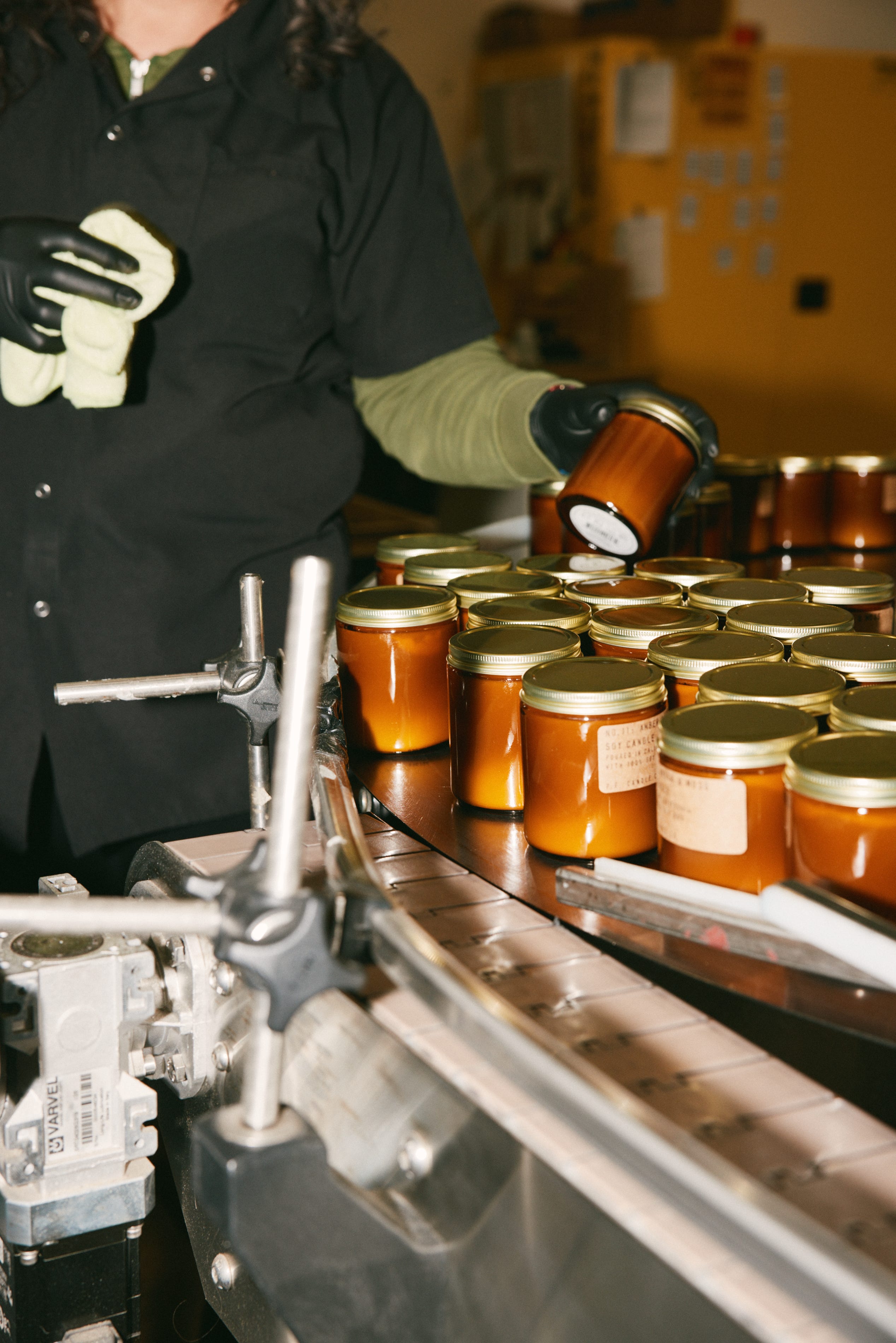
I was making a lot of other things, too, but candles were the thing that stuck. We didn’t really hone in on the packaging, the way it looks now with the really simple font. It looks like a stamp because it literally was a stamp. I didn’t know any graphic design. I just thought, “What can I make that’s repeatable?” And I would hand-stamp every single label.
So that utilitarian need and function ended up becoming our iconic look. And then the scents that came along with it, the unisex scents, that’s what really made us take off.
When you look back at that journey, what stands out most? Were there any moments that changed the direction of the brand?
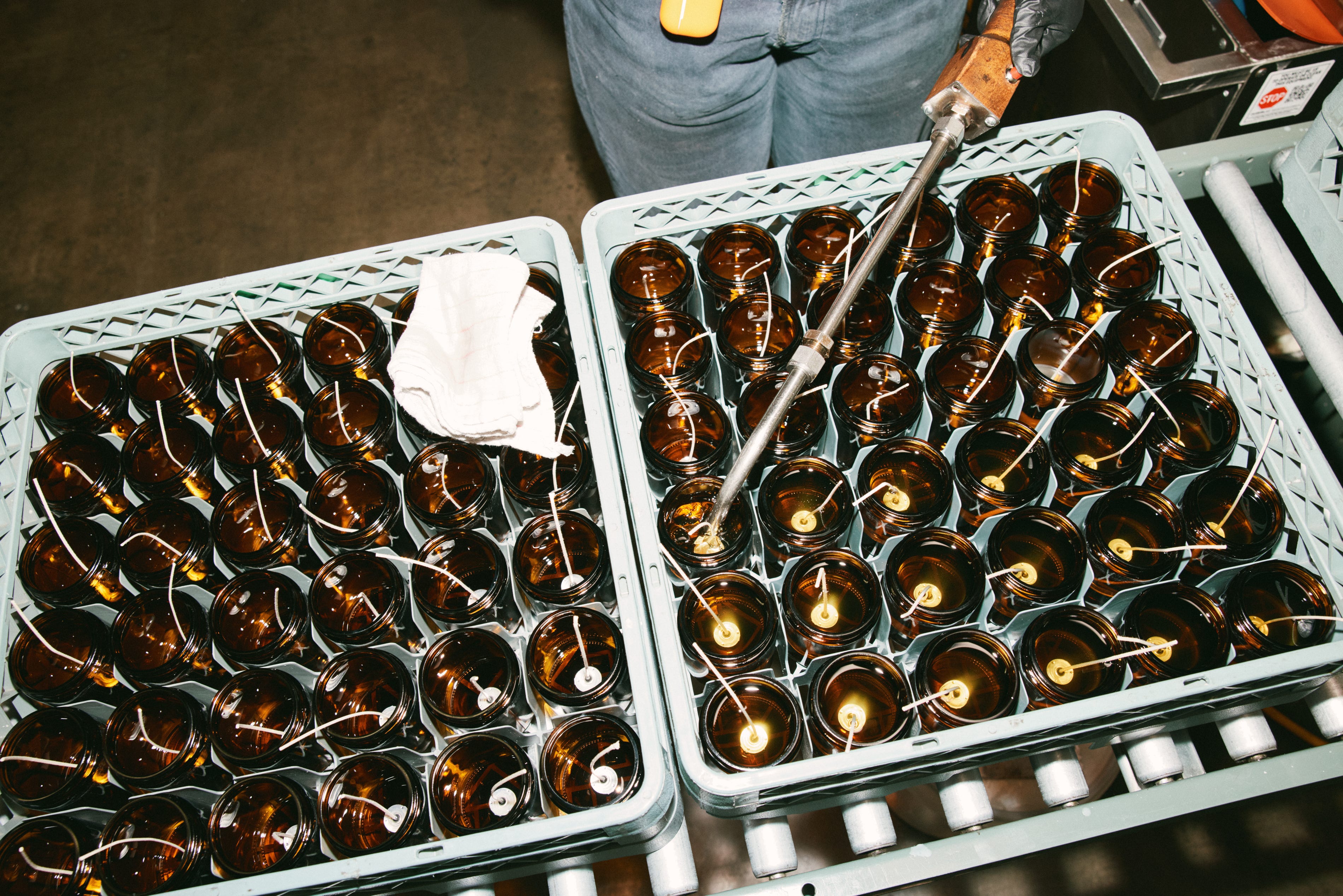
Yeah, well, having a kid changed the direction of the brand for me because before that, with just Tom and me, it was a very—it’s still a laid-back atmosphere, but it was very laid-back. We’re talking beers on the loading dock on Fridays. It was casual. We were probably 12 or 15 people.
So when I had my daughter, it sort of amped up the seriousness of, “Oh, shoot, this is a job now.” And it’s not just me on the line anymore. Honestly, that’s what continues to motivate me: thinking about, “How do I provide for my staff?” Not just myself, but we live in an expensive place, and I’m always just trying to chase providing a minimum wage. It feels really good that we’re able to pay people that and give them fully subsidized healthcare.
And it’s funny that seriousness sort of made me give that to all the rest of my staff, too. I’ve just been like, “Okay, I’ve got to provide for them.”
But I also always remember one of the biggest turning points, when we went from just me to being more than just me, was when I got this really big order from West Elm.
Tom was not on board yet—he was not my business partner, but he’d always help me at markets and craft fairs. He was just like, “Look, the future is very uncertain.” He was graduating with a degree in radio, television, and film, and NPR was laying people off. So he sort of took that mentality of, “Let’s make our own future,” and just said, “If you can go get that order, I will make all the candles with you.”
And that was just this massive turning point: getting our own studio and becoming a real business.
When you were first building the company, how much thought did you put into the vessel and packaging? Did you always want it to feel like something people would proudly display in their homes?
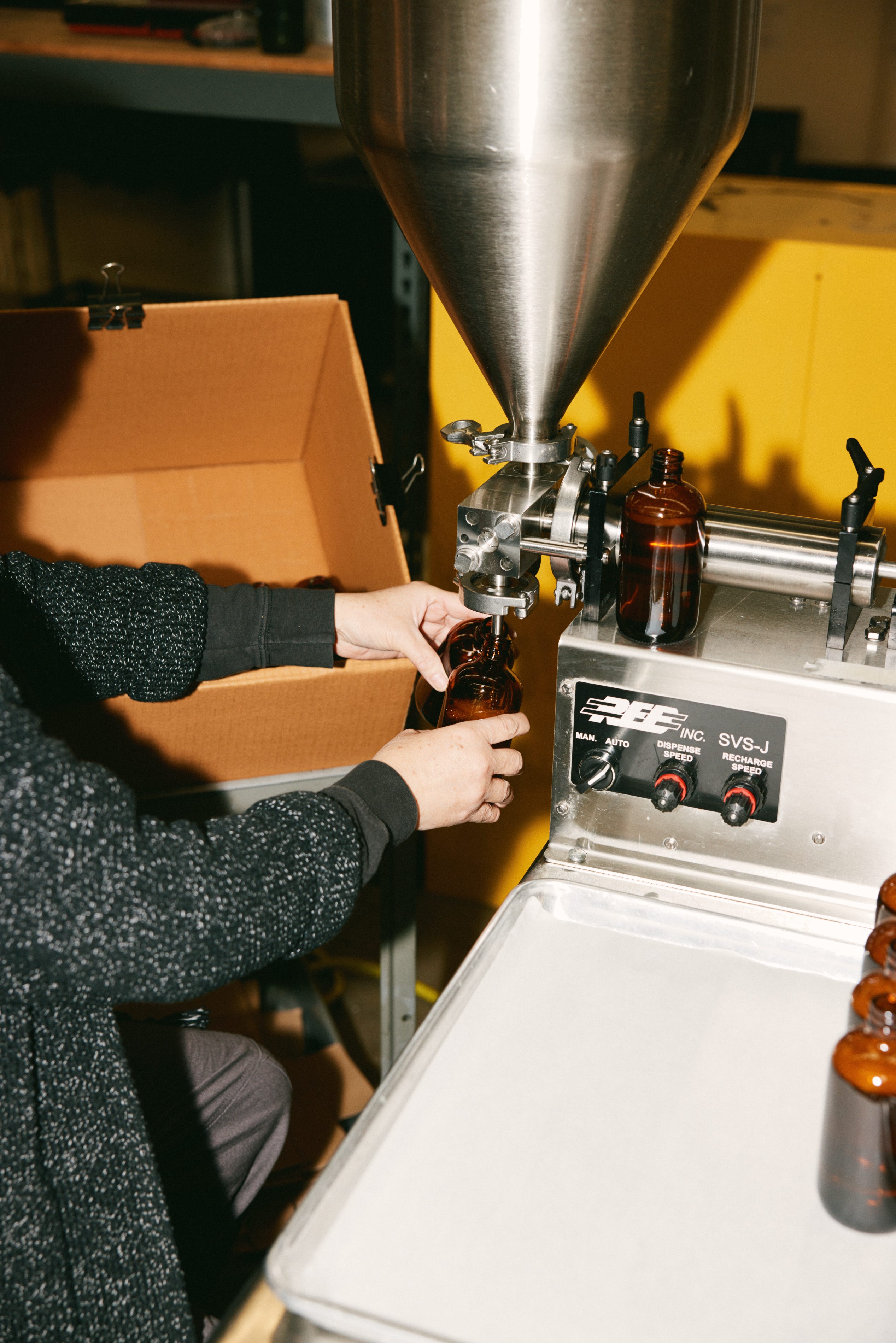
I think when I look at our packaging, I wouldn’t say that “pretty” is what drives me. What drives me is utility. It should be functional, and you want it to look good, but it shouldn’t be overly ornate. It’s very simple and functional, and it’s meant to be this everyday item. So you don’t need it to be over the top.
So much of that was just born out of the tools I had at hand and the process of working with them. I would just go to a container supplier, see what they had, and test different items.
The first candle vessel I ever used, though, came from when I was waiting tables. You know those pizzeria-style candles? My boss at the time would throw them out when we were done with them, and she let me take them home. I would pour candles into those, and they had this gorgeous amber glow because they were the yellow ones. I just couldn’t scale it. I stopped working there, so I couldn’t keep getting that item.
I think I wanted something brown or amber, and that’s where that seed came from.
Your scents feel really transportive. How do you go about developing a fragrance? Are there influences, like music, films, travel, and food, that shape the final scent?
The fragrance note ideas can come from so many places. Travel is a huge source of inspiration because I think anytime you can get out of your little pocket, it allows you to zoom out and get a bird’s-eye view. You’re not quite so myopic about your everyday life. You see things a little bit differently.
A lot of our fragrances are inspired by California. It’s not a strict rule, but we have a lot that are inspired by natural spaces. I love to hike and be outdoors, so I like things to smell natural-ish—very true to life.
But we also have a scent like Sandalwood Rose, and we wanted to capture the feeling of a gritty New York atmosphere—the streets, perfumes, and all of that. We call it “New York Meets LA” because it also has this floral component that feels very Los Angeles, like botanical gardens and all of that.
Why do you think people connect with well-designed candles and apothecary goods? Is it about taste, identity, creating a certain feeling at home, or something else?
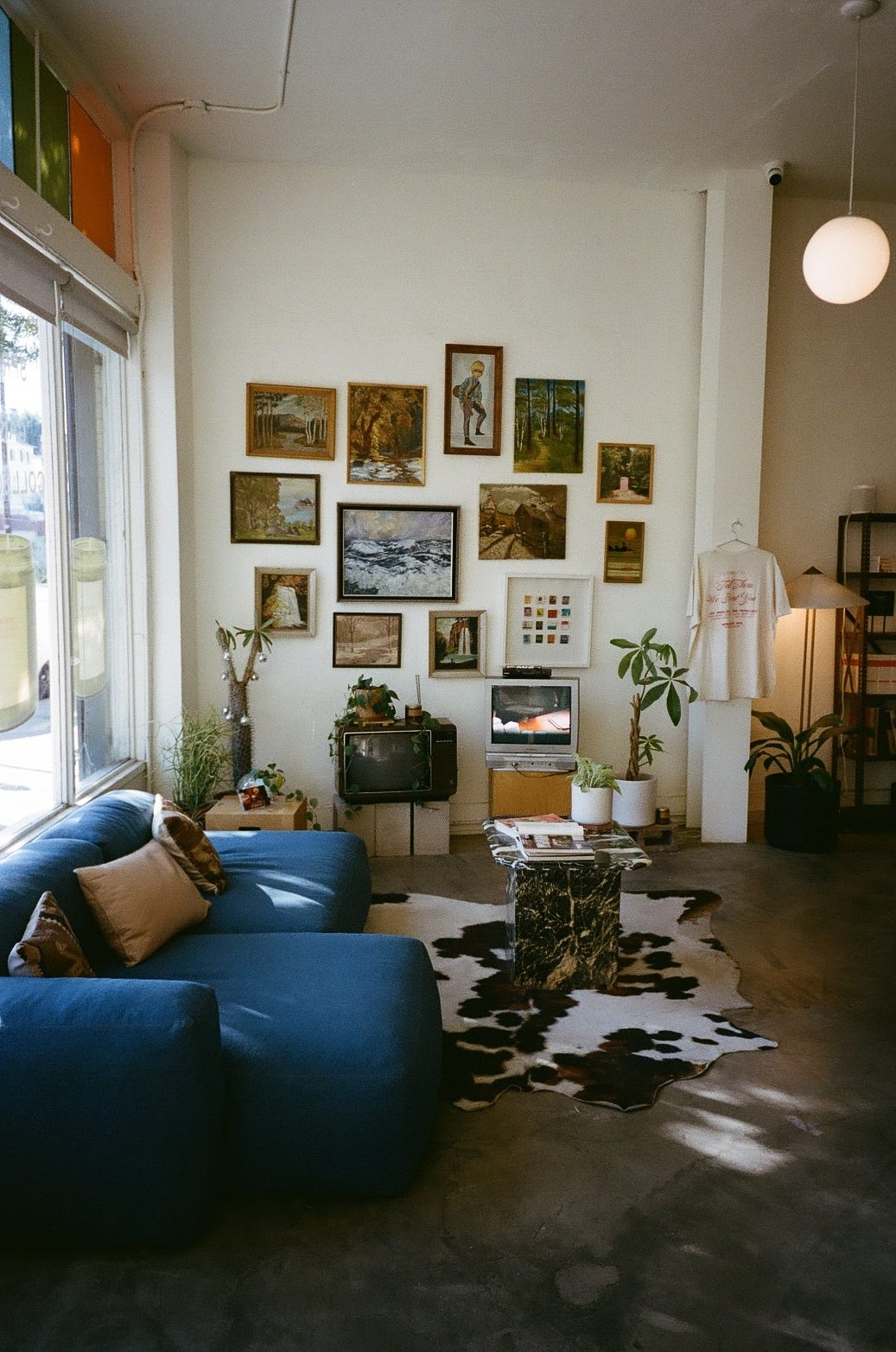
I think people connect with fragrance and incense because it’s something you can’t really do online. It’s incredibly personal, and it speaks to the ritual of caring for your space and slowing down, even if it’s just for a second. Like, you cared enough to light a candle, you know?
In terms of identity, there are so many candle brands now that you can really find one that speaks to your scent identity, as well as your design identity. A lot of people connect with P.F. Candle CO. because we were born in California. Especially if they don’t live here but used to, they’ll be like, “Oh, I have my little piece of California.” They really connect with that part of the identity.
So, it’s everything. But scent is so closely linked to memory that it can really stick with you. The other night, I was burning incense to cover a bad smell, and I had to think so carefully about what incense I was going to burn because I was like, “I’m about to sacrifice this memory. What am I going to associate this scent with forever?”
What makes someone the right collaborator for P.F. Candle Co., and what are you looking for before saying yes?
So many of our collaborations are born out of genuine relationships. First, we have done the licensing thing. We did a Peanuts license that was really interesting because, being an independently owned brand, it was a very different experience. The math on that was really different. We had such high minimums to meet, so we had to really figure out: How many candles do we have to make in order to meet the licensing minimum?
But it was fun because we were creating these scents that were so inspired by nostalgic, iconic vintage Snoopy imagery. So that was really fun.
For some of our other collaborations, like Grillo’s Pickles, The Hundreds, and Toy Machine, we’ve worked with people where there’s already a genuine relationship. We have a few more collaborations coming down the line with coffee shops, and in those cases, we know them or already have a relationship with them.
I really like starting with the relationship first because you sort of get to know each other and figure out what sparks you. The Grillo’s collaboration was so fun because they have the same kind of energy as us. We work in a similar way, and it was just fun. We were like, “We’re going to create this true-to-life pickle scent.” It actually smelled really good.
For someone who just lights a candle whenever they feel like it, are there any underrated tips on when to burn candles versus when to reach for incense?
So I like to have at least an hour or two if I’m burning a candle. If I don’t have that much time, or if I have to step out to walk the dogs, I’ll burn it inside a little hurricane because that gives it extra protection, but it also amplifies the scent throw. If you’re burning it in a big space—my living room is kind of long, for example—I’ll burn it in the hurricane, and it fills the whole space.
Incense, I could burn all day, every day. I have to watch myself, though, and I always ventilate. I try to open a window or run the air purifier when I’m burning it. But the different forms—cones versus sticks versus paper—are where you can get kind of niche, because each one burns for a different amount of time.
What does a typical studio fit look like for you? Is there a uniform you've settled into over the years?
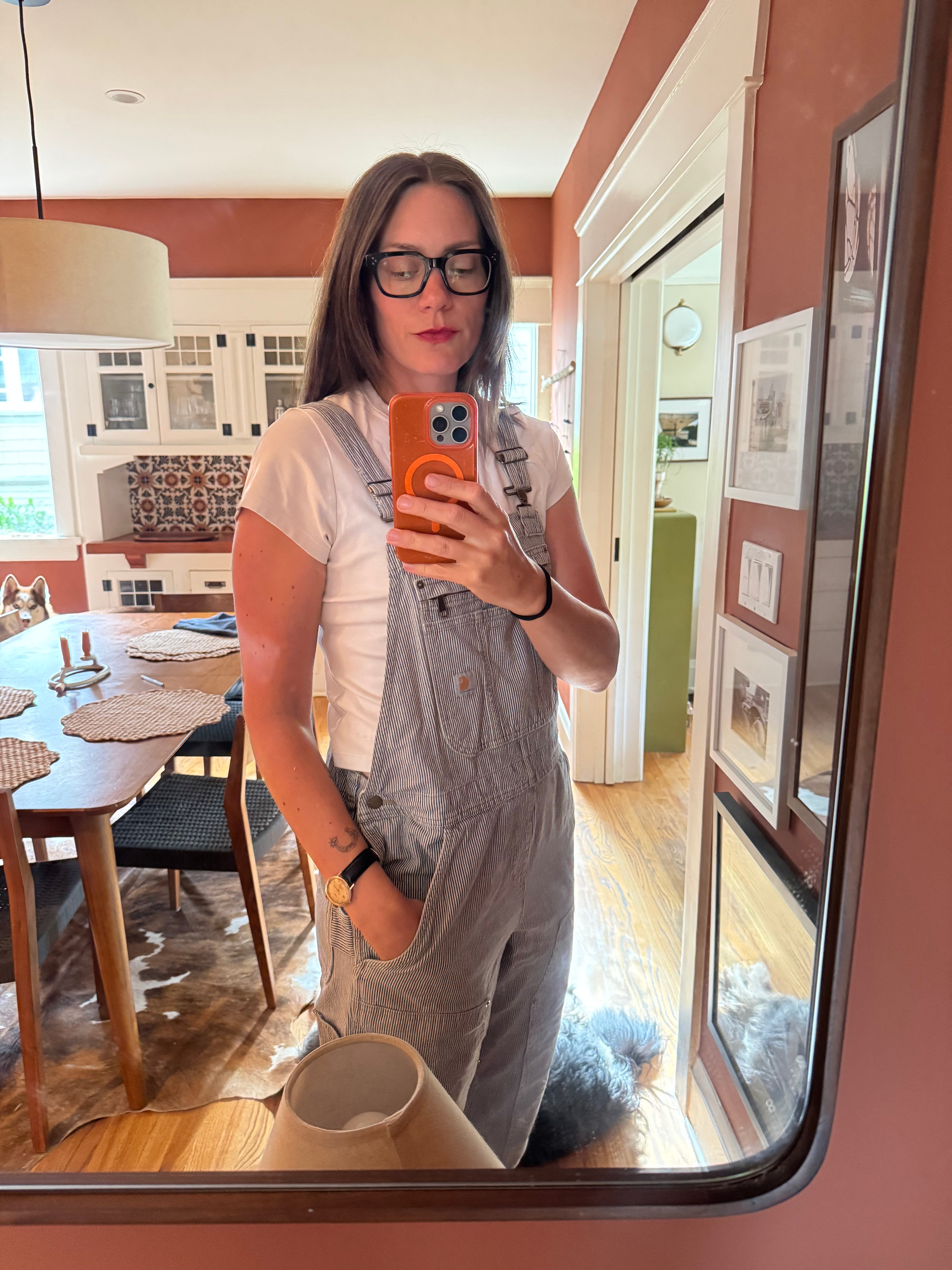
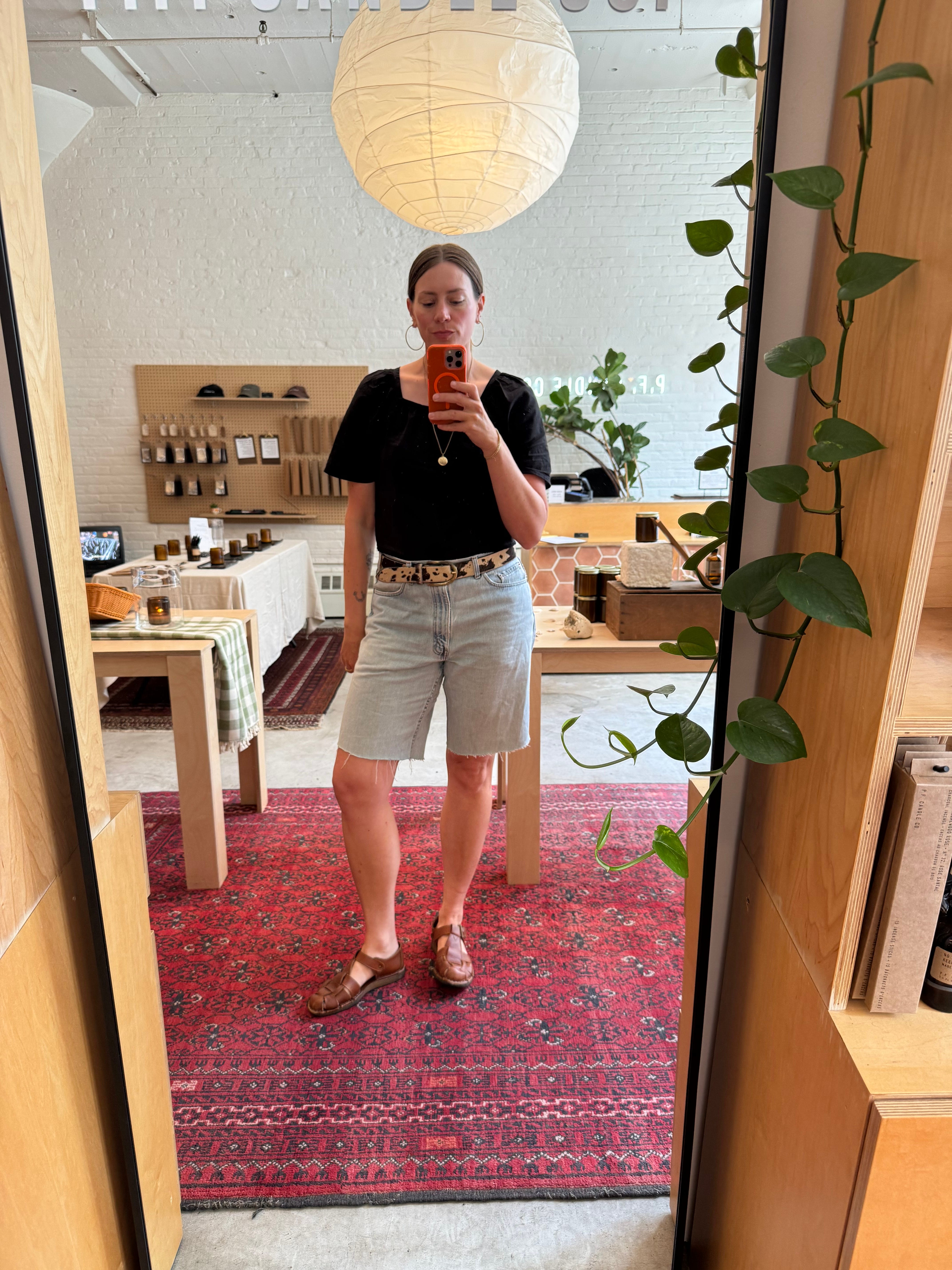
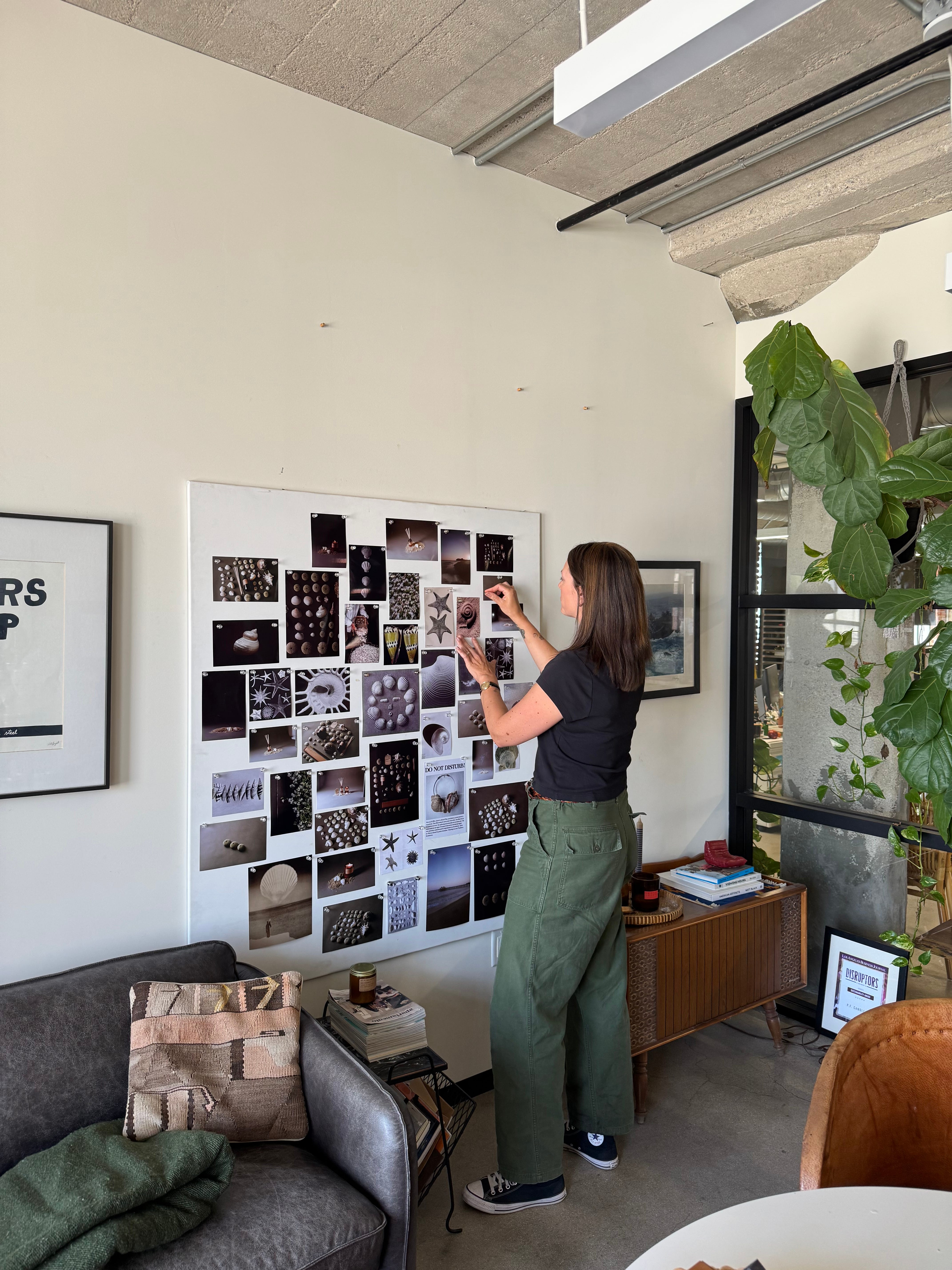
I have a uniform that I’m wearing right now, which is OG-107s. I found this amazing vintage fit guide on Substack about how to buy them and where to find them, and they are the best damn pants. I swear, they’re comfortable for travel, but they look cool, and they’re so rugged.
My fit always has to be about utility because I’m always riding a bike. So I either have to have a really baggy skirt at the right length or wear my OG-107s. I usually wear those, and then I’ve been living in these mini tees from Uniqlo. I have them in like five colors. This year, I said, “These are my outfits,” and then I just put one on in the morning and don’t think about it. That’s been very helpful.
And then I always wear Chucks in the summer. I might mix it up. I have this Todd Snyder x Gardenheir collab fisherman sandal that I throw on, you know. And then maybe a long jean short is entering the chat, along with an oxford. I’ll do a little oxford with a tank.
For someone hoping to start a business today, what advice would you give an aspiring entrepreneur in 2026? Is there anything you wish you'd known when you were starting?
I think you can do it now because I started this in the middle of the recession. You can sometimes get so scared when you’re at the bottom, essentially, and there’s a lot of fear. But this is also a time when you can really create your own opportunities, and create something that has meaning to you and where you see a need in the market.
That’s what we need right now: thoughtful, well-thought-out companies. So really, the biggest thing is finding that. I don’t want to say “finding the need in the market,” because that feels like it takes the heart out of it. But you will always be competing if you’re just sort of ripping someone else off. You want to figure out what it is that you do that’s unique.
That takes a lot of analysis, too. A lot of asking, “Why did that work?” Understanding the deeper connections behind why things worked can help you build a stronger business that’s very true to who you are.
The other thing is trying to find inspiration that comes from yourself. Getting off the internet is so important nowadays because I think you can end up creating things that you feel are an original thought, and then it turns out you’ve never had an original thought. You don’t know whether you’ve just absorbed something that’s been disseminated online.
We’ll release a candle scent and then see one of our competitors do an incredibly similar one, and they’re coming out at the same time, so we know we developed them in tandem. And it’s just like, well, is it the trend? Are we just having that collective-unconscious moment?
So I do enjoy the process of creating a little bit more in a vacuum and trying to draw inspiration from real-life experiences, because that’s going to create better work.