

The fashion space is downright fickle. If you’re not selling through your hero categories, snagging a celebrity co-sign, or hopping on the latest micro-trend before it becomes a macro one, your brand can feel obsolete in the blink of an eye.
We’ve seen plenty of great labels shutter after just a couple of seasons because of it. Fashion loves you, until it doesn’t.
But one brand that’s managed to sidestep that fate for over two decades is the Japanese label Nanamica.
The brand prides itself on consistency, fabric innovation, and making beautifully uncomplicated clothes—like these jeans and this thermal hoodie, both of which I’ve been living in for the past few months.
Founded in 2003 by Japanese outdoor-industry mastermind Eiichiro Homma, who also serves as Creative Director of The North Face Purple Label, Nanamica was born from a clear market gap.
“At that time, many outdoor brands were not yet able to satisfy both functional performance and fashion sensibility at the same time. That disconnect was the gap Nanamica set out to address,” Homma says.
Nanamica translates to “house of the seven seas,” a nod to Homma’s and co-founder Takashi Imaki’s love of the ocean. “We wanted the brand name to reflect that connection,” Homma explains.
Once you understand that ethos, the performance fabrics start to click. It makes sense when you feel one of their ALPHADRY field jackets or pull on a lightweight COOLMAX Cotton tee.
The pieces are technical, but never try-hard.
Homma adds, “Rather than being tied to a specific place or moment, our design philosophy is shaped by the idea of openness and movement, much like the sea itself.”
We recently spoke with Homma about:
How he got his start in the industry more than 40 years ago
The lessons he’s learned from customers along the way
What differentiates Nanamica from The North Face Purple Label
Why he’s never been interested in designing for the algorithm
+ more!
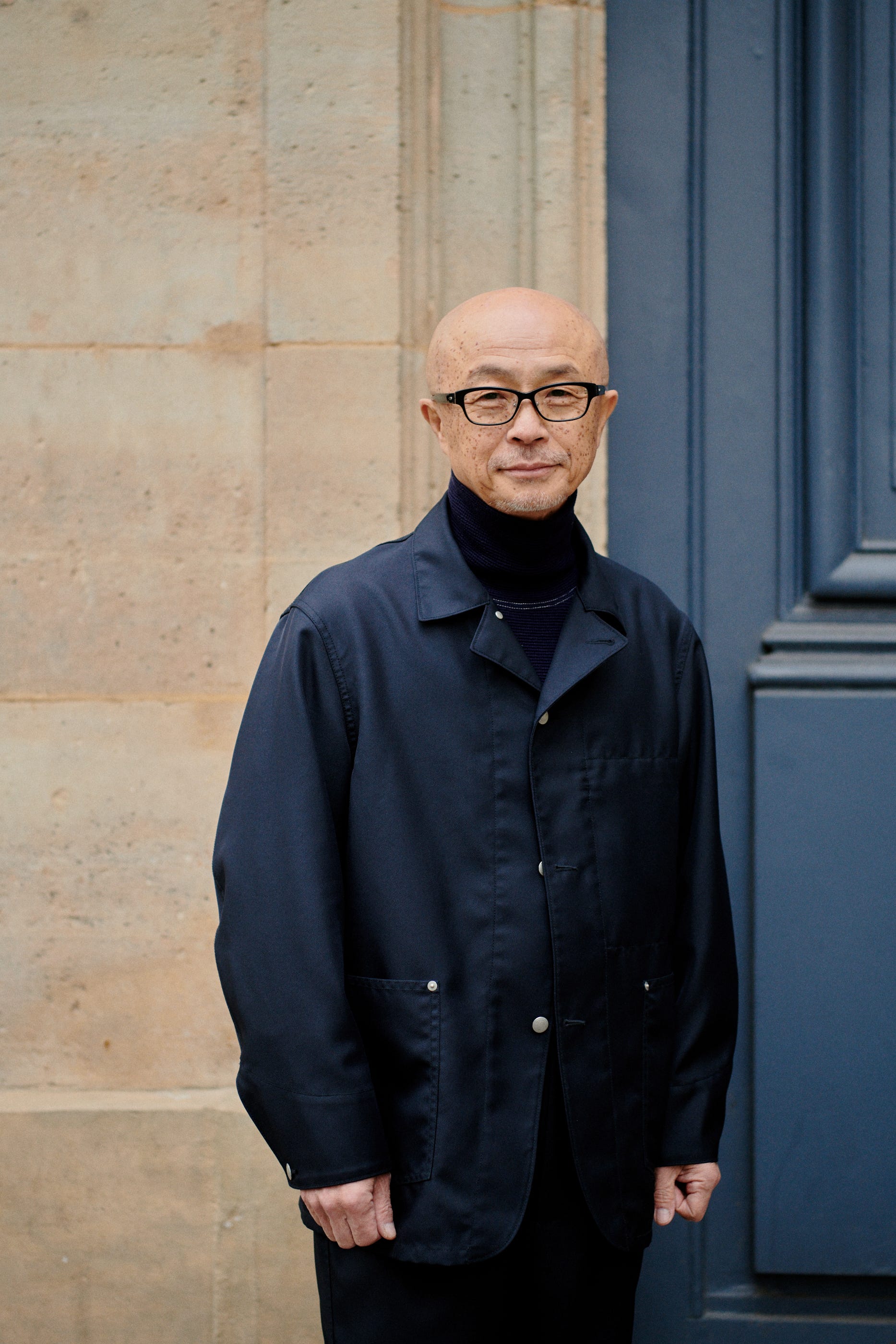
Before fashion became your life’s work, what were you doing, and what first pulled you toward the industry?
I joined Goldwin at the start of my career after spending my high school and university years skiing and surfing. In that era, a lifestyle built around sports felt like a genuinely cool way to live.
I believed that working in the sportswear industry would allow me to create something that could make customers say “wow”—and that feeling is what ultimately drew me into this field.
You officially began your career at GOLDWIN in 1982. Looking back, how does it feel to have witnessed—and helped guide—the evolution of fashion and function over the past four decades?
When I joined Goldwin in 1982, outdoor wear was just beginning to be recognized in Japan as a distinct business category within sports.
Compared to already well-established markets like ski, tennis, and athletic wear, outdoor clothing had a unique quality: many of its items, such as flannel shirts and chino pants, could be worn naturally as everyday clothing.
Even at that time, Goldwin was developing The North Face, and the company had a strong ability to apply its expertise in functional materials and performance-driven design to products that customers could easily adopt into daily life. That approach made outdoor wear feel accessible beyond pure sport.
I don’t personally feel that I “guided” this evolution. Rather, I think three factors overlapped naturally.
First, the fact that Goldwin was already developing The North Face as a brand. Second, this allowed us to become early pioneers in functional material development. And third, that the era itself began to dissolve the boundary between business wear and sports lifestyle wear.
It was the intersection of these elements that helped shape today’s market, where fashion and function coexist so naturally.
Spending so many years at the intersection of outdoor performance and everyday clothing, what’s the most important lesson the customer has taught you?
When functional clothing is properly understood and accepted by the market, the brand that is embraced by the largest number of people ultimately becomes the most trusted.
This isn’t limited to apparel… when it comes to functional products, the ones that sell the most often prove to be the best products, because they have been validated through real use.
However, there is another side to this. Once functional clothing begins to be seen through the lens of fashion, a different kind of demand emerges—the desire to look different from others.
At that point, if a product or style becomes too widely adopted, its fashion value can sometimes diminish as its level of market penetration increases.
Understanding and balancing this tension between trust, functionality, and the desire for differentiation is one of the most important lessons customers have taught me over the years.
When you launched Nanamica in 2003, what gap did you see in the market?
At the time, much of sportswear was still striving for the absolute peak of performance. As technology advanced and design became more rational, often driven by computers, the ultimate forms began to converge.
Much like Formula One cars, sportswear silhouettes were becoming increasingly similar, and in some cases, garments began to resemble jumpsuits built purely for performance.
However, everyday clothing does not necessarily require ultimate functionality. In fact, there were moments when the pursuit of peak performance resulted in designs that drifted away from the silhouettes and proportions people actually wanted to wear in daily life.
In addition, outdoor and sports styles are deeply connected to the cultures in which they were developed, and there was a growing expectation that this cultural background should be reflected in design.
At that time, many outdoor brands were not yet able to satisfy both functional performance and fashion sensibility at the same time. That disconnect was the gap Nanamica set out to address.
More than 20 years later, how has that original idea evolved?
The core brand concept itself has not changed. However, over the past twenty years, it has become far more common for outdoor and sportswear to be worn as everyday clothing, even in the workplace.
After the pandemic, working outside of traditional office environments has also become a clearly defined part of daily life. As a result, everyday life, work, and leisure are now expected to connect seamlessly.
At the same time, we are living in an era where sustainability is demanded at a much higher level than before. Nanamica began with the idea of achieving a high-level balance between functionality and fashion.
Today, I believe our role has evolved into pursuing an even more advanced balance, one that integrates sustainability alongside function and design.
Nanamica translates to “house of the seven seas.” Why was that concept so foundational to the brand, and how does it continue to shape the way you design today?
The name Nanamica comes from the fact that both my co-founder, Takashi Imaki, and I have always loved the ocean, and we wanted the brand name to reflect that connection.
The phrase “seven seas,” meaning the oceans of the world, carries with it our desire to communicate with people around the globe in a borderless way.
Nanamica is now available in 24 countries, but our ambition goes beyond geography. We hope to create clothing that supports comfortable and stylish living for people everywhere—across different environments, climates, and lifestyles.
Rather than being tied to a specific place or moment, our design philosophy is shaped by the idea of openness and movement, much like the sea itself.
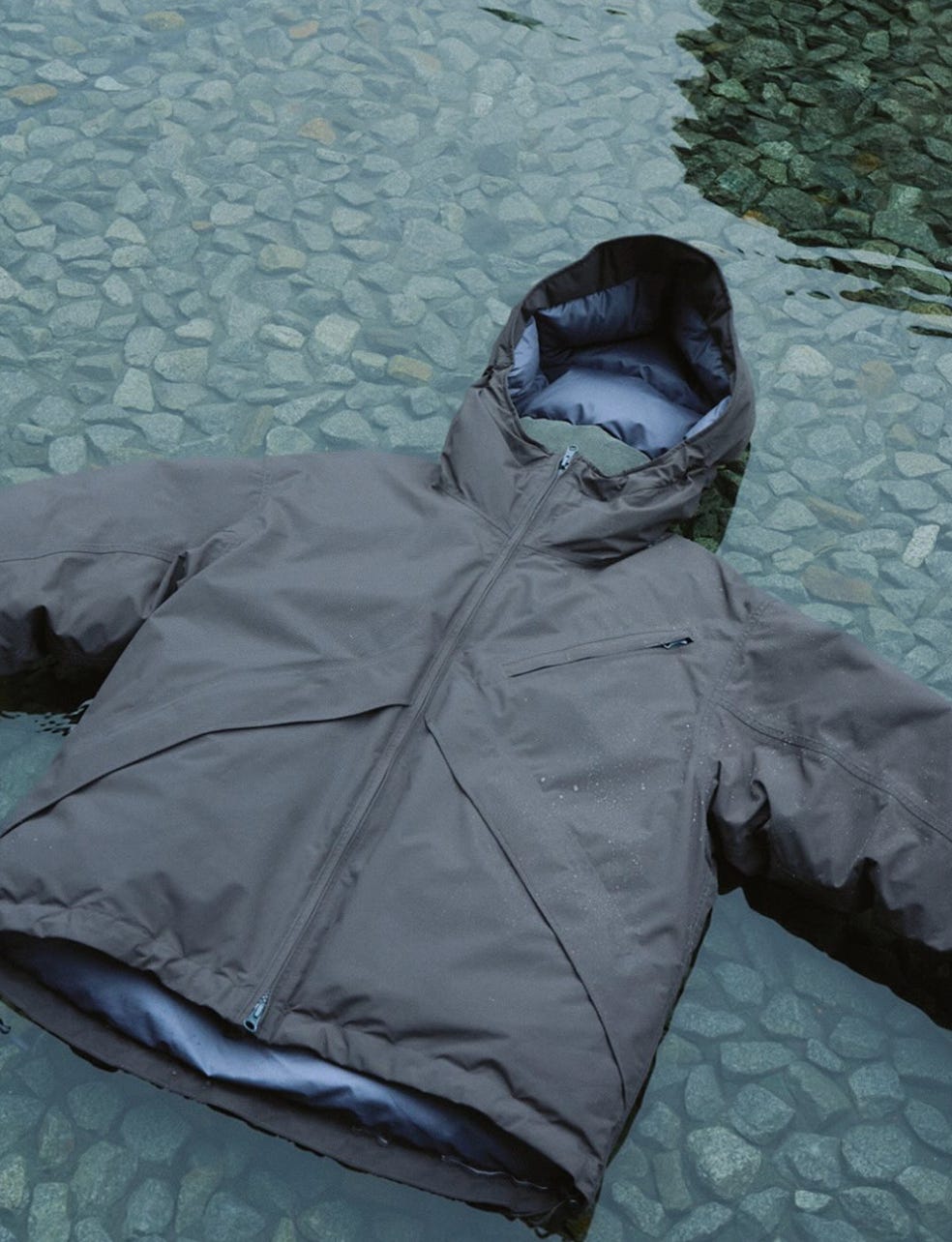
As creative director of The North Face Purple Label, how do you explain the difference between Purple Label and The North Face in the U.S. market?
The North Face in the U.S. is a brand built around the pursuit of ultimate functionality for outdoor activities, and from that core, it has expanded to cover a broad range of outdoor lifestyle products.
When the brand addresses everyday use, it often does so by detuning the performance of its core technical products to better suit daily life.
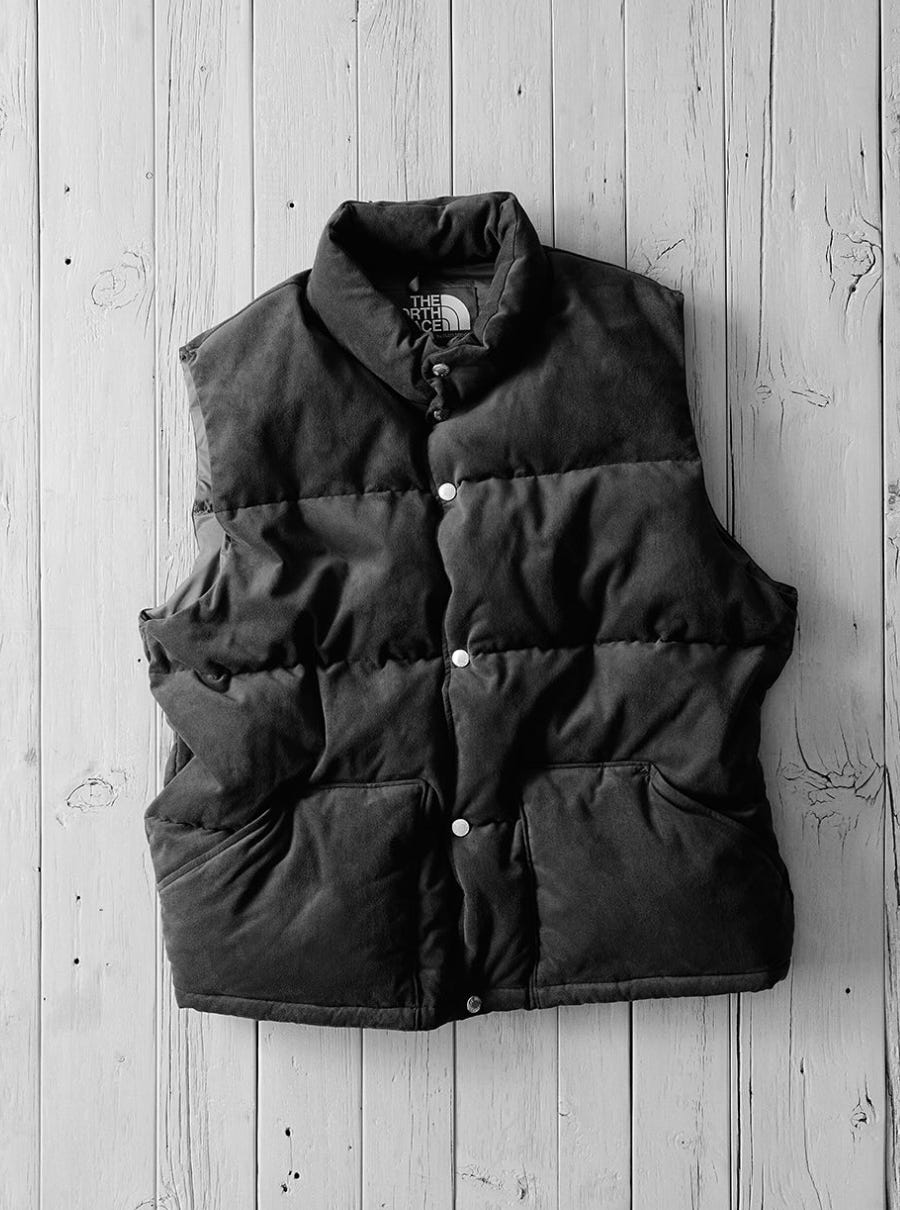
The North Face Purple Label, on the other hand, begins with The North Face’s high level of functionality and its underlying design philosophy, but places equal emphasis on meeting the fashion expectations of everyday wear.
We aim to achieve a higher level of balance between function and style.
Material development, fabric selection, and silhouettes are all designed with a distinctly Japanese sense of aesthetics—subtle, refined, and carefully considered—resulting in products that feel natural in daily life while still retaining strong technical credibility.
Designing collections for both Nanamica and TNF Purple Label, how do you decide which ideas or products belong to each line?
Nanamica is one company with a very clear core philosophy. Our aim is to support people’s daily lives by creating functional yet stylish everyday clothing.
We do this by applying the technical know-how of sportswear—along with military and workwear functionality—to timeless, basic items, and then elevating them with a high level of fashion sensibility.
This fundamental approach is shared by both Nanamica and The North Face Purple Label. The distinction lies in the starting point. TNFPL is a collection in which we express our vision of an outdoor lifestyle through TNF’s technical expertise and design philosophy. In other words, while the underlying values are the same, TNFPL is specifically shaped through the lens of TNF’s functional heritage.
Nanamica has long been known for fabric innovation—from KODENSHI down to ALPHADRY and COOLMAX Cotton. What does that development process look like today, especially with sustainability now front of mind?
We have always approached material development by asking a simple question: how can we create fabrics that are both highly functional and fashion-forward? That mindset remains unchanged.
In recent years, however, growing market expectations around environmental responsibility and sustainability have added an important new dimension. Two years ago, we began a three-year plan to transition all of our materials to more environmentally responsible alternatives, and we are now entering the final year of that process.
Our goal is to complete this transition across all materials within the next year.
At the same time, sustainability does not mean standing still. Alongside this transition, we continue to develop new, compelling materials that bring fresh value to our collections, ensuring that performance, aesthetics, and responsibility evolve together.
Nanamica doesn’t chase trends and has a very clear identity. How do you keep each collection feeling fresh without losing that sense of continuity?
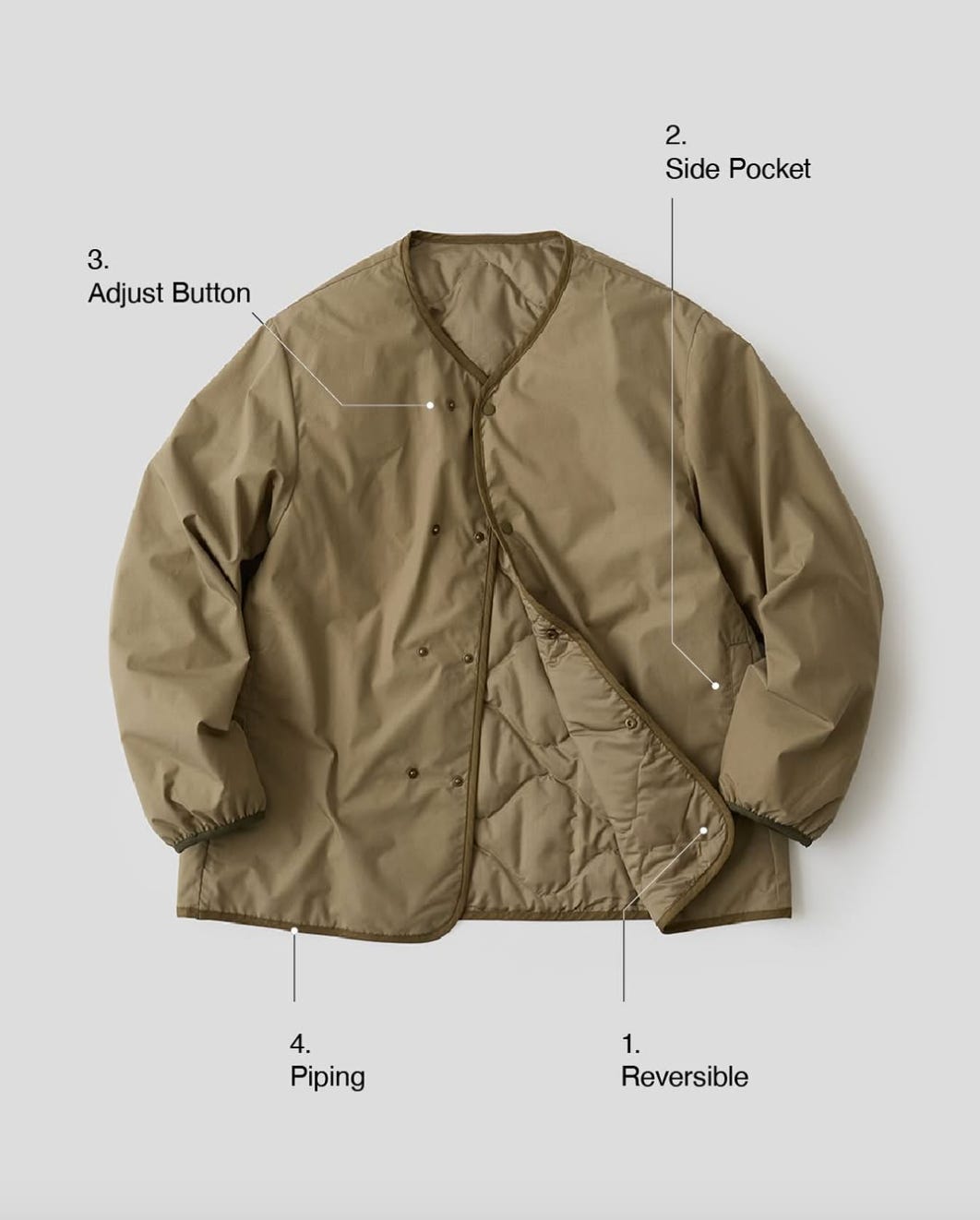
Personally, I’m not someone whose tastes change very much, so expressing continuity comes quite naturally to me. However, in the fashion business, it’s also necessary to respond to the market’s desire for change and offer something new.
For Nanamica, continuity comes from the core values of the brand, and those values never change.
Freshness, on the other hand, is created through evolution rather than trend-chasing—through material innovation, advances in functionality, and subtle changes in shape, proportion, sizing, and color.
These adjustments are never about following extreme trends, but about refining details within the boundaries of what feels true to Nanamica.
I believe it’s this balance—between an unshaken core and quiet, thoughtful change—that allows us to maintain consistency while still offering something new each season.
Having seen nearly everything in the technical outdoor space, what’s a recent product or idea that genuinely impressed or excited you?
Because I work very closely with The North Face, I often have early access to the latest functional materials and advanced sewing technologies—sometimes earlier than people at other brands. That exposure is, of course, stimulating.
At the same time, I find inspiration in much simpler places. When I compare very basic items—like classic white button-down shirts from different brands—I often discover something new.
Subtle differences in pattern-making, stitching, or even button placement can completely change a garment's expression and the way it feels when worn.
Those quiet realizations can be just as exciting as the most advanced technical innovation.
Are there a few standout pieces from the upcoming SS26 collection that you’re particularly excited about?
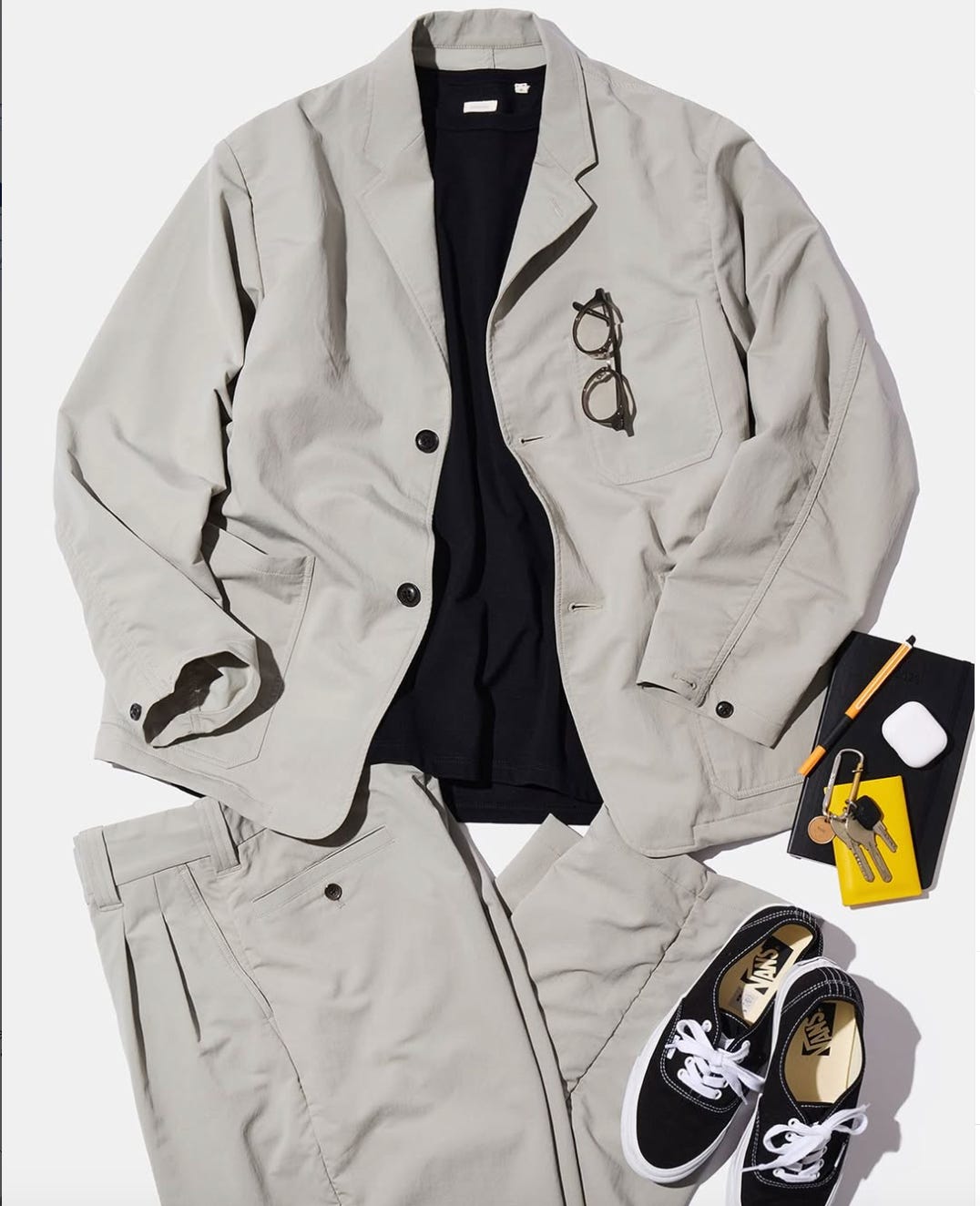
For SS26, there are two looks I’m especially fond of. One is a trucker-style jacket made from vegan leather, paired with silk-nep pants. The other is a deck jacket and pant set-up crafted from polyester twill.
What excites me about the first is the way we were able to reinterpret workwear through rich, tactile materials like vegan leather and silk nep. In the second, we expressed workwear in a more refined direction, using a subtly lustrous fabric that gives it a slightly formal feel.
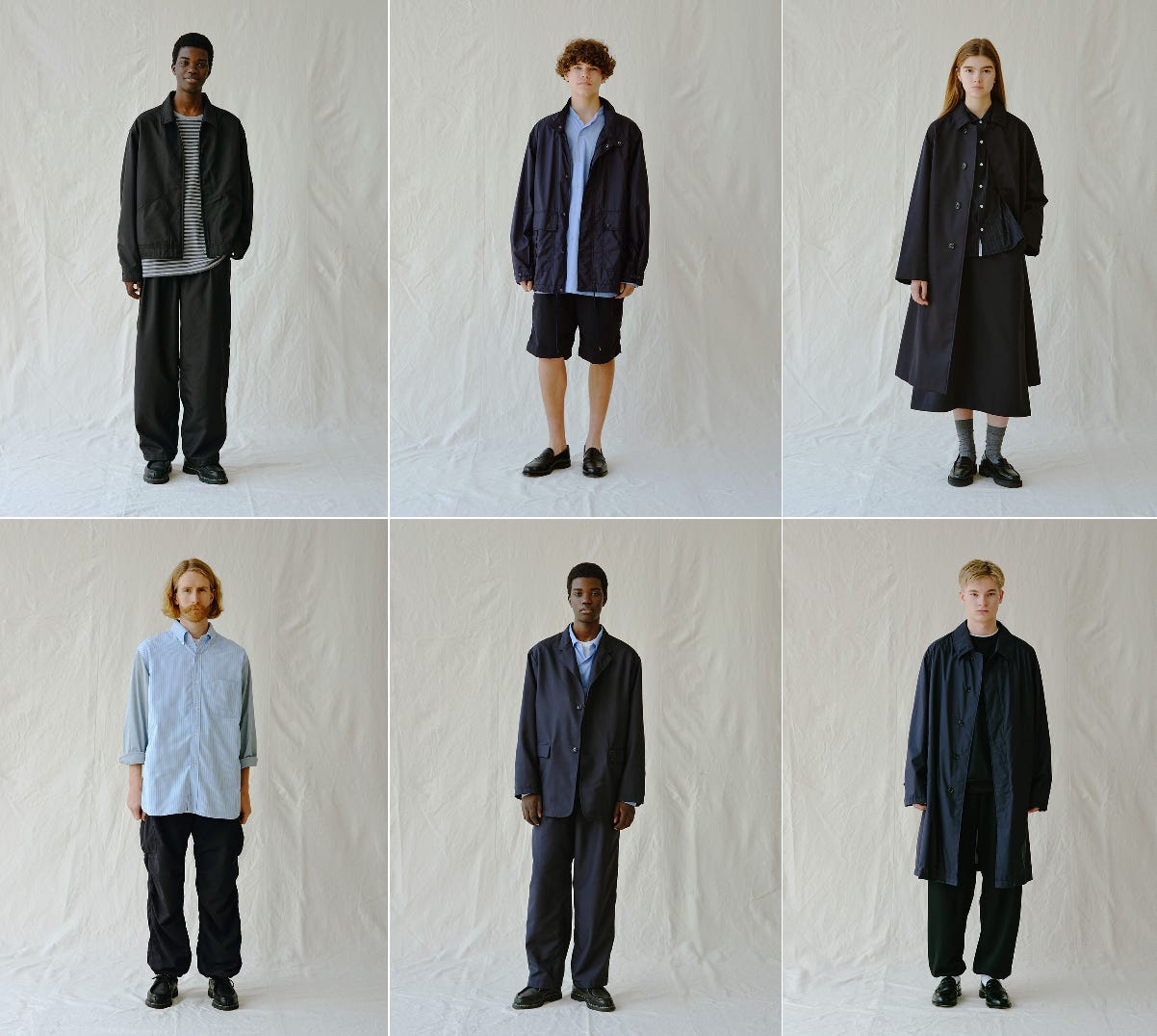
In both cases, it’s the contrast—the mix between the expected image of the material and a somewhat opposing design language—that creates a sense of freshness. And of course, each piece still carries the functional performance that is characteristic of Nanamica.
Incredible insights! and such an amazing brand philosophy