Good taste shouldn’t only be measured by how we dress or what kind of car we drive; it’s something that should permeate throughout our daily lives. I’ve said it before, and I’ll say it again: if you care about the Japanese denim brand that still uses ancient shuttle looms, then you’ll care about where your bag of mud is sourced, as well as what mugs and plates you use. It’s all part of a continuous ecosystem that can unknowingly exist in sync.
Which leads me to Copenhagen-based utensils, drinkware, and tableware company Service Projects. They’re making some of the most interestingly designed everyday objects. Pieces you’d enjoy while sharing a conversation over an age-old family recipe or sipping coffee from one of their American-inspired diner mugs.
I became a fan of the brand after getting a set of their brushed stainless steel coffee mugs and saucers. I’ll line one up with some digestive biscuits or pretzel M&M’s while typing away at night. Founder Philip Seerup says, “We want to design pieces that are durable, functional, and versatile, that can be multifunctional in many ways, but also bring out the best of the material as well.”
The former professional badminton player turned tableware brand founder had friends who were chefs and noticed that they used stainless steel in their professional kitchens every single day. In Scandinavia, however, you would rarely see a material like that in a private home. The contrast sparked an idea for Seerup, and eventually led him to start his own thing.
I spoke with Philip last month about starting the brand stateside before moving it back home, breaking down the differences between the materials the brand uses, why everything they put out needs to be accepted by the hospitality sector, how all the guys at the JJJJound office love the cafeteria mug, and his pseudo “best of” coffee and dinner list for the next time you find yourself in Copenhagen.
Can you tell me a little about what you were doing before starting Service Projects in 2022?
I played professional badminton. I played my entire life, and I played a little bit for Team Denmark, competing on the European tour and trained at the national center.
When I was around 23, I was also studying economics and business administration on the side. In Denmark, athletes get a lot of support, so you’re able to complete your university degree in four years instead of three.
So I took advantage of that and finished my bachelor’s degree. When I was about to graduate, it was basically either: play badminton full-time for the next 10 years and do nothing else, or do something completely different. Then COVID hit, so I had some time to think about it because we couldn’t really travel. I wanted to have a regular job, even just a student job, but I didn’t have any prior work experience, so nobody would hire me.
At that point, I thought, “All right, then I’m going to start my master’s degree.” Because of the support I was receiving as an athlete, I couldn’t just go straight into the program. My girlfriend had moved to New York for work, and I was like, “Can I tag along?” I really didn’t have much else going on, and I also needed some fresh air.
So, we moved there. Then we got settled, and I started figuring out what to do. I’ve always been into cooking. Because I played badminton, I had a lot of spare time when all of my other friends were working or studying, so I was able to cook a lot from an early age.
Then I had some friends who were chefs, and I noticed that they used stainless steel in their professional kitchens every single day. But in Scandinavia, you would never really see stainless steel in a private home.
And I thought, “That’s a little bit strange,” because I cooked often and could see how functional it was. You could put it in the oven; it was easy to clean, and it was really durable.
I also thought it looked quite different from what was popular at the time, when there was so much handmade ceramics. Do you remember that period when everybody was making ceramics and doing that themselves? I was so tired of burning my hands on coffee cups and all of that stuff.
So I thought, “Hmm, I’ll actually just find some products, build a little website, and try to sell stainless steel tableware.”
That was basically the idea. I spent all my time in New York doing the groundwork: finding manufacturers, learning how to build a website, and figuring out all of that stuff.
I started with, I think, 10 SKUs or something like that. They were all white-label products—the same things they used in industrial kitchens—but I sold them to private customers with a little bit of modern branding.
Then we moved back to Copenhagen, and I started the brand there. So that was sort of the beginning.
You started Service Projects while living in New York, and now you’re back in Copenhagen. How has being back home influenced the brand?
I think I took a lot of inspiration from New York. Everything is a lot bigger than it is here in Copenhagen, especially in the States. And then, when we were in New York, everybody was like, “Oh, you know, stuff from Copenhagen or stuff from Denmark is so nice because it’s Scandinavian design,” and all of that. I got a little tired of that.
So I think the approach that I picked up and was inspired by was this international approach, where people don’t really know that we’re from Copenhagen.
I feel like we get that quite a lot, and we also have bigger markets in the UK and the US than we do in Denmark. I think that is something where, when we speak to, let’s say, retailers or restaurants, they don’t know where we’re from. And I really take that as a compliment because we don’t really want to be known as being from Copenhagen.
There will always be great stuff coming out of Denmark and Scandinavian design, but I think the current wave or trend will eventually slow down a bit.
A lot of people settle for pretty generic coffee mugs, utensils, and dinner plates. What did you feel was missing from those objects, and how did you approach making them feel different?
I think you’re right. I don’t feel like there’s too much innovation going on in the industry. To be fair, I think the barrier to entry is quite high. To design these sorts of things and be quite young and start a brand, all of the brands that you see are almost like heritage brands that have been around for so long, and there’s not that much newness coming in there either.
I feel like it could be a little bit more industrial-inspired. All the tableware there, because all the things that you would go to a real retail store to get were kind of cute in some way. And obviously, you can go to IKEA, which is another way of doing it. But if you went through a nice retail store, it was like handmade ceramics, not that functional. I think that was the kind of approach that I had. We want to design pieces that are durable, functional, and versatile, that can be multifunctional in many ways, but also bring out the best of the material as well.
Most of our glassware is stackable, too. Some people don’t really think about that, but it also optimizes storage in many ways. You know, people don’t really design saucers anymore because it’s expensive to manufacture the saucers there, because it’s like half the price, more or less.
And I was like, oh, all right, how can we design a saucer that is more versatile, so you can use it for something else? And I was like, all right, if we do it like this, then we can put olives in it, and when you’re done with the olive, there’s space for the pit in there. Or you can have olive oil, or a little snack, or something like that.
I think that is the design approach that we have in all of the designs that we’re doing. It’s like, you really need to live with the products to learn how to navigate them and to really feel connected to them as well. It’s not something we will tell customers they need to learn; it’s something they need to discover themselves in many ways.
There’s an interesting mix of references in the collection. From canteen-brushed forks inspired by ancient architecture to mugs influenced by American diners. How do you bring those different worlds together so naturally?
I think it’s going back to the international approach. You know, we live in a world where people are well-traveled and well-educated in many ways, and these inspirations are coming from two completely different things.
I love Greek columns. I was like, “This is so sturdy.” And then we were talking about a canteen and how that works in a canteen because it really needs to be doable there. I was like, “It’s like a column,” and I’ve just always loved columns.
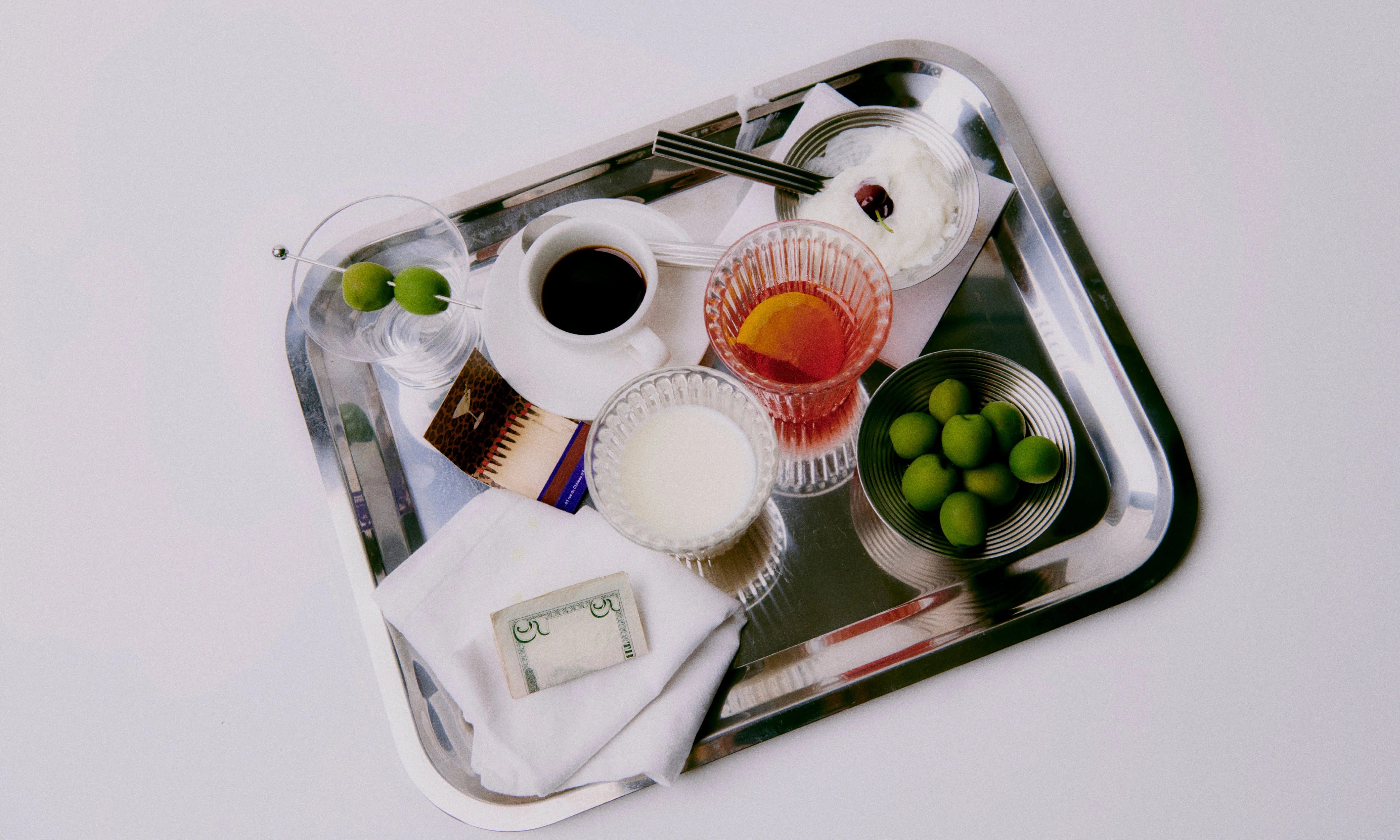
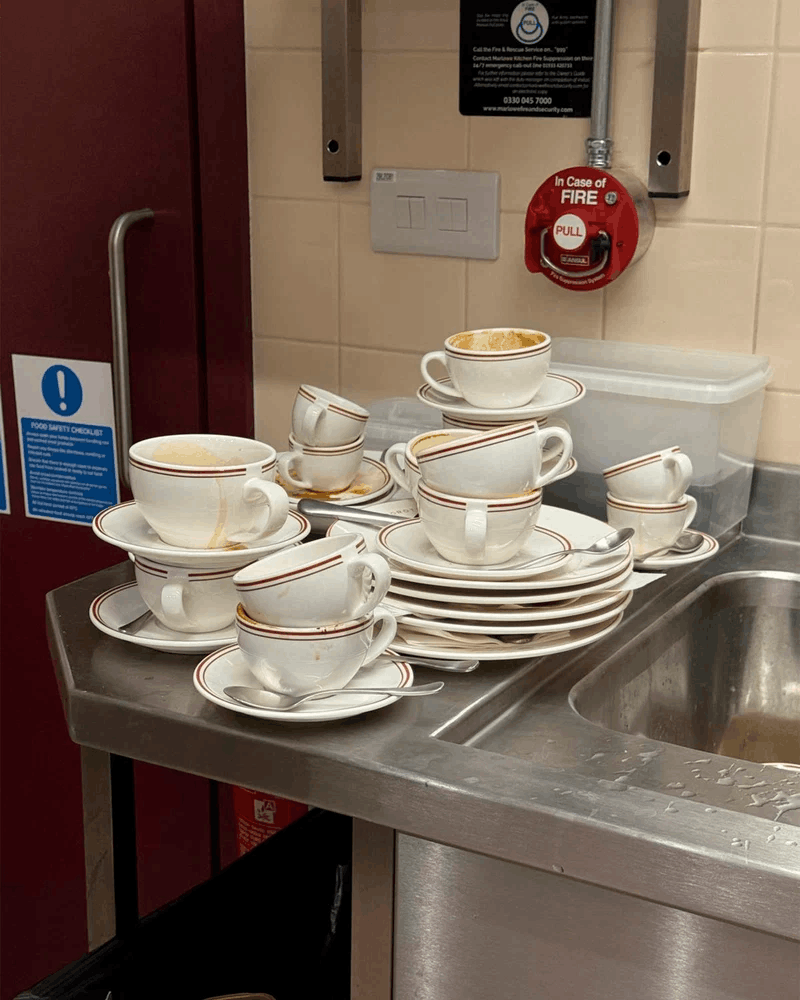
But then again, with the diner inspiration, it’s completely different because that is much more Pantone-oriented. We went to all these diners when we lived in America, and I loved the culture that surrounded them. But I was like, “I see the same green cup everywhere,” and I was like, “That racing-green color is not for me.” I have something else that I’m interested in.
So, it’s two different approaches, but I think they both speak to the sort of service-proper aesthetics, colors, and design language that we really want to have in there.
And then it was also like, the diner needs to be sort of everyday porcelain, easy to use—because it’s not that we want to change anything about that culture. It’s more of a nod to the culture that they have built up over, I don’t know, more than 100 years.
Who are some designers or artists who have influenced the way you think about the brand?
I would say working a lot with Laura Bilde. She has designed several of our products. When we started, we were working with white-label products because I’m not a trained industrial designer. She approached us after a month and showed us a design that had never been released.
Then she came on board and started designing. I think we’ve just been talking so much about the products and working so closely together that now we kind of know what we like and how we want the design language to be. She’s definitely the person who has influenced me the most in terms of design.
I also think being an outsider in the design industry has influenced me. I don’t feel like an outsider, but I haven’t worked in the industry before, so I look at a lot of things and think, “This isn’t functional,” or, “You’ve just designed this to look nice on a shelf.”
What’s the process of sourcing materials like porcelain, stainless steel, and mouth-blown glass? Do you tend to start with a material and see where it takes you, or does the object come first?
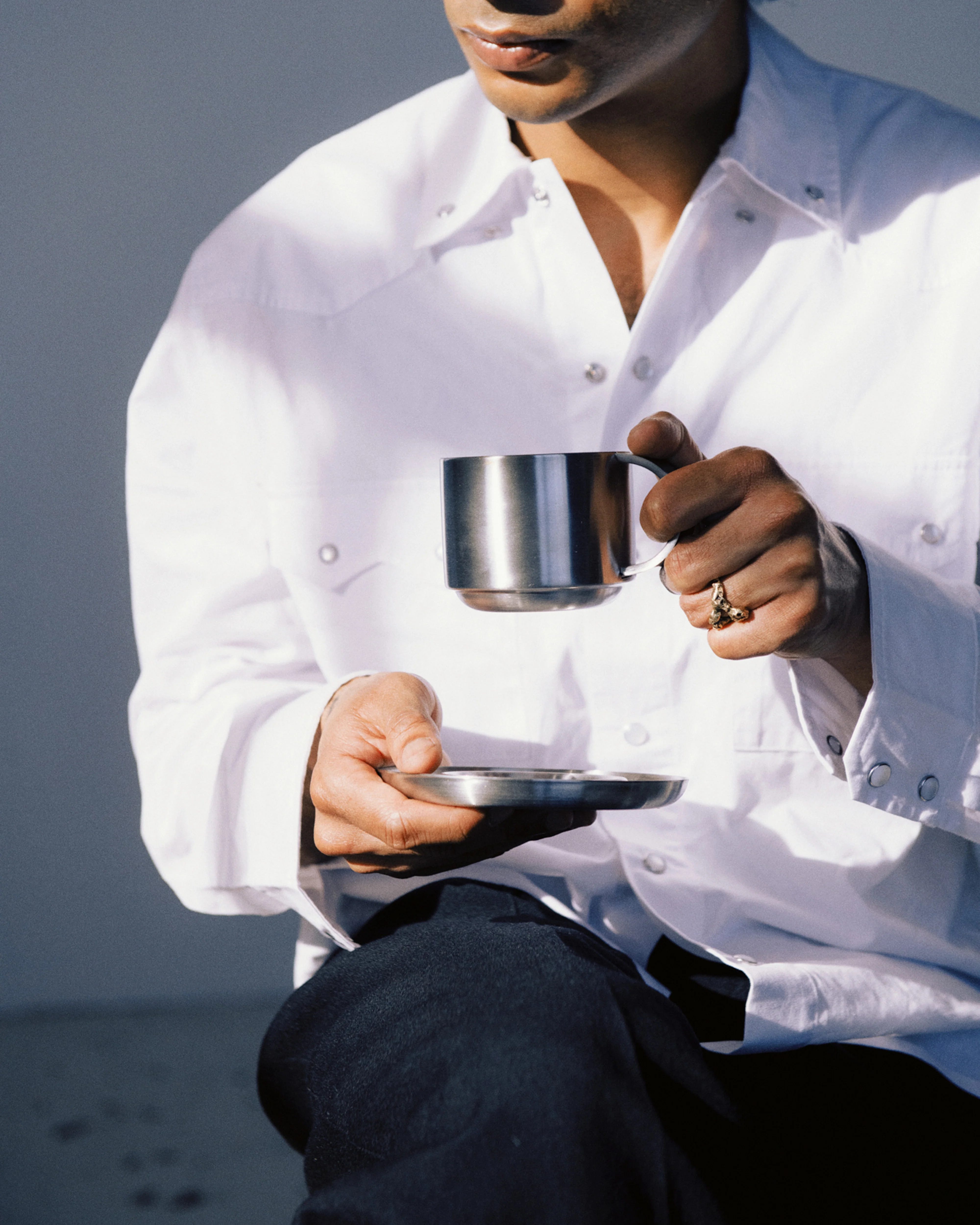
I think certain products call for certain materials. Our core material has been stainless steel, which is what people mostly know us for. But I would say that, in many cases, we don’t really think too much about it. Right now, for example, we’re designing in terracotta, which is something you haven’t seen in a long time. It’s actually quite a nice material. It’s not like porcelain, which is really sturdy, but then again, you can put it in the oven.
So I think it’s different. Whenever we want to design delicate, high-end glassware for personal or home use that is really beautiful, then you need to make it mouth-blown because it’s sort of about the craftsmanship and the details you can achieve. And when we want to make the Canteen Bodega glass, there’s a nice difference there because that is sort of like hospitality glassware because it’s stackable. You can stack 20 of them on top of each other without really thinking about it.
With porcelain, we could also make stoneware, but we don’t want to do that because it’s not suitable for what we’re trying to achieve. Everything we put out needs to be accepted by the hospitality sector, because if it’s good enough for restaurants that are really high-paced, then it’s good enough for private people as well.
You’ve worked with JJJJound and Canyon Coffee, and you’ve also created an exclusive retail corner with Gem Home. What do you look for in a company or brand when deciding to collaborate?
I think it just needs to feel right, or at least that’s the easy answer here. When I was younger and growing up, JJJJound was such a cool brand and image library—just the best of the best. It all came together so naturally. It was like they purchased themselves just for their private homes, and then they just sent me a DM saying, “Oh, we really love what you do.”
I was like, “Let me know if you ever want to do anything.” At that point, we hadn’t done any collaborations when they reached out, because I was like, “There are also a lot of collaborations going on in this world, and we don’t want to put out anything that doesn’t feel right.”
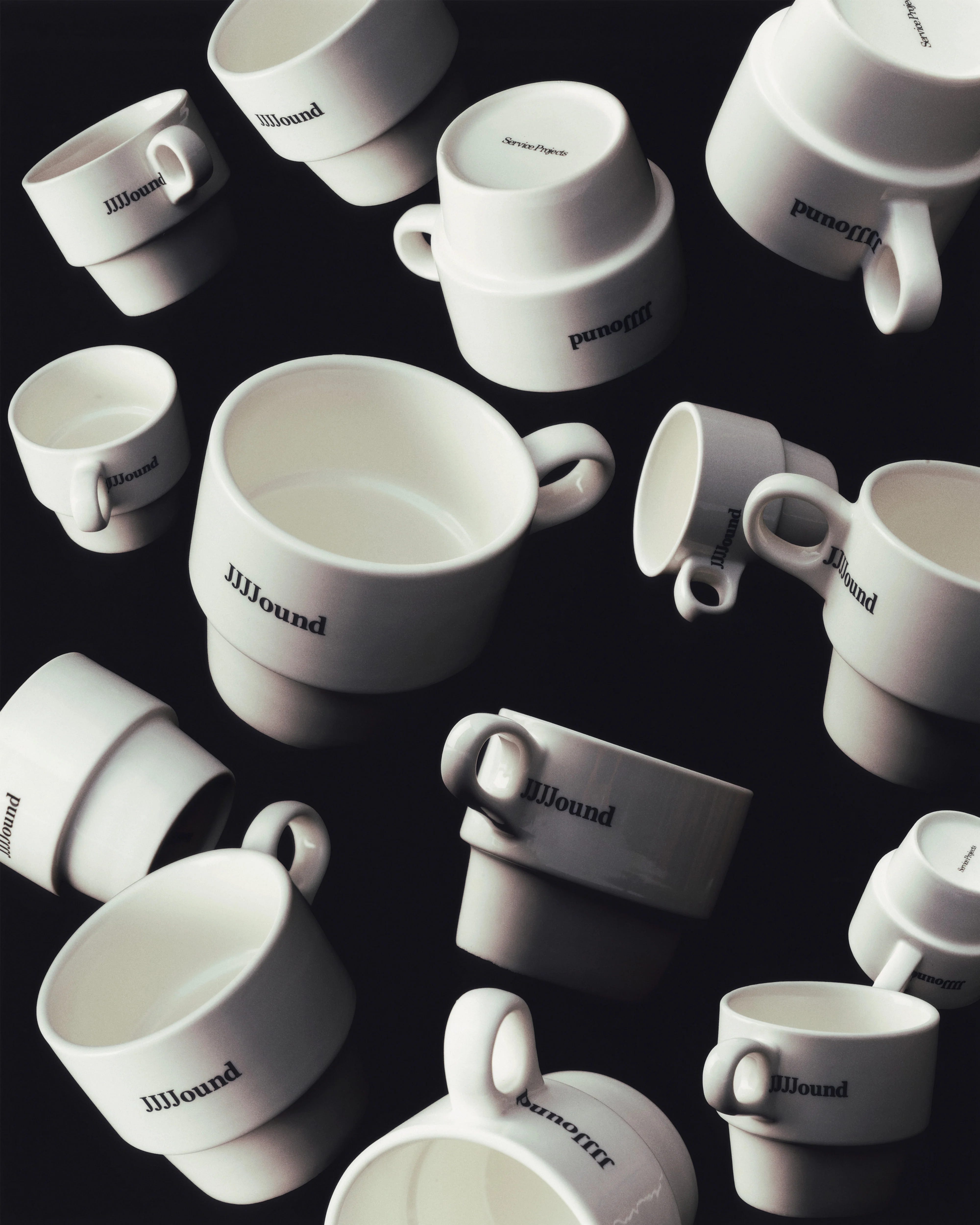
Then we talked together about what could come out of it, and we were like, “All right, so we have this cafeteria mug.” Apparently, all of the guys at the office love the cafeteria mug, and I was like, “You know, it’s also so JJJJound-coded in many ways.” They were like, “Let’s just do it.” It’s sort of a nod to this imperfection of mass production—just print the logo at the wrong size, in the wrong placement, and all of that stuff.
Then, in terms of who we collaborate with, I think it’s just the people that we talk to at the office. I think you can tell quickly if it’s something that’s just happening because they have a budget and need to do a collaboration with someone versus if they’re genuinely nice about it and really curious.
I think that’s the most important thing for us.
Do you have any favorite restaurants in Copenhagen at the moment?
Yes, I do. There are a few. I would say there’s Apéro. Just in this city, they do snacks and small servings, and they have an incredible wine list. And then we have this open-faced sandwich tradition here, where we have places like Schönemann as well.
There’s so much good stuff here. I would also say Sakura, which is like an old Japanese-Korean restaurant. It’s really, really close to Apéro, actually. And then Maison is my all-time favorite. It’s like a French bistro. It’s where I go when I don’t know where to go. I go there. It’s just always on point.
In terms of coffee shops, there are so many these days, and they all look like each other. At Hotel Sanders, which I would say is the most international place in all of Copenhagen, they have my favorite cocktail bar called Tata. When you get in there, you have no clue that you’re in Copenhagen. It feels like you’re in New York or London. And then if you go a little more fine dining, I would say akmē is my favorite here in Copenhagen.
And then we also have a neighborhood sort of spot called Martini House, which is this classic American-Italian diner in the area where I live. It’s just in such a random place. It’s not something you really find in Copenhagen.