

When you think of Australia in fashion, you might not be able to rattle off hundreds of brands the way you could with its continental counterparts. Still, there’s a steady buzz from down under.
From heritage heavyweights like Blundstone and R.M. Williams to more seasoned Aussie players like P. Johnson and Song for the Mute. Not a crowded room, but definitely not a quiet one either.
There’s also a Melbourne-based design studio that would like a word: Observe. Founded in 2020 by siblings Massimo and Alessia Acquaro, “When we came together with the idea of designing clothes during COVID, partly because we lived together and just wanted to hang out, it created a strong balance,” Massimo says.
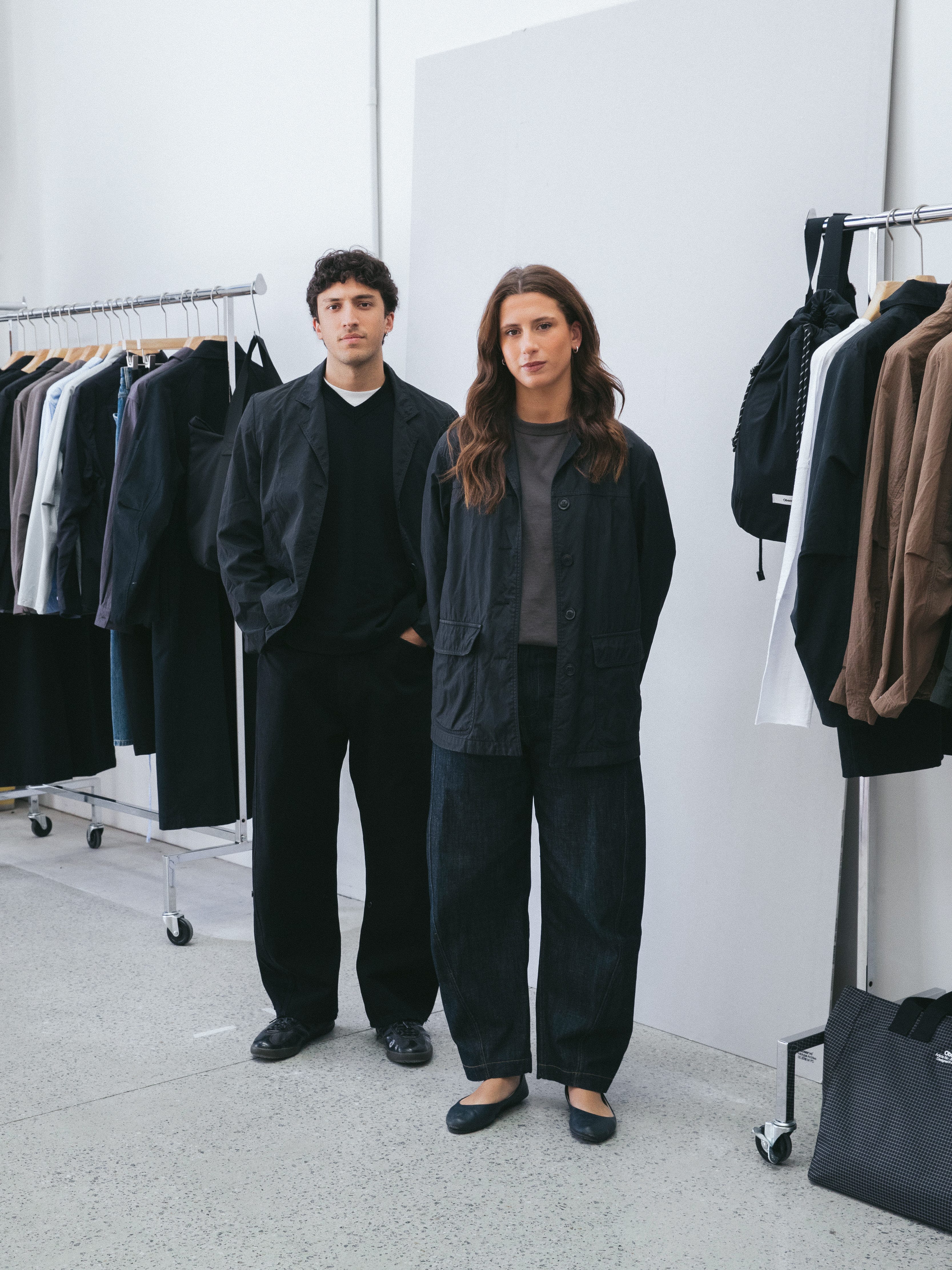
Observe keeps modularity at its core, favoring pared-back designs and silhouettes that actually move with you. Each collection is intentional, with no urge to chase trends just because they’re trending.
The name itself comes from the duo’s university days, where they spent time “observing what people were wearing, who stood out, and, just as importantly, what felt overdone,” Massimo explains.
For a young brand, their cohesion is dialed in. Materials carry across garments, textures that can be lived-in, and pieces from different seasons are interchangeable. They’re also not trying to overwhelm you with a flood of SKUs. As Massimo puts it, “I think there’s a smart way to grow where not everything has to be a hit classic—you want to spread that across seasons.”
Blending a kind of Scandinavian technical sensibility with their Italian roots, Observe is just getting started, but it already feels like they know exactly where they’re going. We caught up with the co-founder to talk about architecture as a through-line in their designs, how they approach each collection, and, of course, the pieces they’re currently obsessed with.
Tell us a bit about what you were both doing before starting the brand? What kind of experiences shaped how you approached it?
My background is in architecture. Around the time we were starting, I was getting my Bachelor of Architecture at Melbourne Uni, and I’m now completing my master’s, so this is my seventh year.
My sister, meanwhile, was in nursing but decided to switch into digital advertising and marketing, specifically in creative production. She found that it gave her more enjoyment. While she did really like nursing, her personality leans toward social interaction.
She loves expressing herself and helping people, so she brought that energy into creative practice.
I’ve always said she’d make a great producer, especially in film and TV. She naturally knows how to handle a room and coordinate people.
For me, coming from architecture meant bringing more technical skills to the creative process. When we came together to design clothes during COVID, partly because we lived together and just wanted to hang out, it created a strong balance.
I was using CAD to approach things more technically, while we both collaborated on creative direction, sharing palettes and ideas.
We were aligned in not wanting to be overly trend-driven. A lot of our inspiration came from university—observing what people were wearing, who stood out, and, just as importantly, what felt overdone.
I’ve always been especially inspired by my friends and the way they each express themselves through clothing. There’s something about that individuality that really stuck with me.
Architects, in particular, tend to dress in a way that stands out subtly—it’s refined, intentional, and usually avoids loud branding or logos. That sensibility definitely influenced how we approached things and how it all started.
With (Massimo’s) your background in architecture, how did that shape or influence your move into fashion?
I’d say it really shapes your taste, especially your personal sense of what feels cool. Going back to friends and peers, you’re often nudged in a certain direction depending on the kind of architecture you’re into, whether that’s brutalist or something more contemporary and minimalist.
Palette plays a big role, too. It feels like a direct extension of architecture when you’re working with materials like steel, glass, and other stark, industrial elements; things tend to skew more subdued.
That carries over into how you dress: blacks, grays, whites—rarely straying far from that base.
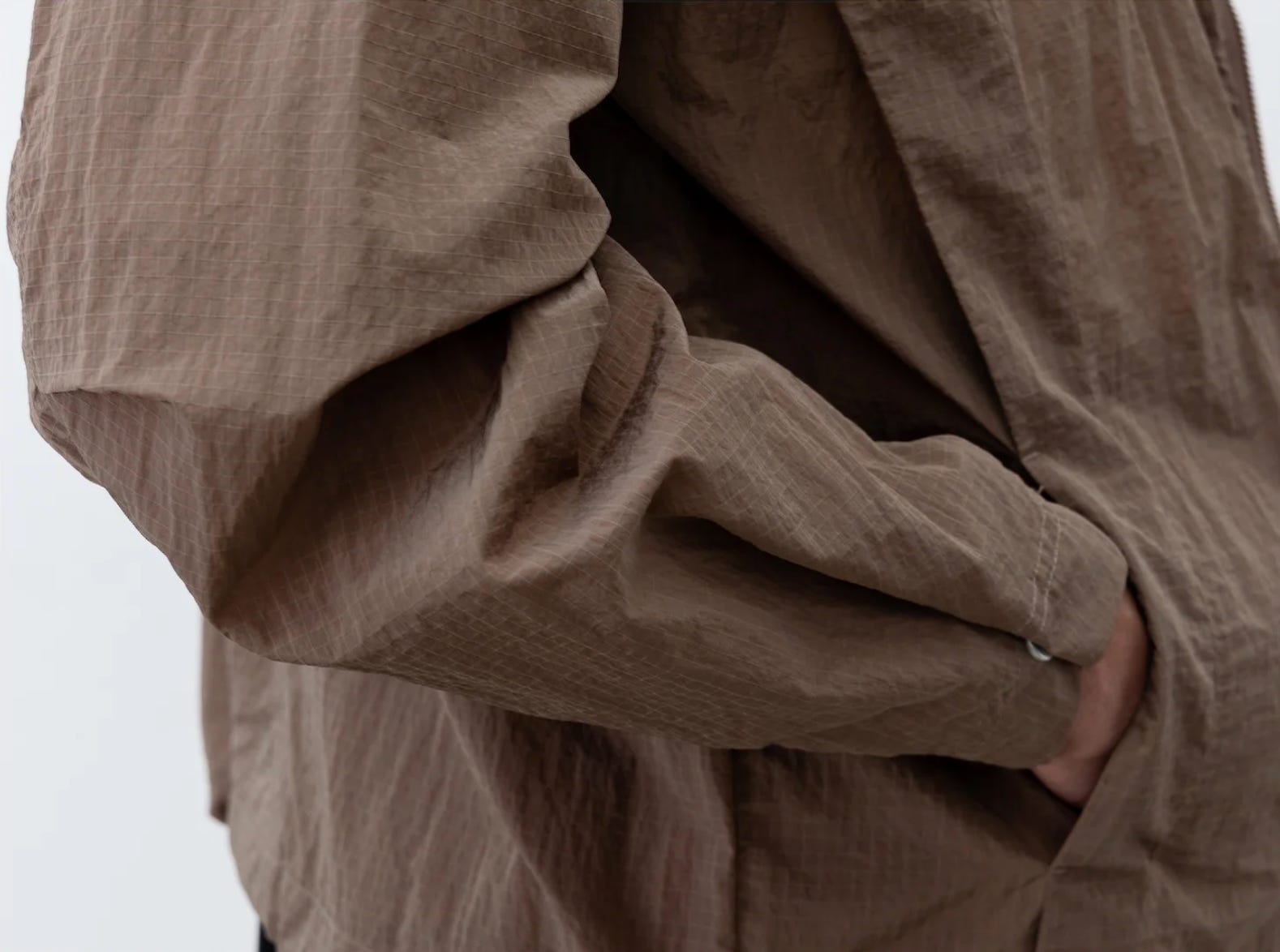
Where it starts to shift is with texture. That’s where fashion opens up a bit more, letting you create variation and develop a broader range within an otherwise restrained palette.
What’s it actually like working together as brother and sister? Does that dynamic make it easier to be honest with each other, or does it come with its own challenges?
I’d say when it comes to working with a sibling, it’s all about brutal honesty.
Sometimes it’s like, “No, no—that looks terrible. Don’t do it again.” And that’s kind of it. But the upside is you get things done so much faster without beating around the bush.
The other thing is you’re constantly around each other, so ideas are always flowing. But you don’t want it to become too toxic (like always talking about Observe, always talking about the brand) because at the end of the day, there’s still a relationship there. You have to respect that the other person needs their own life.
I mean, we travel together… we’re pretty much best friends, and we’re super grateful for each other.
When it comes to collections, how do you approach them?
When we approach a range, we usually start with a theme, whatever we’re feeling at that moment. It might be particular music or movies we’re really into at the time. Since we’ve only been developing and designing collections for about four seasons, that process is still evolving.
One of the main things we do is look back through our archive of older brands and study the details. I always start with outerwear; that’s the foundation for me.
Designers like Massimo Osti are a big influence, so I’ll go through his books and pull out color palettes and technical features.
From there, we build a big mood board. We actually used a lecture theater at uni for this, put everything up on a big screen, all our categories and inspiration images. That’s where it really starts to take shape.
We pull our colors and silhouettes from that setup, write everything down, and then over the next few weeks, we start sketching and coming back with different variations on those silhouettes.
Six years in, what are some of the biggest things you’ve learned so far?
It comes back to staying true to our vision. First and foremost, like I was saying earlier, it’s about staying aligned with the brand and actually believing in it, that’s something we’ve really learned.
There are definitely moments where you feel like you have to sway a bit in order to sell more, or become a certain type of brand just to be “successful.” But going to Paris really reinstated this confidence in us—this belief that who we are will eventually, hopefully (fingers crossed), work.
There’s a lot of confidence in that now.
Within the collections, we’ve also learned a lot about the importance of variation—using the same materials across different garments, creating cohesive pairings, and really focusing on texture. That was a big lesson after our first season.
Looking forward, what does the next five years feel like for you both?
We want to expand the collection, but in a way that feels solid and intentional, not like we’re just adding fluff. We’ve spoken to agents in the past who’ve said, “You need 45 SKUs next season,” and we’re still at around 15.
I think there’s a smart way to grow where not everything has to be a hit classic—you want to spread that across seasons.
That said, we’ve never put anything out that we wouldn’t wear ourselves, and we want to keep that standard as we grow into more stores. We’d love to expand retail, especially across Europe.
We’ll keep being super considerate about where we place the brand. We’re lucky enough to be stocked with Baskèts in Amsterdam this season, and a few great stores in the UK have picked us up as well, like Goodhood.
We’re really appreciative of the retailers who took a chance on us.
A big goal for us now is to transition to working on this full-time once we finish uni—being able to dedicate ourselves to it day in, day out and really build a routine around it.
Up until now, our time’s been split between uni, side jobs, and everything else needed to support the brand.
Last year, I was working at an architecture firm while studying and running this, all while training in athletics.
My sister plays AFL, so she’s balancing training three nights a week—five hours at the club—plus games on weekends, along with studying and working on this. It’s been a lot.
So yeah, one of the main goals is simply to get to a point where we can go all in—working on the brand full-time and giving it everything we’ve got.
Give us a few standout pieces from the SS26 collection.
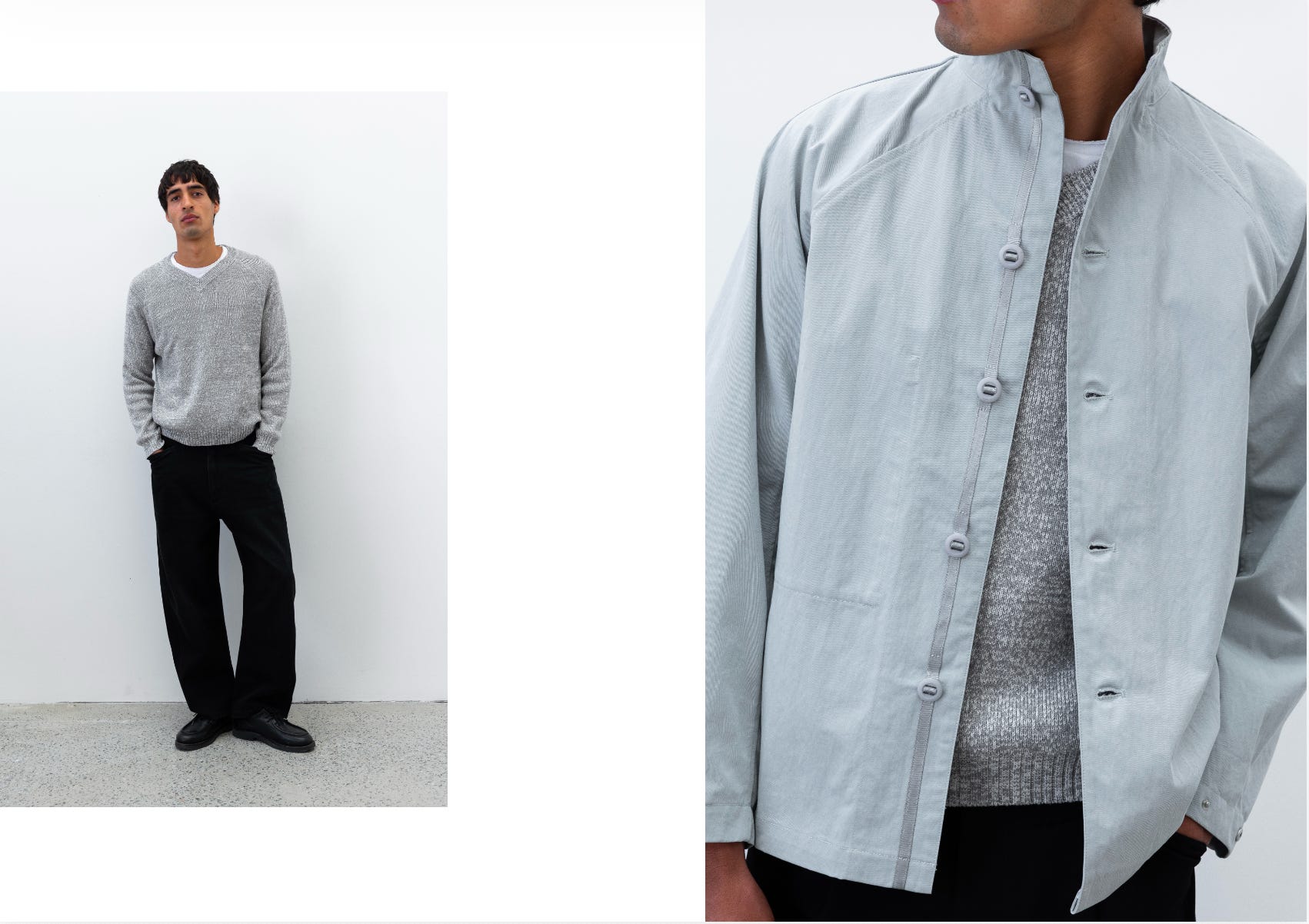
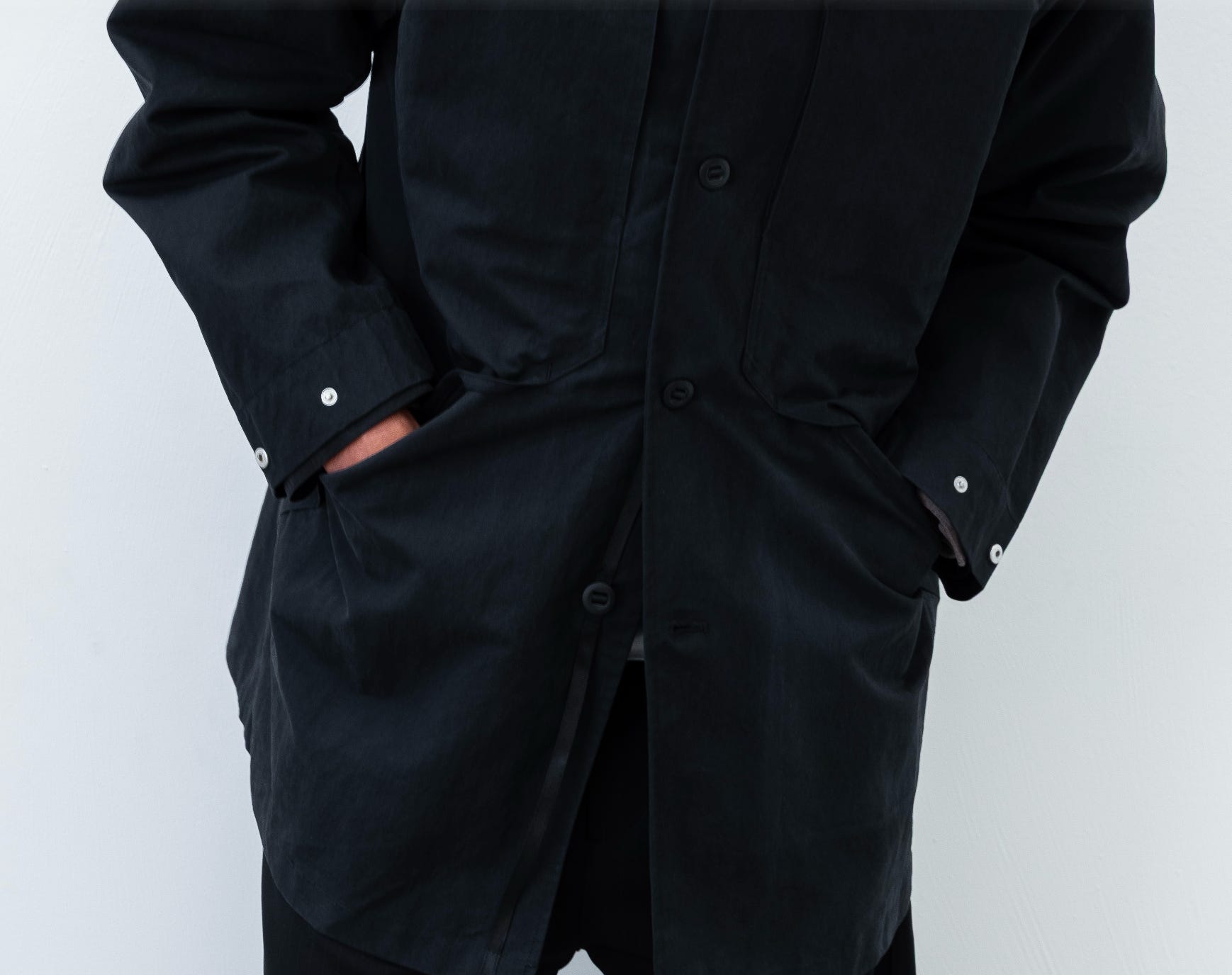
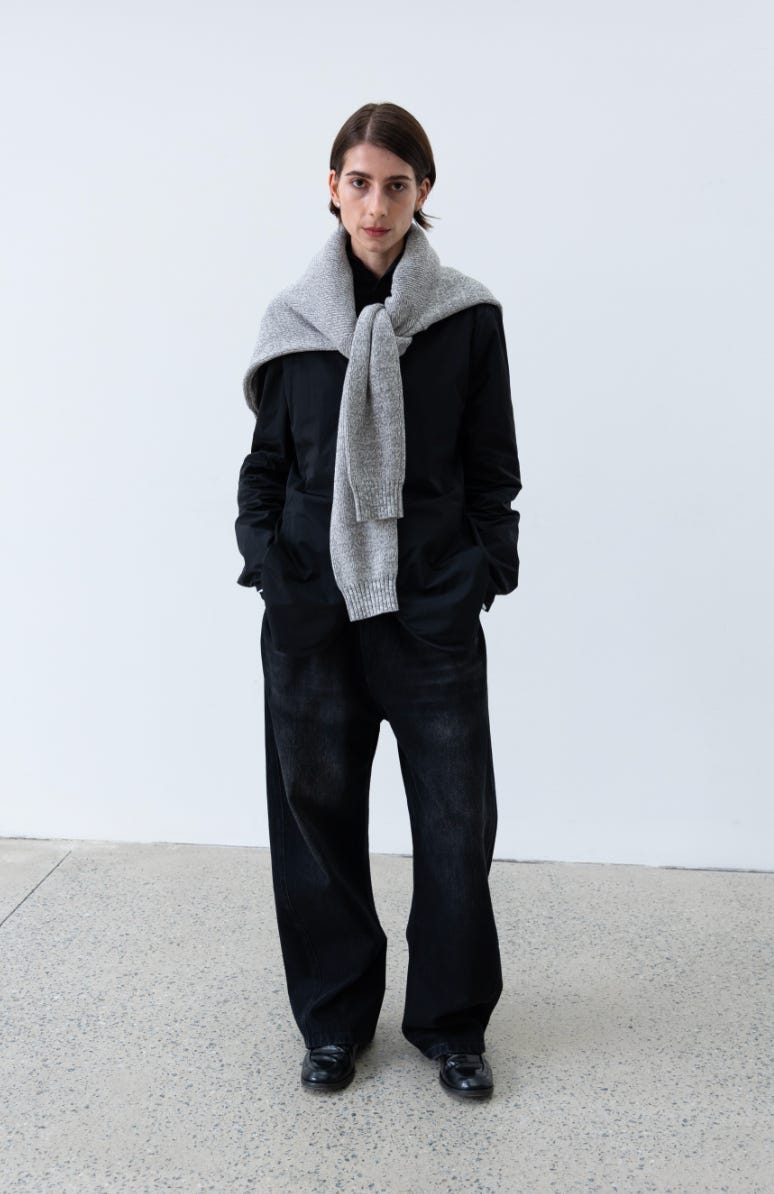
Our favorite piece from that range is probably the vented jacket. It feels like a piece that carries the technicality of an outdoorsy jacket, but reduced and pared back in a way that feels like Observe. It has this minimalist, very clean front, but within that, you’ve got box pleating and what we call vents down the sides—these are pockets that run all the way up, which is where the name comes from.
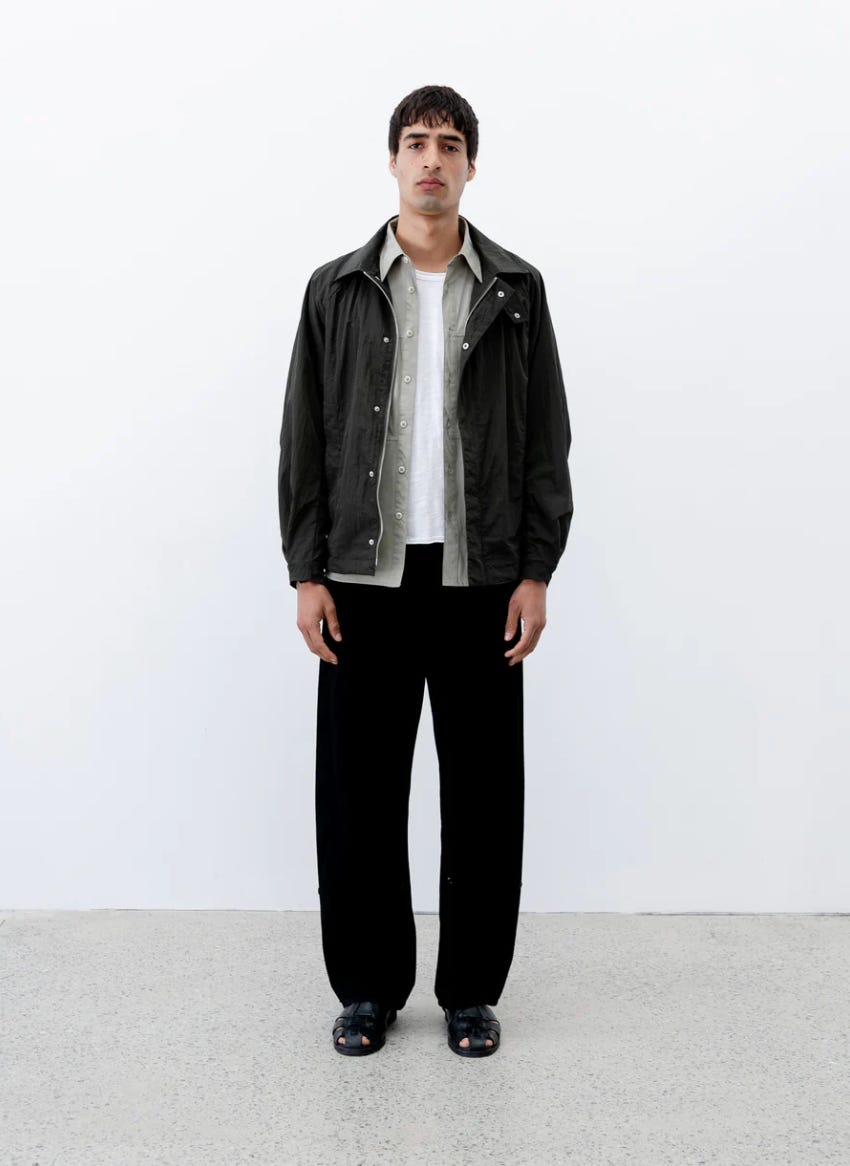
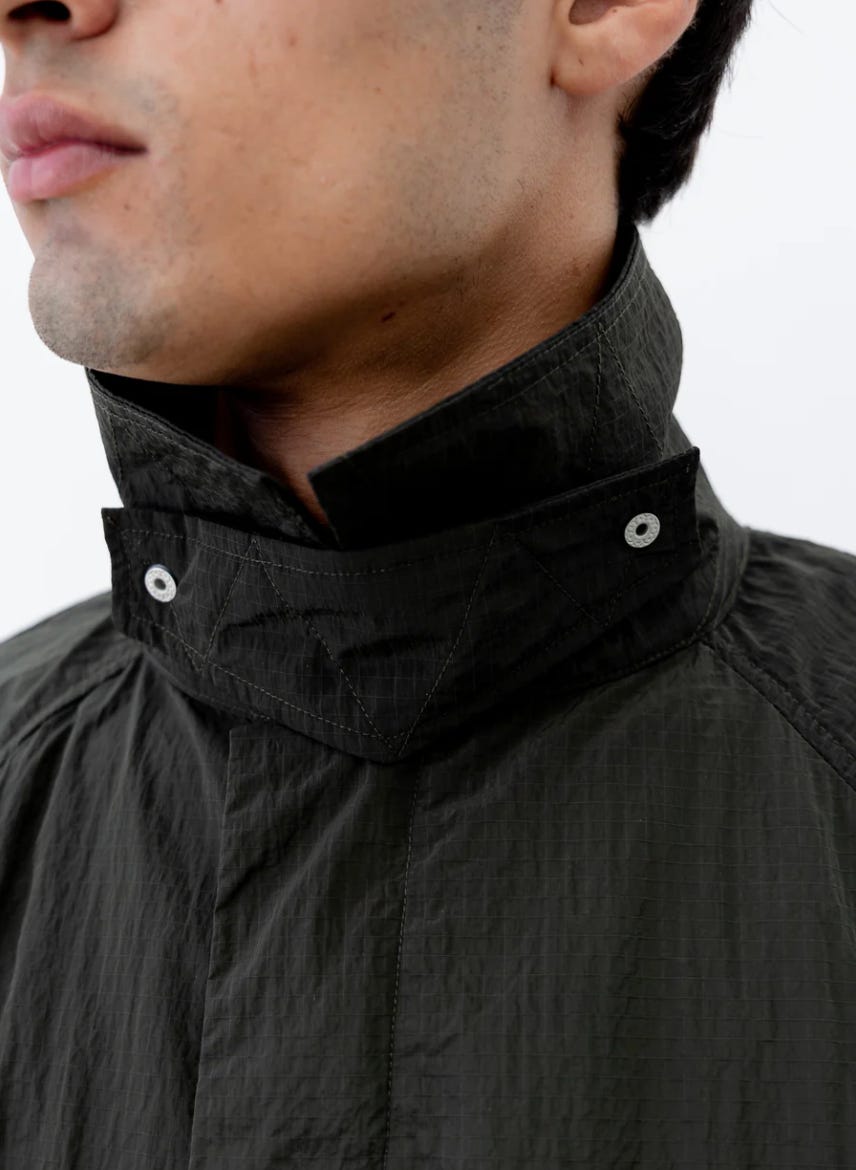
It’s also the first time we’ve done pleating at the wrists with snap buttons, really dialing in the arm detailing.
Overall, it’s a beautiful jacket. And the neck latch adds something special—it’s that outdoorsy, technical piece with a slightly formal twist, giving it a more refined, almost classic look up top.
Another design cue we brought in this season is the Cambia. “Cambia” means “change” in Italian, and we’ve applied it to both a shirt and a pair of denim pants.
Each piece features a Cambia button on the side that lets you adjust the width of the sleeve or the leg.
It’s a simple idea, but really functional. For example, if you want to wear sandals with your jeans without rolling them, or ride a bike in the summer without tucking your pants into your socks, you can just adjust the opening with that button.
It’s a subtle detail, but one we really love and keep coming back to.
Bonus content
We interviewed them during Paris Men’s Week last summer (2025) in case you want to learn a little more about Observe. Watch from second 0:35 onward.

observe so goated, clayton put me on