

When you hear that someone was born in Scotland before moving to, and growing up in, Texas, it’s hard not to imagine the cultural whiplash. That was the case for Everyday Mountaineering founder Scott Ferguson.
His fascination with his dad’s old Scottish climbing gear from the 1970s, combined with a suburban Houston upbringing spent skateboarding and diving deep into climbing and internet climbing forums, laid the foundation for the brand he launched in 2024.
Ferguson’s background is in interdisciplinary art, working across photography, video, sculpture, performance, and installation. With no experience making garments, the first thing he attempted was a down jacket, “which was far too complicated,” he says.
But he approached clothing design as a series of problems to solve, and that mindset still defines the brand today.
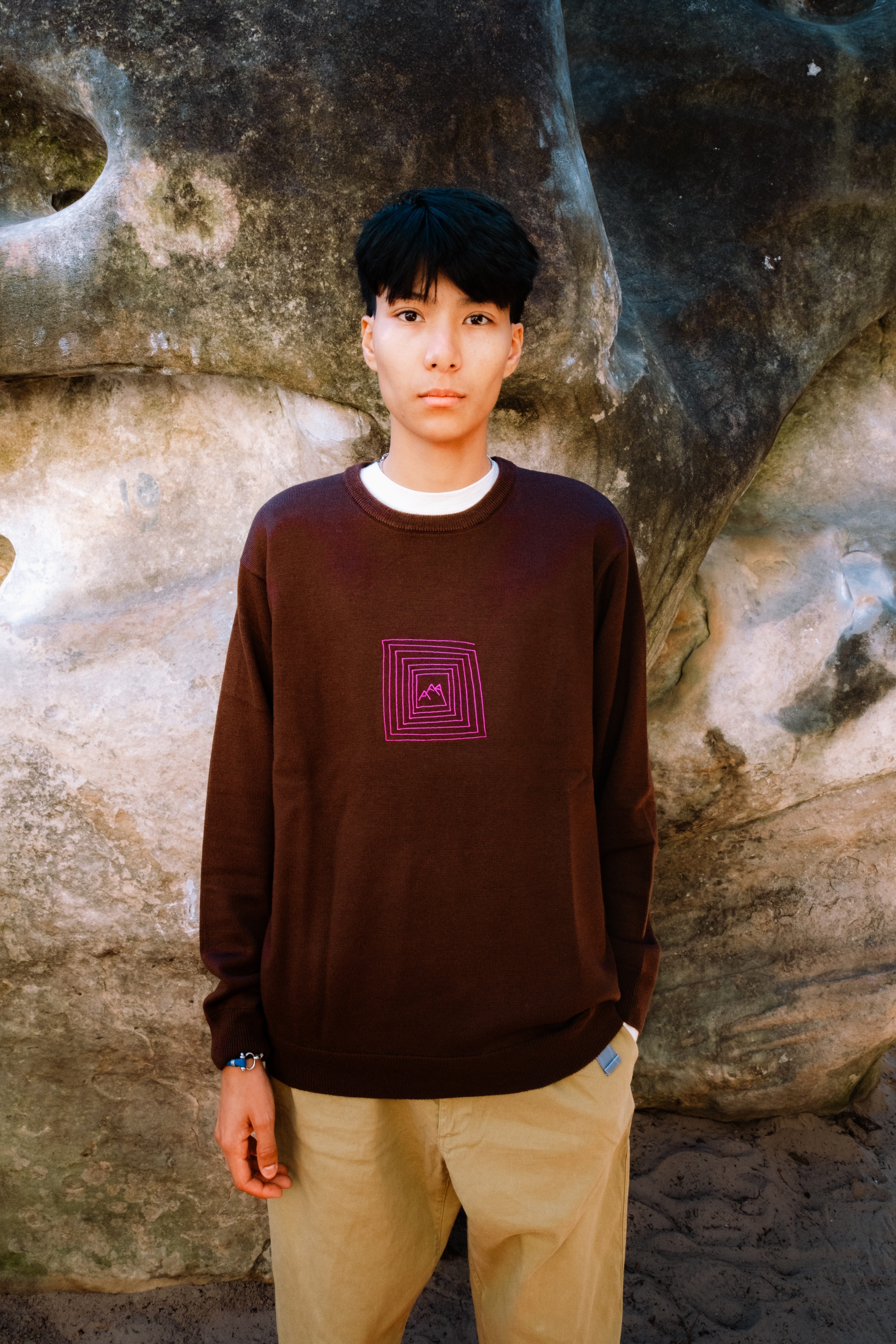
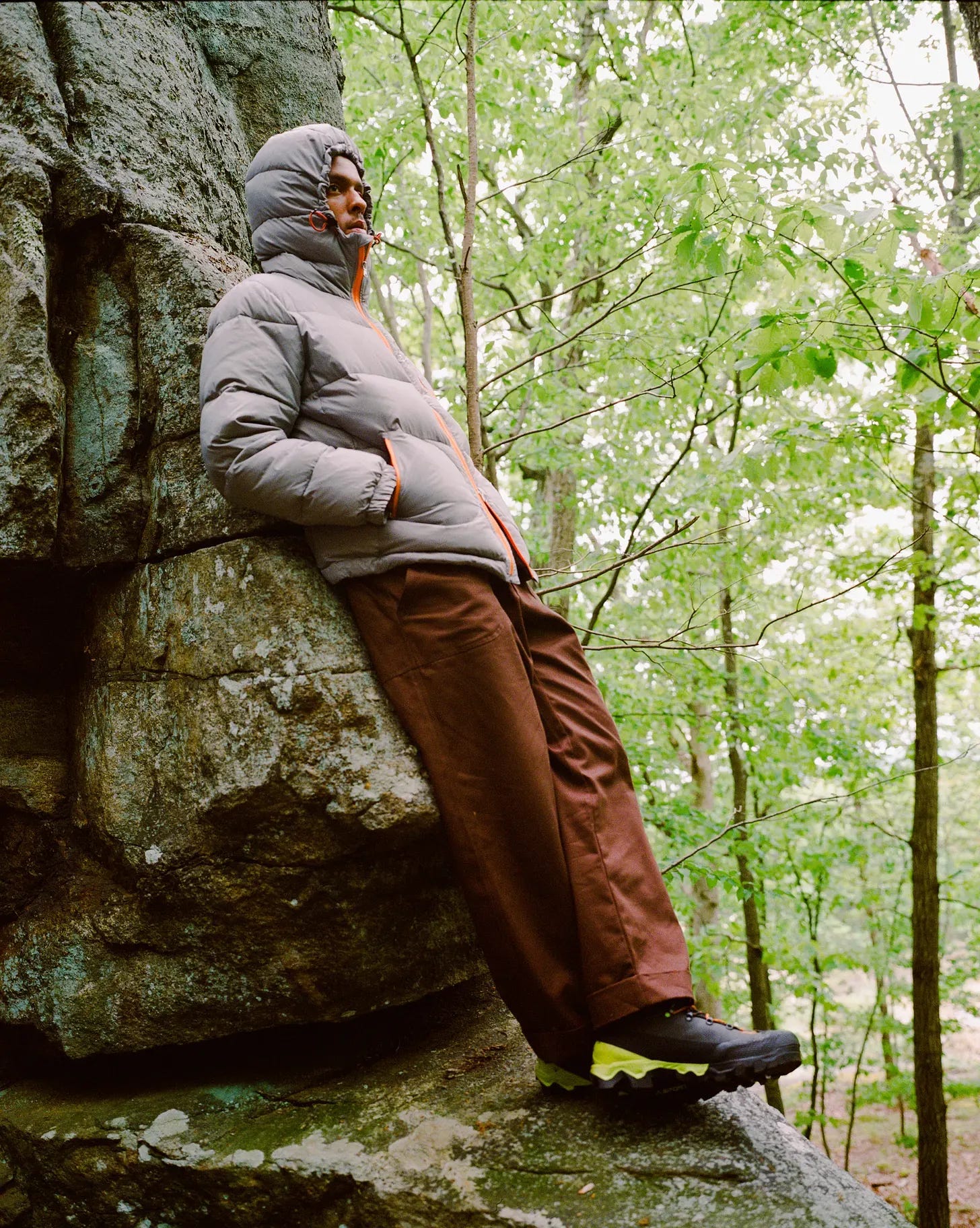
You can see it in the Trossach trousers, with their integrated belt and zippered stash pocket, or the Hemp-Tech hoodie, designed to help regulate body temperature and keep you comfortable in changing conditions.
With his burgeoning brand, Ferguson creates outdoor-inspired clothing for creative-minded people. It’s refreshing to see a climbing brand that doesn’t make you feel like you need to summit a 3,000-foot peak to wear its clothes.
As Ferguson puts it, “I don’t know if I’m making clothing for the most diehard climbers, but I think that’s okay.”
I spoke with Ferguson about the parallels between art and clothing, his dad knowing the inventor of the Terrordactyl ice tool, the fabrics he’s currently geeking out over, and why climbing’s growing popularity isn’t a bad thing.
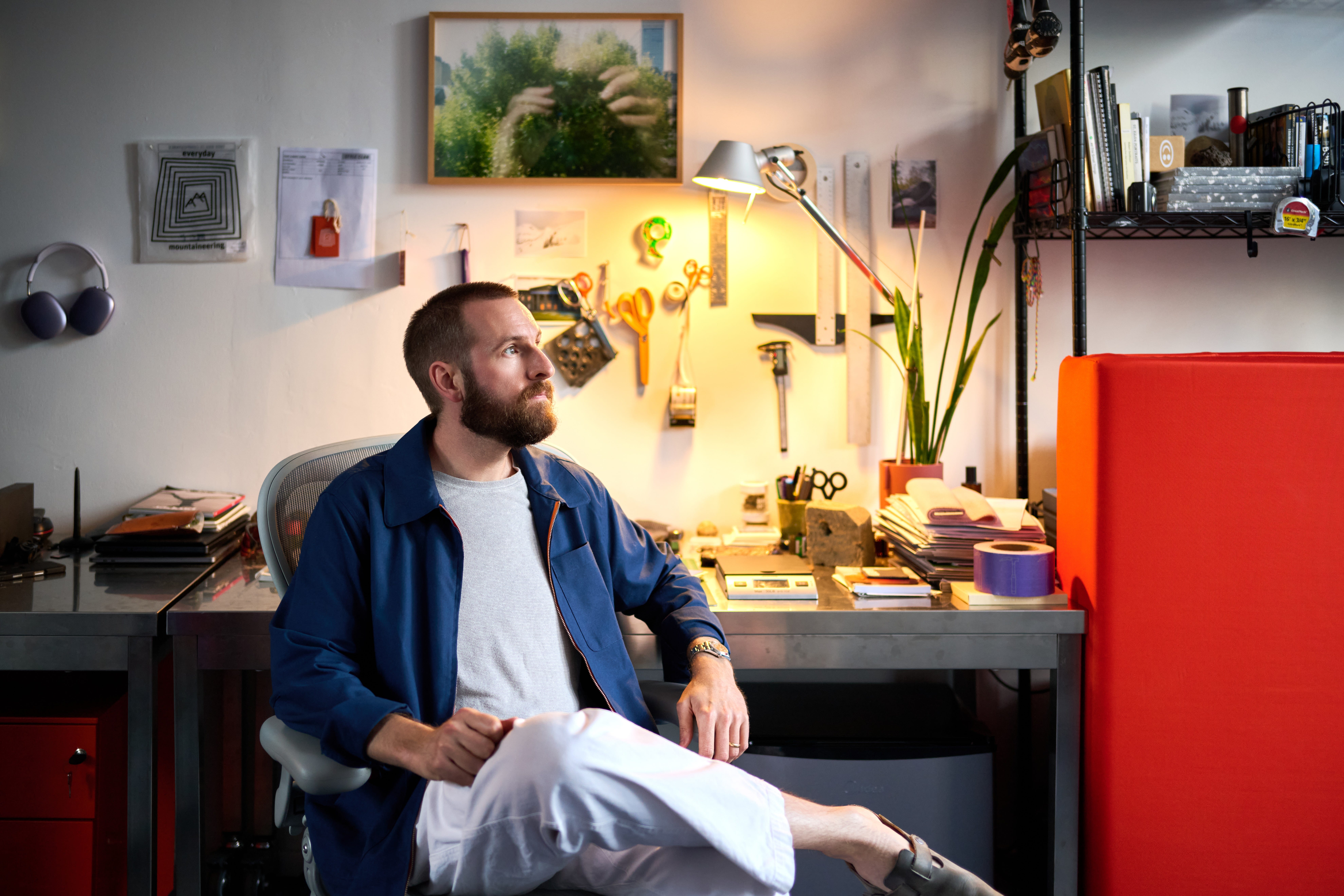
You were born in Scotland but grew up in Texas. What was that experience like, and how did those two very different places shape your relationship with the outdoors?
I think it was an interesting one. I actually got my dad climbing again not that long ago, but he and his brothers all grew up really into climbing and mountaineering in Scotland in the '70s. So I grew up hearing stories about that.
My dad got me climbing from a pretty young age. He wanted it to be something I liked, and it did catch on. What was interesting, though, was then moving to a suburb of Houston. It's not exactly the mecca of climbing—it's flat and insanely hot.
But I think, in a funny way, it made my obsession with climbing and the outdoors even deeper. I got really obsessed with climbing. Mountain Project is the main website now, but back then it was rockclimbing.com. That was the climbing forum where you found different climbing areas and connected with other climbers.
I got really into climbing at the gym while researching climbing from afar. I climbed as much as I could indoors, then got outside as much as possible on school breaks and weekends.
Texas actually has some amazing climbing. It's just that Houston has never really been the center of it. Austin has great climbing, and West Texas is amazing.
I think that passion naturally carried over into clothing. At the same time, I was also really into skateboarding.
Skateboarding has such a direct connection to clothing, and I think I became interested in that through climbing too, especially wearing brands like Patagonia, Gramicci, and Prana, and even wearing approach shoes to school.
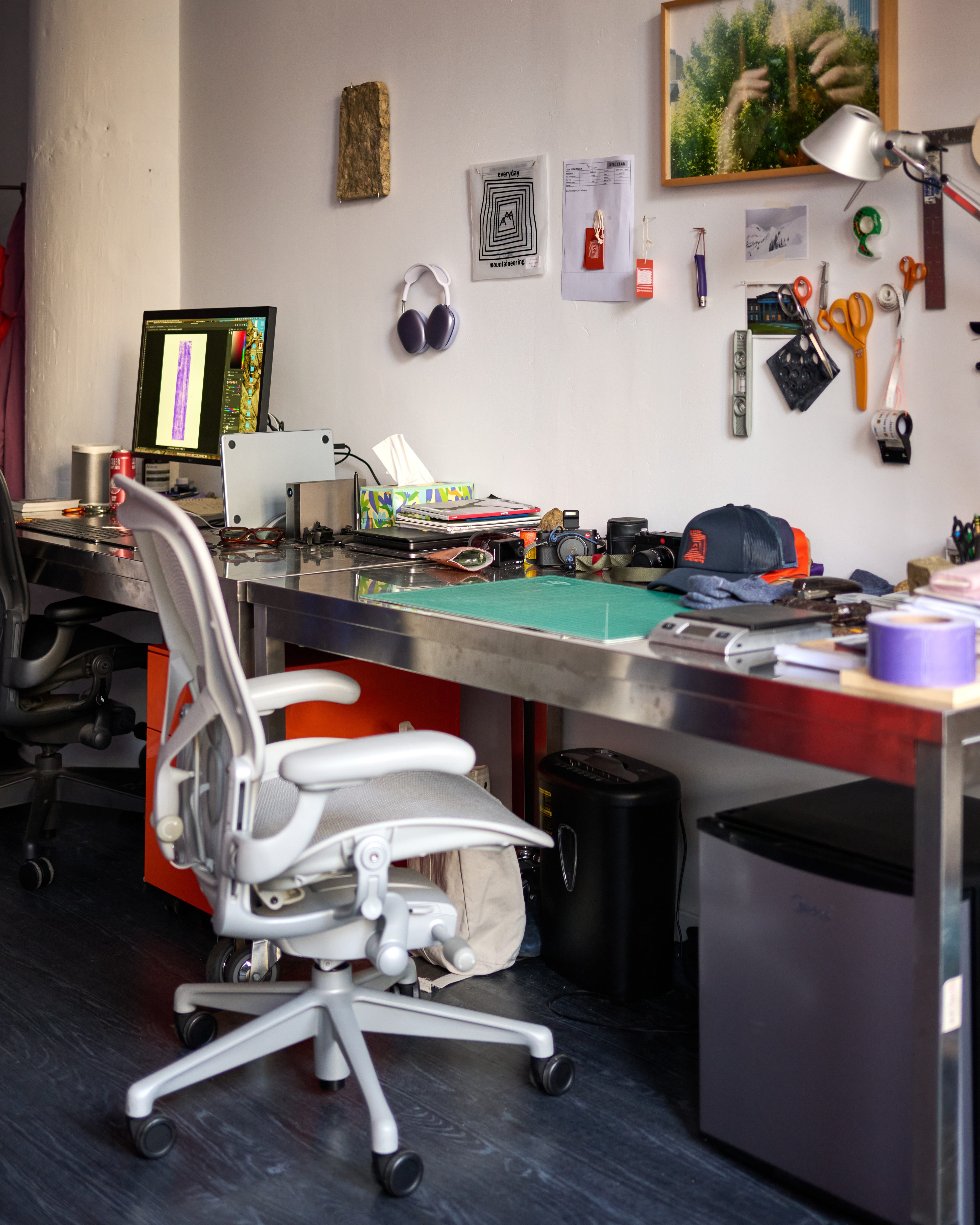
You're into bouldering, snowboarding, and hiking. Are there any mountain ranges or places you find yourself returning to for inspiration?
Before living in New York, I spent quite a while in Colorado, and that’s where my family lives now. I’d say the Rockies, and Colorado more broadly, have been incredibly important to me. I’m back there quite often, and my family lives in Vail, so that area, in particular, has a special significance.
I also think a lot about Boulder, where I went to college, especially when I think about designing some of my climbing pants. Boulder is such an amazing town because you can be sitting downtown having a coffee, and then, 20 or 30 minutes later, be out climbing somewhere.
Before launching the brand in 2024, you were working as an artist. What kind of work were you doing, and how did that creative background eventually lead to starting the brand?
So with art, I’d describe myself more broadly as a multimedia or interdisciplinary artist. I worked extensively in photography, video, sculpture, performance, and installation, and I was also involved in more experimental music and related projects.
Conceptually, I was always interested in shifting perspective or focusing in on everyday objects and occurrences to create bigger worlds within them, whether through photography or by building installations and immersive experiences.
When I decided to dive into making and designing my own clothes, I brought that same mindset with me. I’m still very interested in the way clothing can alter your experience and shift your perspective.
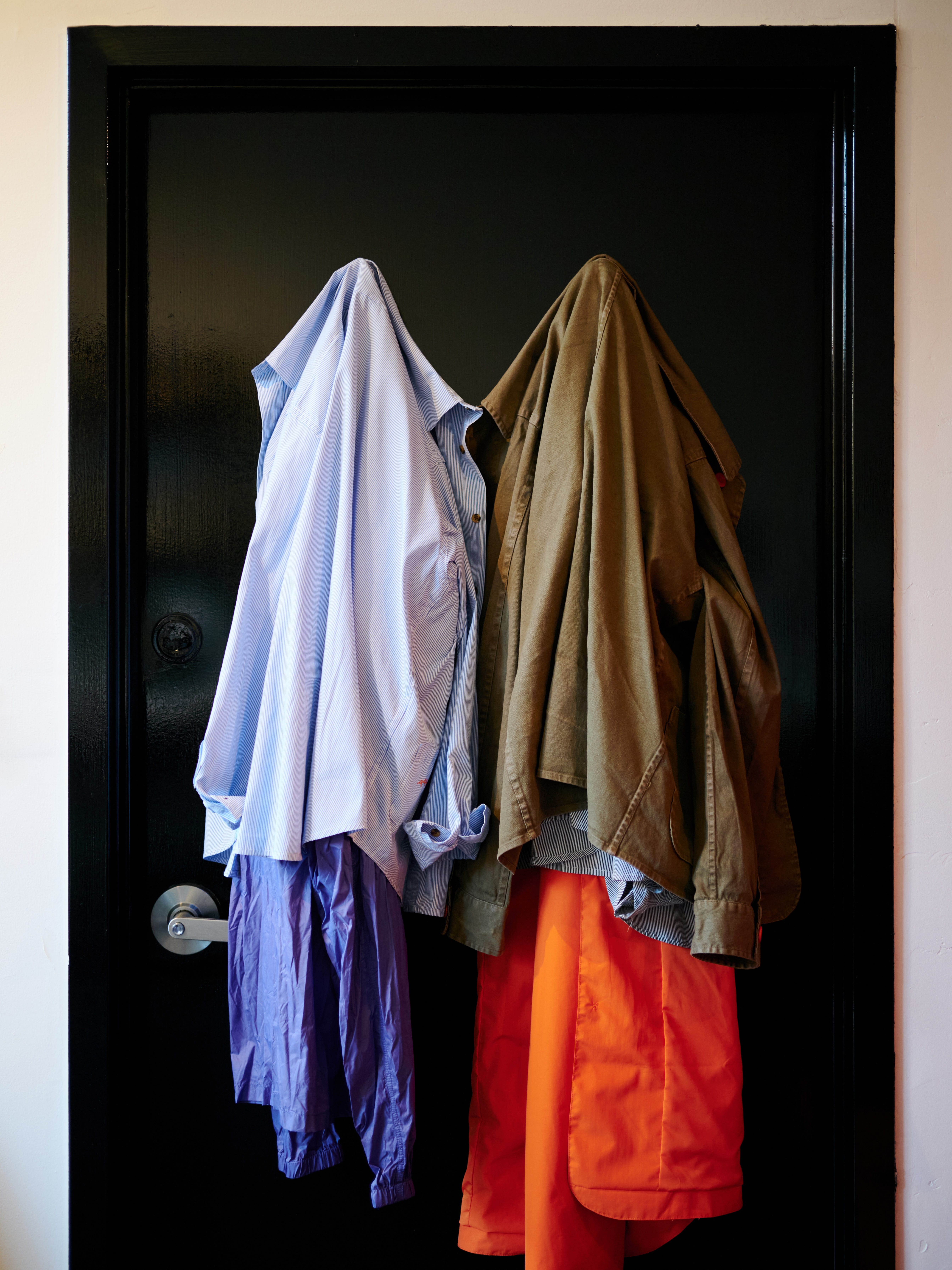
Could you kind of think about like any parallels between like the two mediums of like making art and then making clothes?
I think they overlap a lot. Specifically, when I started making and designing clothes, I didn’t have any background in the garment world. I went into it very green—I didn’t really know how it worked.
My background in art definitely shaped my approach. In my art practice, my medium would jump around depending on the project. It wasn’t so much, “I’m a painter, so I make paintings.”
I had taught myself a lot of different skills before, whether it was working with materials for sculpture or learning new video editing software. So when I started designing clothes, I approached it in a similar way. I thought, “This is a project.”
The first thing I tried to make was a down jacket, which was far too complicated. But I approached it as a problem-solving exercise, and that mindset carried over from my art practice.
Where art and clothing start to differ is that, with art, you have a decent amount of control. If you’re putting on a show, you can decide, “I want this piece on this wall, with this lighting, and people will experience it from this angle.”
With clothing, it’s quite different. You’re making something and putting it out into the world, where people incorporate it into their own lives. You can have a million ideas in your head about what the piece means or how it should be experienced, but someone else ultimately takes it in on their own terms. I think that’s really cool.
I've read that your dad's old outdoor gear from Scotland, especially pieces from the '70s, sparked your obsession with products. What was it about those pieces that stuck with you, and how has that influenced the brand?
There was something that really interested me at first about finding a lot of my dad’s gear from the ‘70s. It must have been the early 2000s, and what fascinated me was that—especially at a time when design felt so futuristic—this gear was incredibly low-tech.
Yet here it was, 30-odd years later, and it was still working. I think there was something really compelling about that.
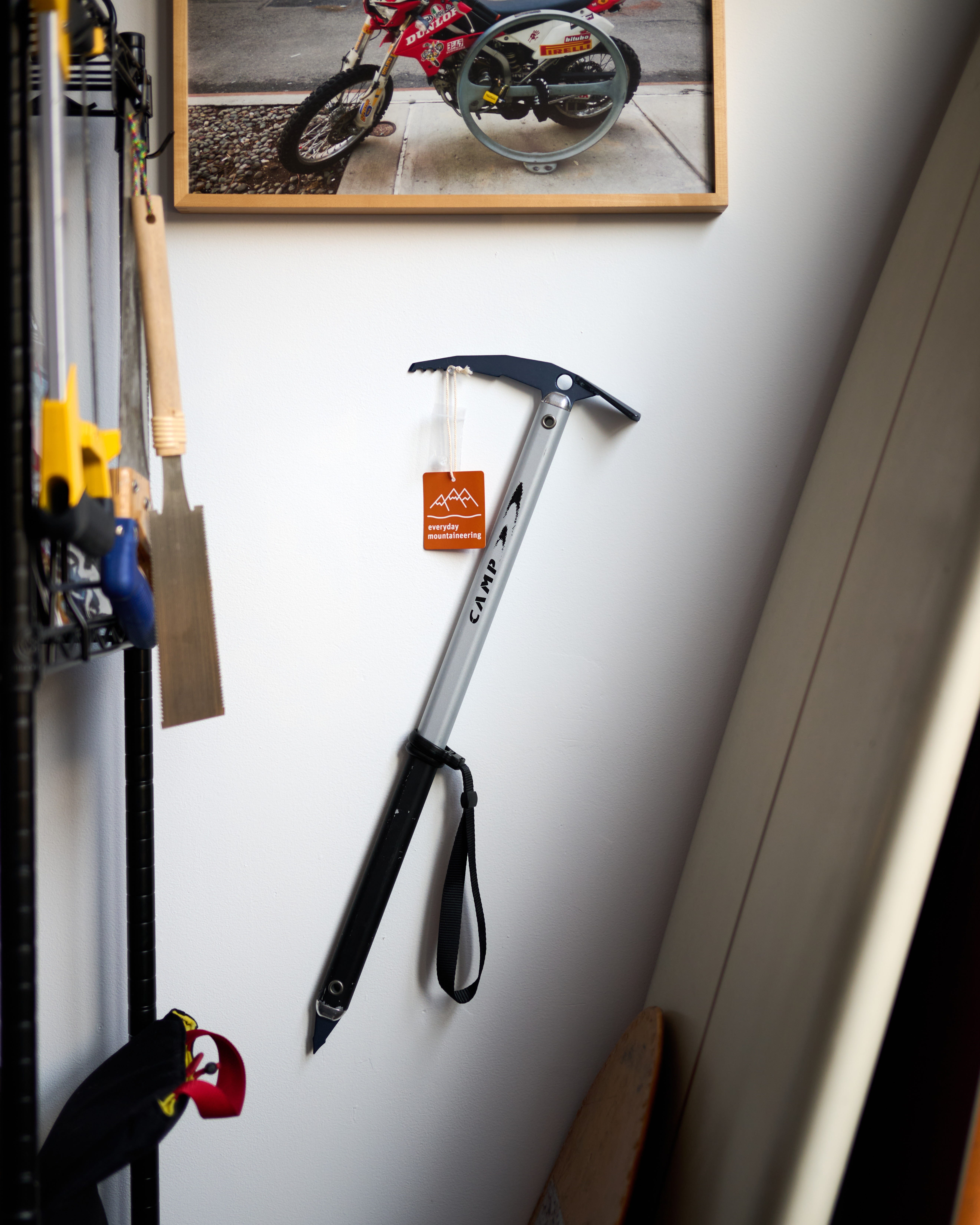
What’s funny is that, at first, I was probably more interested in the gear than the clothing. My dad has an ice tool called the Terrordactyl, one of the first technical ice tools invented by Scottish climber Hamish MacInnes. He had one of the original versions, and I think I was really drawn to the history behind it.
There were other things I found that were just amazing, too. I read quite a bit, and my dad also collects mountaineering books, so I spent a lot of time reading climbing books from that era. I think it was a combination of reading about that history and then, when my dad brought his gear over from storage to the U.S., digging through it and seeing everything in person.
Some of the pieces just looked incredible. There was an old orange climbing helmet that I thought looked amazing, and some of his old climbing shoes that basically looked like Converse with climbing soles attached. It was really cool to see those kinds of designs.
When it comes to clothing, though, I think that appreciation came a little later—closer to the point when I started thinking, “Okay, maybe I want to start the brand.”
Who do you see as the Everyday Mountaineering customer? Is it someone who's embedded in outdoor culture, someone who's just getting into it, or a mix of both?
What’s interesting is that, when I first started thinking about the brand, my idea of who it was for has shifted and ebbed and flowed over time. My clothing is very inspired by the outdoors, but it’s not about summiting Everest or extreme expeditions. It’s more about bouldering in the evenings, climbing at the gym, or heading outdoors on the weekend—activities that can naturally exist alongside everyday life.
So I’d say it’s for a creative-minded person with a genuine appreciation for the outdoors.
Looking at the Spring/Summer '26 collection, are there a few pieces that best capture where the brand is headed, or that you're particularly excited about?
There are quite a few pieces that I’m excited about.
For Spring/Summer ‘26, I made a rugby shirt using a paper-cotton blend yarn that’s quite breathable. I’m really excited about it, and about expanding into knitwear for the summer.
Then, for fall, on the more technical—or tech-ish—side of things, there’s this pant and this short. They’re part of my Font family, named after Fontainebleau in France, which I’d say is one of the birthplaces of bouldering—or maybe the birthplace. They’re made with a cotton-nylon blend.
Since you also paint, how did you mix and apply that specific faded purple color to the line?
I think something I’ve learned over time, working with color, is that when I’m designing—especially jackets—I get really excited about making everything bright orange. That’s great for someone who loves a bright orange jacket, or for certain photos, but I think there are really two directions you can take with it.
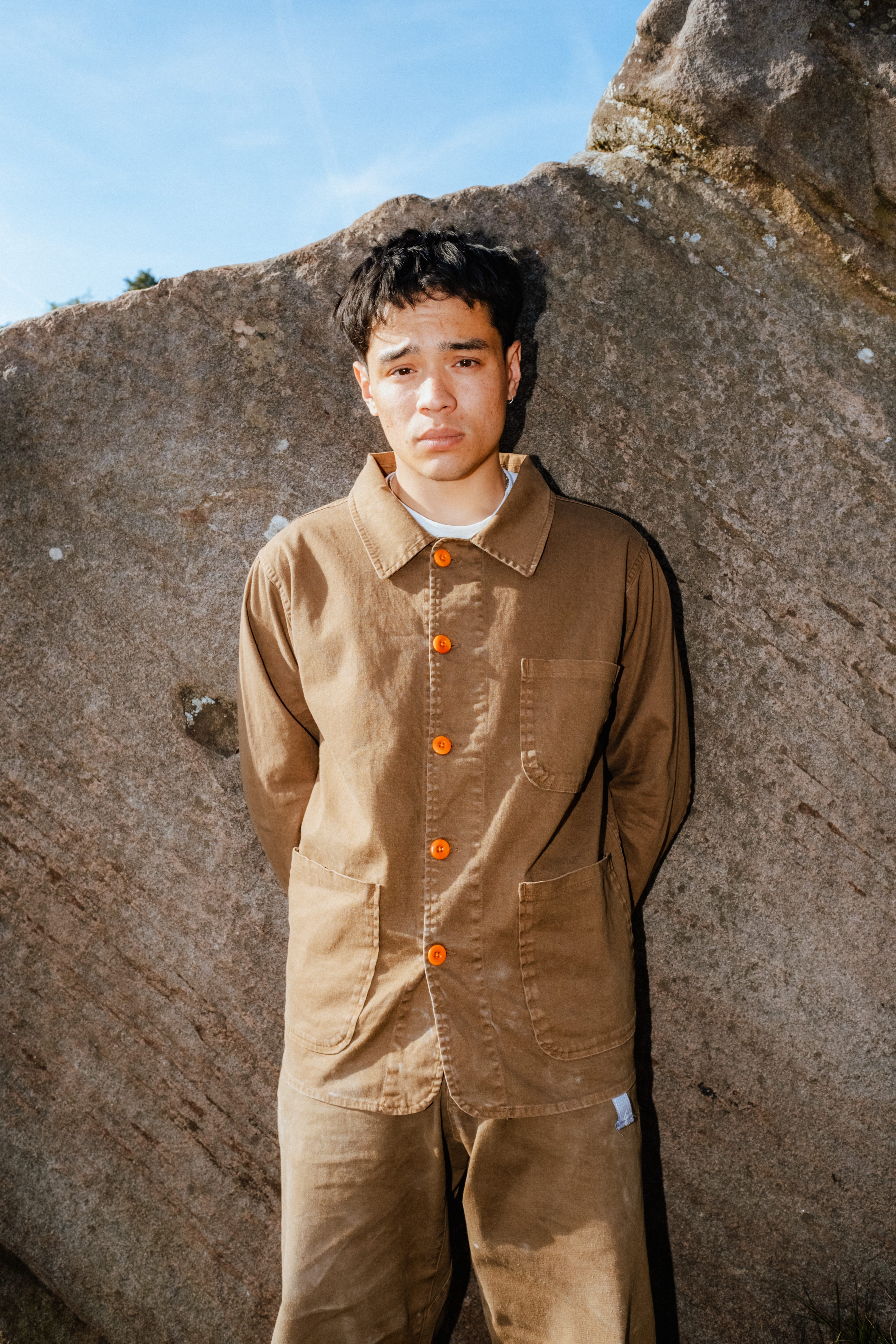
Instead of making the whole jacket orange, I’ve found that I can bring that color in through smaller details. Almost everything I make with buttons has at least one orange button. Or it might be something as subtle as orange zipper tape.
The outdoor world has become influential in fashion, with climbing and mountaineering aesthetics showing up everywhere. How do you feel about that shift, and where do you see Everyday Mountaineering fitting into that conversation?
I love seeing more people get into climbing. I think it’s pretty amazing.
It’s interesting because I don’t think climbing will ever reach the popularity of running. Running is simply more accessible. But with my brand, I think it’ll always exist a little more on the periphery of climbing.
I don’t know if I’m making clothing for the most diehard climbers, but I think that’s okay.
RE:
"It must have been the early 2000s, and what fascinated me was that—especially at a time when design felt so futuristic—this gear was incredibly low-tech.
Yet here it was, 30-odd years later, and it was still working. I think there was something really compelling about that."
I can relate to his fascination. Climbing in the 90's, there was a lot of climbing tech being rolled out at a dizzying rate. The myriad types of spring-loaded cam devices, exotic climbing slippers, and endless new breathable/waterproof products were exciting, of course. But they never completely replaced my old basic kit of nuts, hexes and chocks, and my beloved wool sweaters and blown out heavy cotton duck trousers.