
Tons of retail shops today can feel cold and purely transactional. And I get it. Owners are there to run a business, pay their bills, and support the employees and designers they carry.
But the best brick-and-mortar shops feel more like a third space: somewhere to hang out, listen to new music, sip a glass of L’Anglore wine, and feel encouraged to linger.
That’s always been the case with Brooklyn-based shop Million Goods. Co-founders Drew Kaufmann and Matt Reyer opened their first shop in Greenpoint in 2024, while their newest flagship just opened a few weeks ago in Fort Greene at 201 DeKalb Avenue.
Their roster of brands includes some of the more IYKYK names in fashion, like ssstein, Ranra, and Berner Kühl, but “the space itself focuses on culture and lifestyle rather than purely product,” says Kaufmann.
They’re aiming to attract customers who are interested in things beyond clothing, whether that’s music, art, or hospitality.
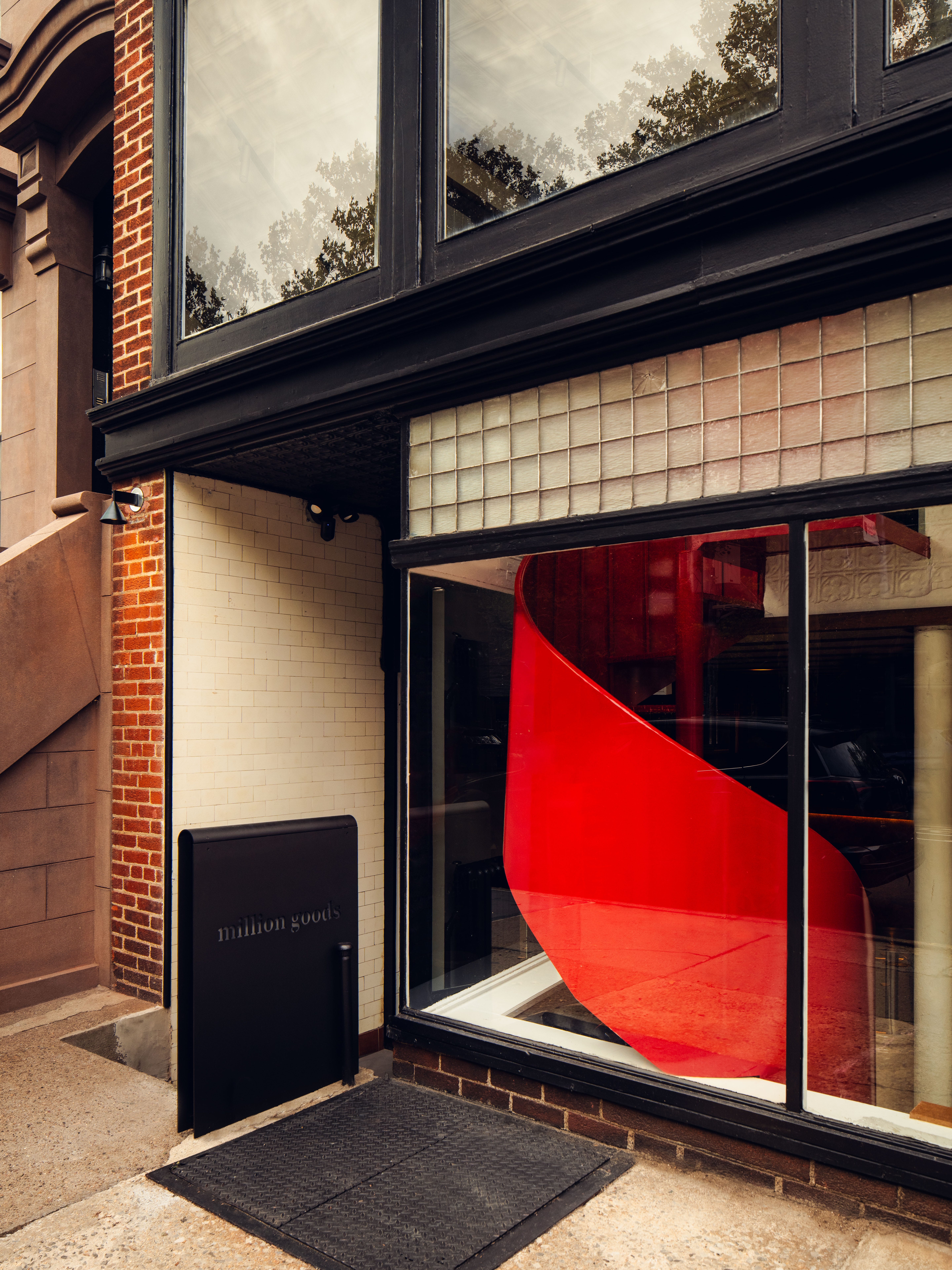
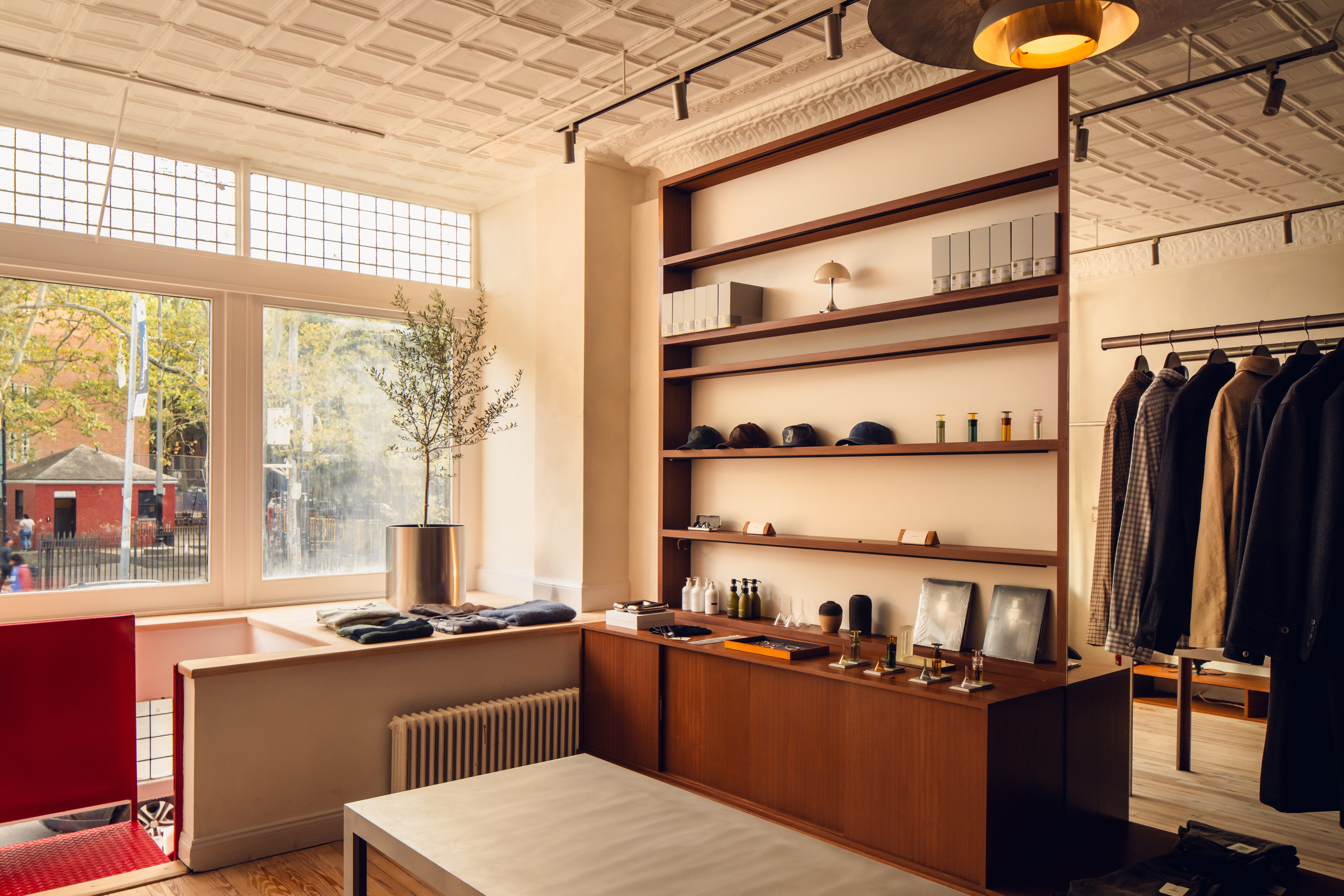
You may show up for the clothes, but one look at the interior and it’s easy for your curiosity to shift toward the all-red spiral staircase by Gjergji Shkurti, the lighting by Louis Poulsen, or the furniture pieces by Frama and Emeco.
With both shops open between 10 and 12 hours a day, the spaces need to be somewhere people actually want to spend time.
“If we’re asking people to spend an afternoon with us, the room has to actually be comfortable for an afternoon and a place you want to hang out,” says Reyer.
For our latest installment of Shop Talk, we caught up with Kaufmann and Reyer to discuss how they decide which brands to bring into the store, the new brands they’re excited about, how physical retail became the impetus for opening Million Goods, and what they’re currently enjoying about menswear.
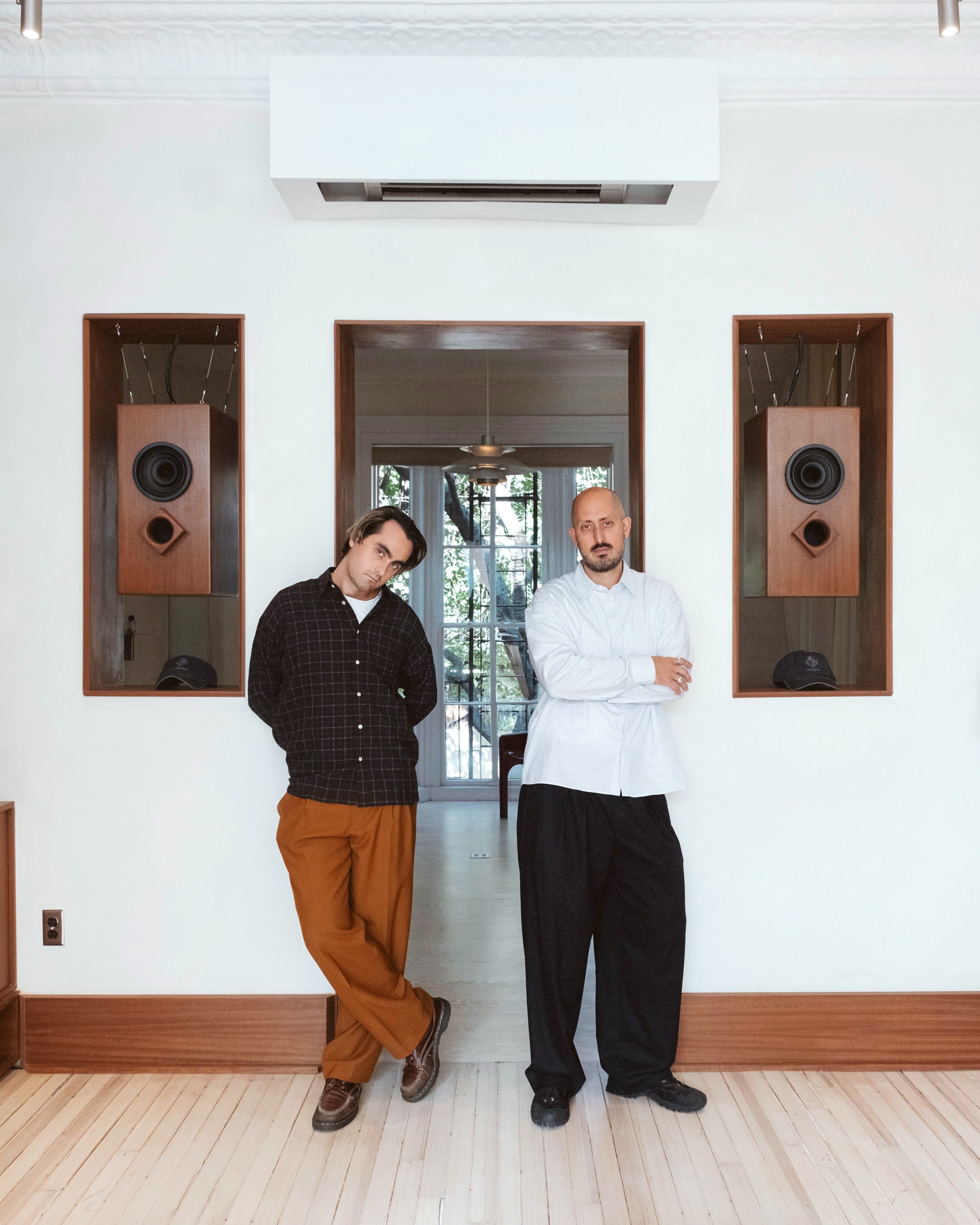
Drew Kaufmann (L) and Matt Reyer (R) c/o Andy Zalkin
For anyone who may not be familiar with Million Goods, how would you describe the shop and the kind of customer you’re speaking to?
DK: We are a contemporary menswear shop that houses a hi-fi listening bar and wine program focused on low-intervention producers.
The space itself focuses on culture and lifestyle rather than purely product, and I think we’re looking for customers who appreciate that and are interested in things beyond clothing, whether that’s music, art, graphic design, hospitality, etc.
We want to be the first place people come to when they want to talk about a musician they’ve been listening to or a gallery opening they saw, in addition to a place they come to shop.
When you’re deciding whether to bring a brand into the shop, what are you looking for?
DK: I think what’s most important to us is if there is a tangible culture behind the brand, whether that is Nicholas Daley’s references to reggae music or Études’ book publishing arm of the brand.
We want to show how several of these clothes are products of the lifestyle and interests of the brand founders, and not the other way around.
We see the way we dress as a product of our cultural interests and are looking for brands that embody that.
Are there any newer brands in the shop that you and the team are especially excited about right now?
DK: Absolutely, this is our second season working with ssstein. The quality is fantastic, and the clothes feel super effortless on the body.
We just started working with École de Pensée out of Montreal. We didn’t have anything more tailoring-oriented in our product mix, and it was super exciting to meet the guys, learn about their roots in both skate and graffiti culture, and how that influenced their journey into becoming tailors. It felt like a natural fit.
Have you ever brought in a brand that ended up resonating with customers in a way you didn’t expect?
DK: Definitely. I think part of being a buyer is being on the floor and seeing what people gravitate towards and how they talk about the brand before you’ve introduced it to them.
There are always surprises where a brand means something different to you than your customers, and the product you picked up the brand for ends up being a lower performer, while the product you figured you’d just try is what sells out.
We thought people would gravitate towards Berner Kühl’s more sportswear-influenced pieces, but it turns out they wanted shirting and Loro Piana fabrics from them. You’re always learning.
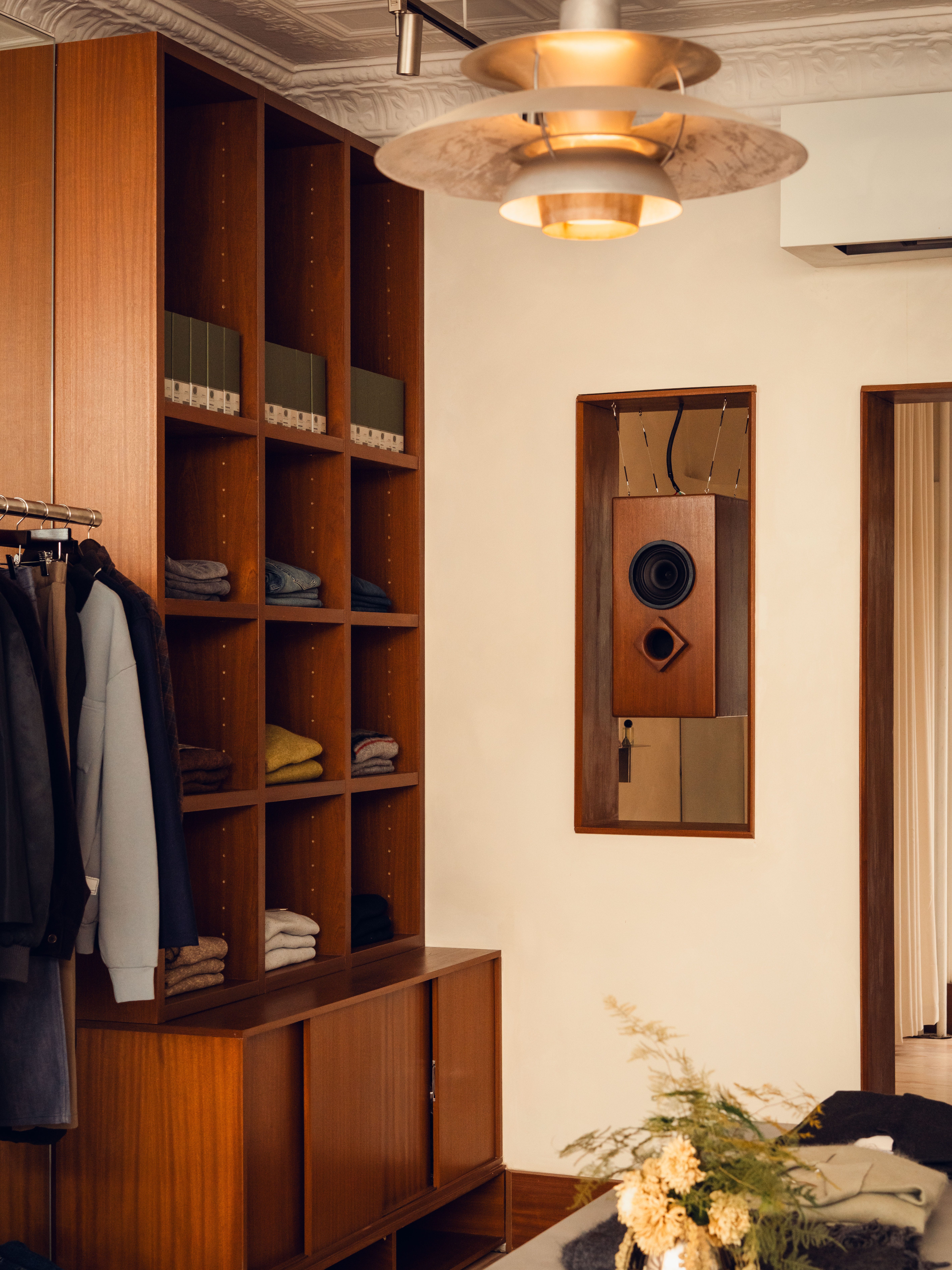
You opened your first location in Greenpoint in 2024, and just a few weeks ago opened your second in Fort Greene. What keeps you excited about physical retail, and what did you want the new space to do differently from Greenpoint?
DK: I would say, by and large, physical retail is our impetus for being.
In the 2010s and after the pandemic, we were watching brick-and-mortar be decimated by e-commerce, and we really wanted to create a model that would allow small independent retailers to stand up to those larger forces.
I think we’re just really excited to have found something that resonates with people and to continue facilitating our space as somewhere people can congregate around their shared interests. With the larger space in Fort Greene, we’re not planning on changing too much, but instead having a larger canvas to continue storytelling and building our community.
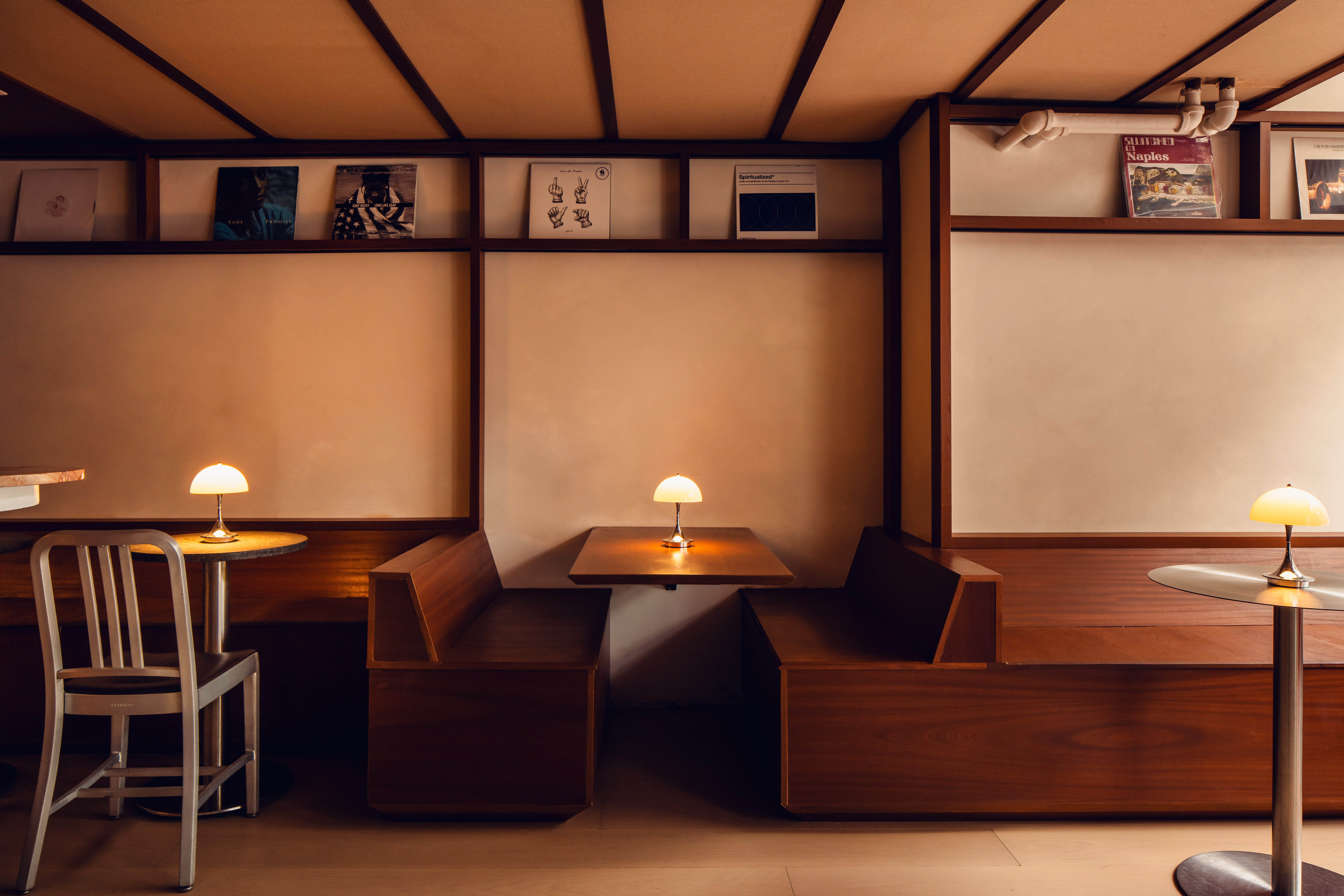
There’s a real emphasis on creating a place where people want to stick around, from the hi-fi sound systems to the natural wine bars. Why is that sense of lingering and discovery so important to the way you think about retail?
DK: I think that comes from my experience as a teenager, when on the weekends there wasn’t much else to do besides go and hang out at the skate store.
We’d spend hours bantering with the employees there, and it’s where I was introduced to brands like Supreme and Stüssy. In the end, we wanted to recreate that experience for people based on our current interests. You can come, have a glass of wine, listen to a record, and spend an afternoon with us the same way we did as kids.
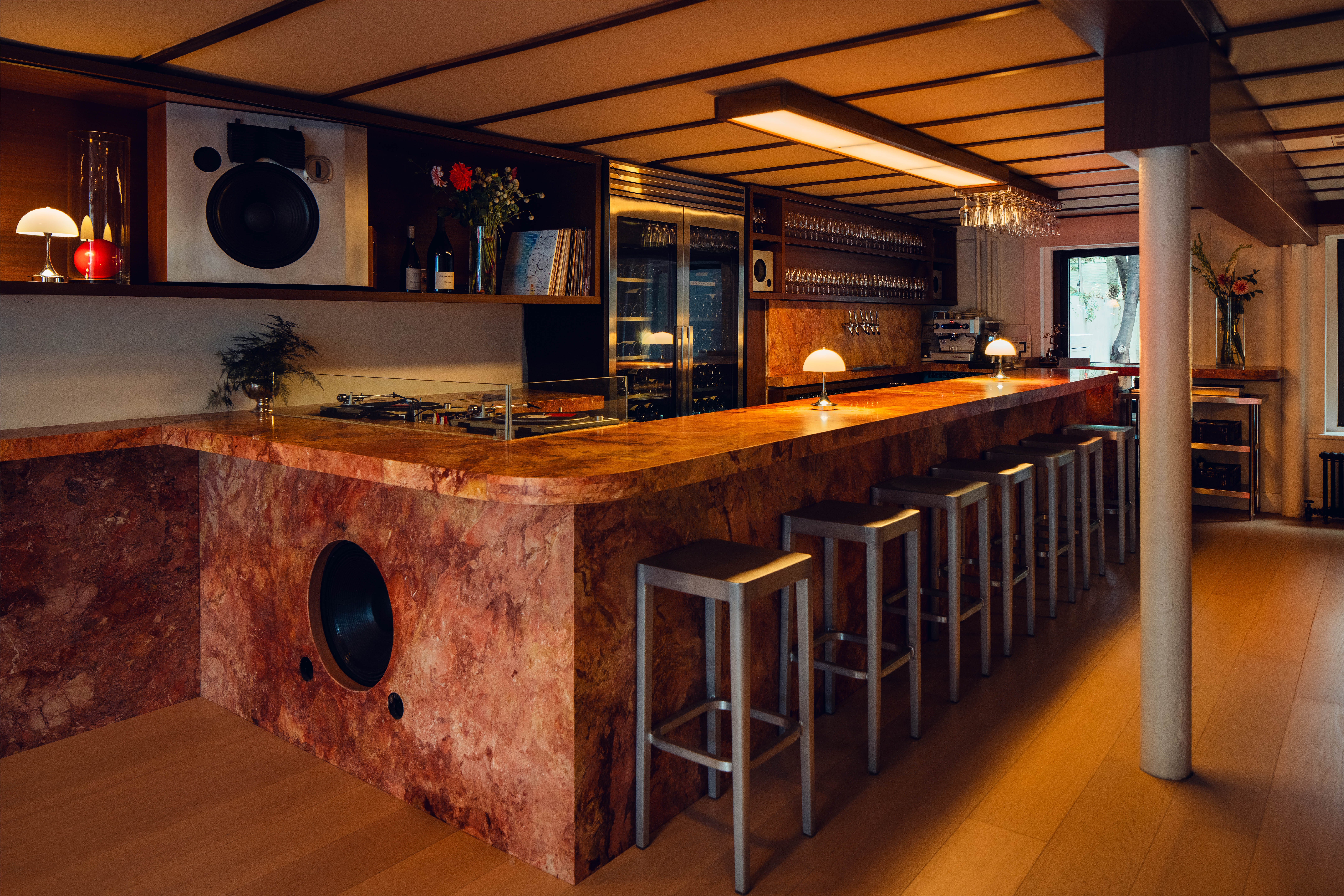
That same attention to detail extends beyond the clothing, with furniture from FRAMA and lighting by Louis Poulsen. How do those choices fit into the larger experience you want to create in the shop?
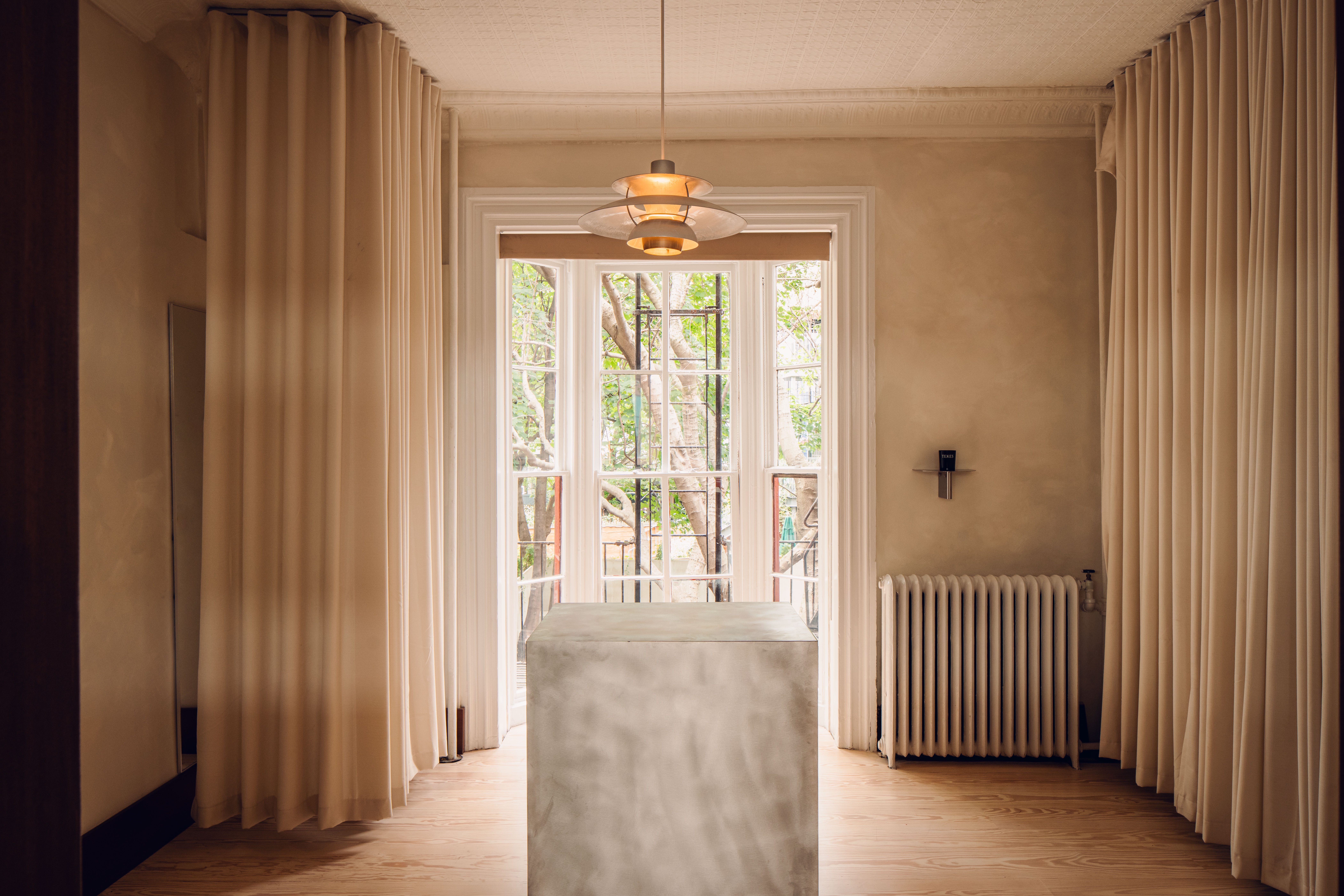
MR: It’s the same filter we use for the clothing. Louis Poulsen is a company with a real point of view behind the product, and you can feel that when you’re sitting in the room. They’re doing something specific with light. Everything is shielded, so you’re never looking at a bulb. It’s all warm and low, and it makes people settle in.
We used their stainless-steel PH 5s and AJ Eklipta indoors and then carried it into the garden with the Flindt bollards and post, so the whole building reads as one place after dark.
Furniture is the same idea. The Emeco stools at the bar, one-sided banquettes facing the room, an assortment of stools, so there’s always somewhere to sit and no signal that you should be moving along.
If we’re asking people to spend an afternoon with us, the room has to actually be comfortable for an afternoon and a place you want to hang out.
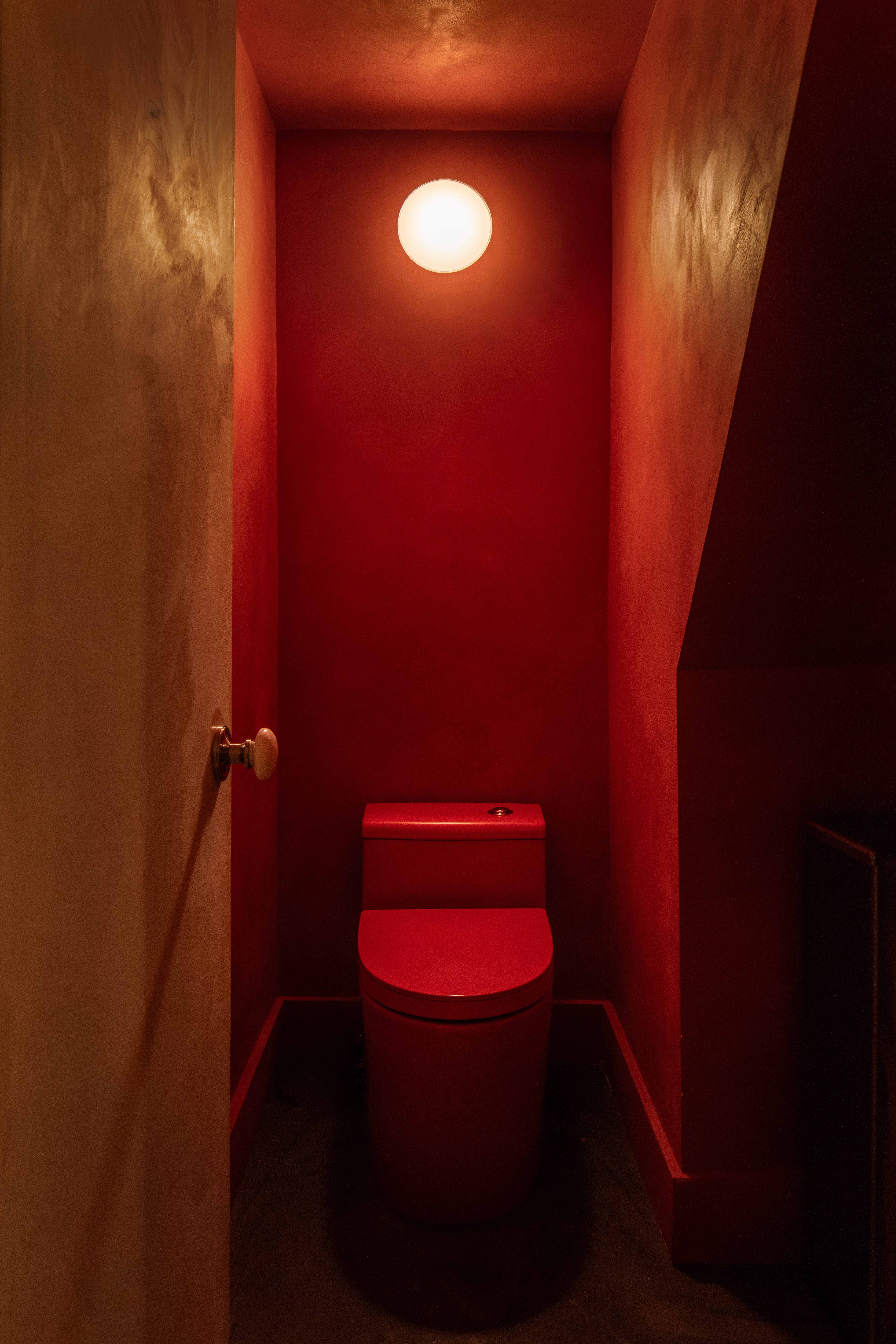
The staircase does something similar in the other direction. Finishing it in our red makes it the thing you notice from the entrance, and it plants the question of what’s upstairs before anyone tells you.
That’s the movement we want in the building: you have a glass of wine, you look at the garden, and at some point curiosity takes you upstairs on your own time rather than because someone walked you there.
The smaller details do a lot of that work too. We pulled the red from the staircase into the outlets and switches, which is the kind of thing you only catch on your third or fourth visit. The limewash has the same instinct—European-inspired, matte, and a little uneven, designed so the building doesn’t feel like it opened a few weeks ago. Nice objects are a nice byproduct, but the goal is that the place feels lived in and nobody feels rushed.
Stepping back from Million Goods, what are you seeing in menswear right now? Are there any shifts or trends that you’re particularly excited about, or any you’d be happy to see move on?
DK: I’m really enjoying seeing the return to presentations and runway shows with an emphasis on music.
I think designers are seeing it as an opportunity to do more than showcase clothing, and it’s been really fun seeing musicians we’ve worked with get involved in that storytelling. Sunflower had a fantastic show at Pitti for their SS27 collection that featured an original score by August Rosenbaum and Jakob Littauer. That was really exciting to see.