

I used to spend my entire paycheck on clothes.
After high school, I went straight into the workforce, while living with my parents, on a $36,000 annual salary. Not much, but in 2013, it might as well have been like earning six figures.
It started with ASOS and Zara, but before I knew it, I was splurging on Mr. Porter.
It was excessive, unnecessary, and I have no recollection of what I even bought at that age. But it started a bad habit of constantly buying things, usually without any thought.
“Because buying things doesn’t make you stylish. But buying the right things and knowing how and why you’re buying them will form your personal style.”
And while it wasn’t a big deal when I was living with my parents, once I got married, had a kid, and took on a mortgage, those habits became unsustainable.
But beyond the cost, excessive shopping makes it difficult to understand your own style.
It feeds the idea that “more” = “better,” all while training you to buy things without thinking about why. It’s why you can own all the sneakers, shoes, or boots in the world and still be entirely swagless.
Because buying things doesn’t make you stylish. But buying the right things and knowing how and why you’re buying them will form your personal style.
How to make better purchases
So to change my habits, I came up with a simple way to make better purchases: categorizing what I buy. Every time I buy something, I try to place it into one of the following 6 categories.
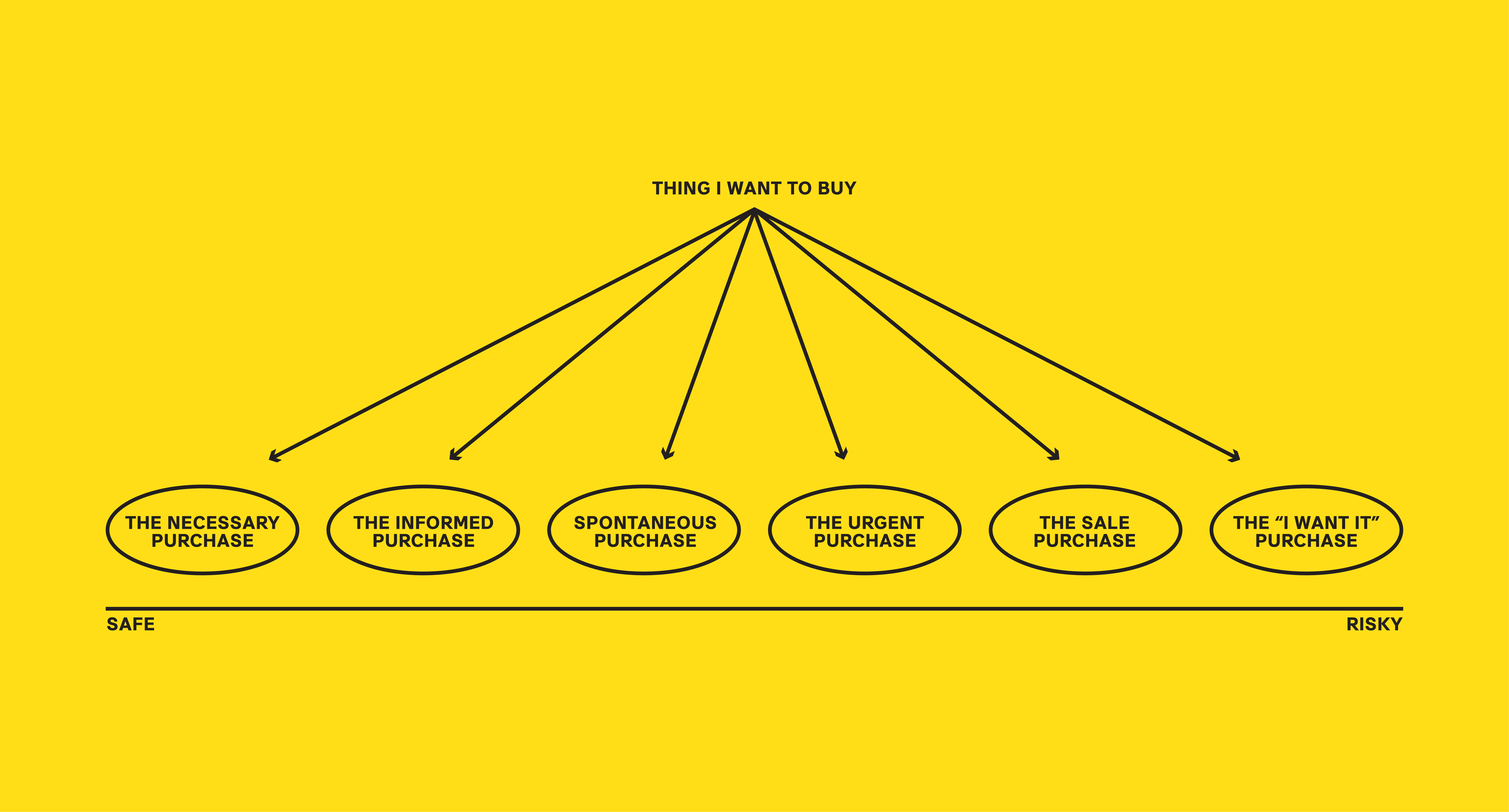
I realized that most bad purchases didn’t happen because I couldn’t afford something; they happened because I hadn’t really thought about why I was buying it. Once I started sorting purchases into categories, it became much easier to see what kind of decision I was actually making in the moment.
Not only has this saved me money to spend on other garments, but it’s also made me more aware of where my money is going and whether or not I actually need what’s in front of me. Let me run you through it with some examples.
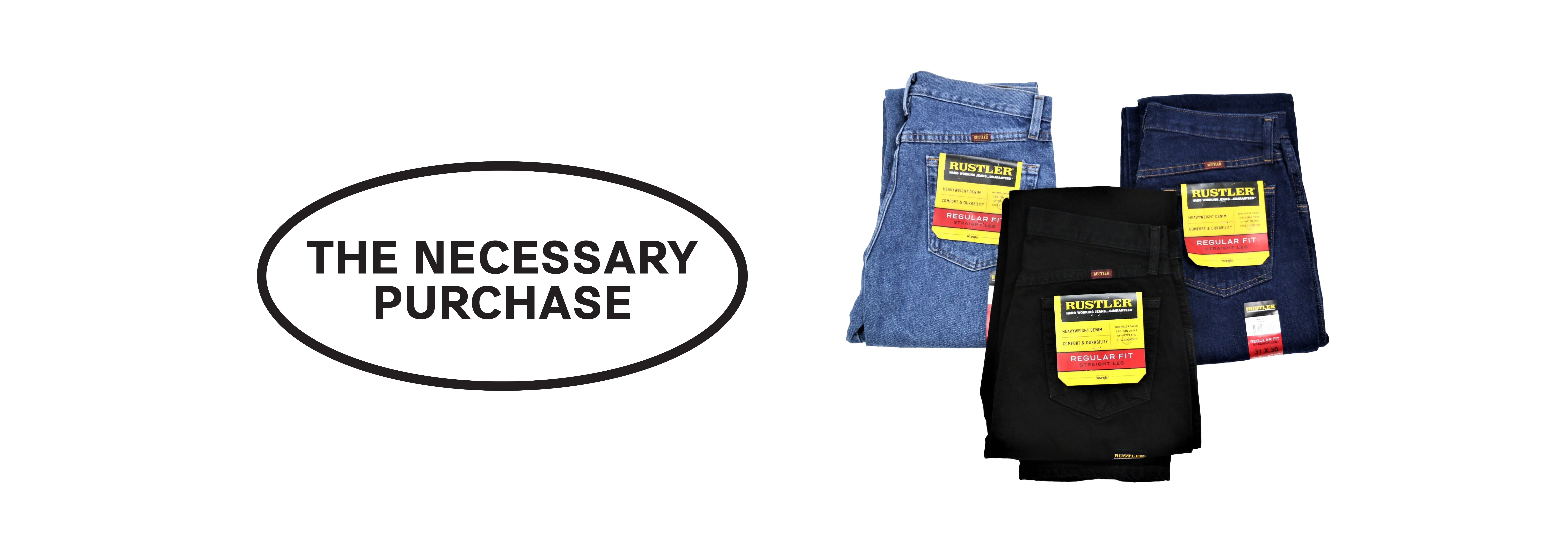
1. The necessary purchase is when life puts you in a position where you genuinely need something. Simple.
Last year, my family and I took a road trip to Disney World and on day one I managed to tear the one pair of jeans I brought with me… a truly amateur packing move.
I was also in the south, which is effectively a barren wasteland for shopping for good clothing. Luckily there’s a mystical place down there called Super Walmart, where you can buy anything imaginable: groceries, electronics, assorted rifles…and Wrangler jeans?
After a brief cost-benefit analysis…and trying to drown out the thought of the sweatshop where they were probably made…I swiped my card for $15.
I’ve worn these jeans 3-4x a week since to justify the purchase and they’re done well as a basic jean.
Sometimes that’s how clothing shopping goes: you dirty your white shirt before a wedding, your jacket tears before a camping trip, your jeans rip, and suddenly you’re at the mercy of whatever is available in front of you. Swipe your card and move on.
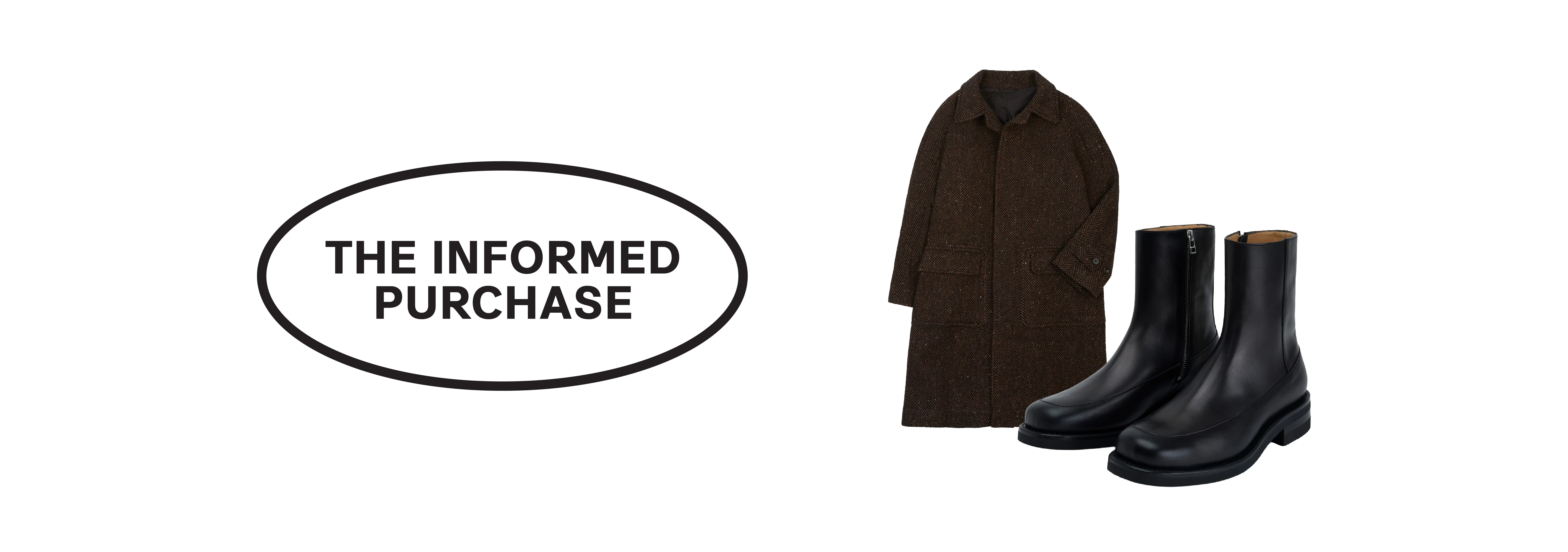
2. The informed purchase is when you’re buying the thing you’ve spent hours researching and years saving up for.
For me, that purchase was the Drakes Raglan coat I’ve written about at length.
Pitching a $2,100 coat to my wife wasn’t easy. But it helped that I had been talking about it for three years and had saved up for it. She knew it wasn’t a trendy piece of clothing; it was the coat I planned to have around for the next decade.
My next informed purchase will probably be the 3Sixteen side-zip boots. I’ve watched reviews, compared the prices against the Our Legacy Camions, and have gotten to see how they’ve aged thanks to the menslfuencers that post fit pics with them on daily.
My wife has already heard about them enough times to know they’re coming, and I’ve been saving.
I firmly believe that if you’ve wanted something for long enough without changing your mind, and it’s within your financial means, you should absolutely buy it.
Informed purchases are important and mostly safe because they’re often trend-proof. If your opinion on something hasn’t changed while the trends have, that’s a pretty good indicator that you aren’t shopping to keep up with what’s popular… you’re shopping for yourself.
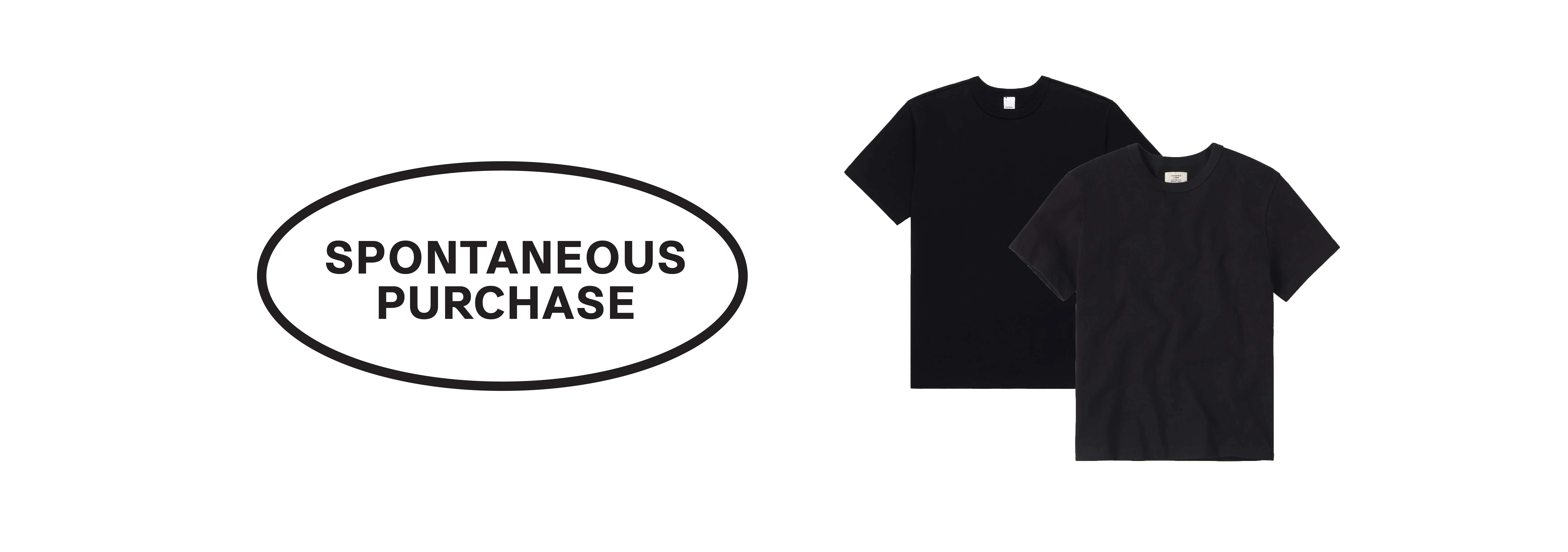
3. The spontaneous purchase is when you see something you know you’ll eventually need and think, “Ahh, what the hell — if I’m already here.”
I had two of these happen recently with black t-shirts that I was planning to buy anyway for an upcoming t-shirt guide I’m writing. I happened to walk by the 3Sixteen store one day, and the Buck Mason store another day, and figured I’d save myself the shipping. Plus, it’s nice to pop into a store and talk shop for a bit.
Now I’ll be honest — this can be tricky to define. For me, it’s something I can buy without planning to buy it that day and without opening my banking app to do math. A t-shirt, a pair of sneakers, a hat. Not a major purchase like a coat or raw denim. The key is that the purchase isn’t random, it’s just earlier than expected.
Note: The next three categories are where things get harder. They require a bit more self-control.
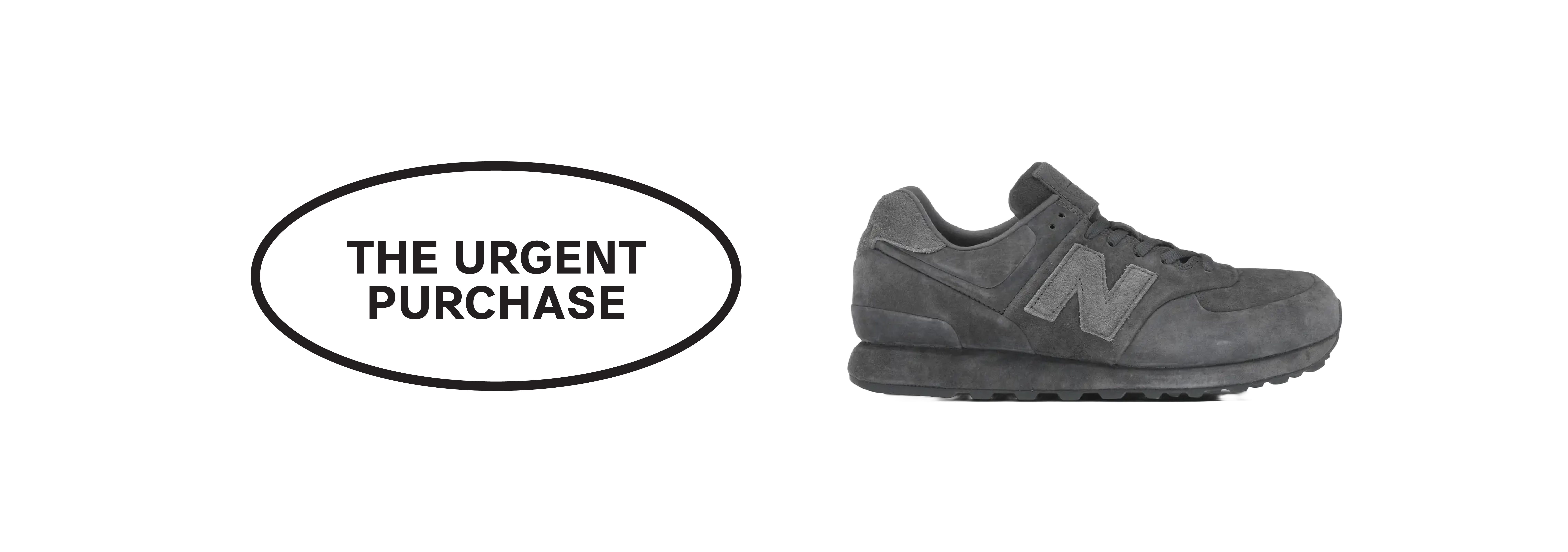
4. The urgent purchase is when something has to be bought right now, or not at all.
This usually happens with limited releases, vintage finds, or moments where you know something will disappear if you walk away. I don’t fall for this one too often, but it does happen.
At a recent event we hosted with Stone Island, they quietly announced that guests could buy their New Balance 574 early before the official release. Fellow Sprezza writer Chris heard this news about five minutes before the event ended and was torn on whether to purchase of not. I peer-pressed him heavilyyyy, knowing he really didn’t have time to weigh it out.
Ultimately, he copped, and I’m glad (and he’s glad) that he did.
Urgency can push you into decisions you might not make if you had more time to think…but there’s also something thrilling about pulling the trigger on something at a moment’s notice.
If shopping was always entirely predictable, we’d miss out on really cool opportunities and stories to buy things that are rare or unique.
With urgent purchases, I think buyer's remorse can set in sometimes, but I just look in the mirror and tell myself to shut up and enjoy the money spent.
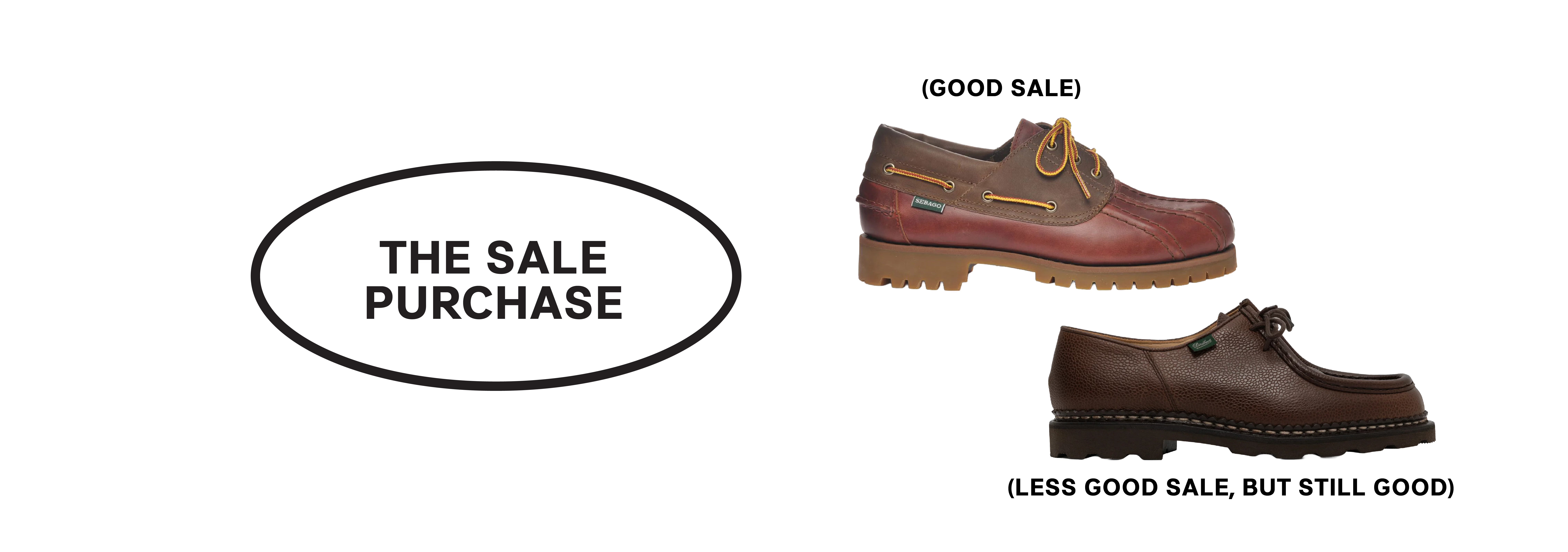
5. The sale purchase is pretty self-explanatory. Sort of.
We’re pro-sales here at Sprezza, and we even dropped a quick sale shopping guide last week. But sales can both work for you or against you. Sometimes they save you money on something you already planned to buy.
Other times, they convince you to buy the wrong thing just because it’s cheaper.
Here’s a good scenario: I'd been eyeing the Sebago Tucson mocs for a few weeks as a cooler alternative to the LL Bean duck boots everyone wears here in the Northeast. I planned to buy them anyway, and then they suddenly went on sale for 60% off. I purchased instantly.
Here’s a bad (or less good) scenario: When I bought my first pair of Paraboot Michaels, I had already decided on the black smooth leather version. Those never go on sale. But then I saw that the brown pair was discounted 45%, so I bought those instead.
I love them and wear them constantly, but they’re still not the black pair I originally wanted.
I compromised on what I actually wanted because it was cheaper. That’s not necessarily a bad thing, but it did leave me longing for more, and I then proceeded to buy another pair of Michaels shortly after… also on sale… black with pony hair on the tongue. I’m 2-0 on the all-black pair.
Thus, you need to be wise with sales.
Think them through and ask whether the money you’ll save is actually worth the compromise. If it isn’t, save up… and now you’ve got yourself an excuse to go make an informed purchase. I’d rather own a few things I really wanted than a bunch of things I got on sale.

6. The “I want it” purchase is the honest answer to the question: What happens when something doesn’t fit neatly into any other category?
There are going to be moments where you find yourself spending money on something you didn’t know you wanted, or that you planned for, or that you intended to buy, or that’s time-restricted. It’s the moments that surpass all the rules!
It’s what happens when you discover a new brand and decide to buy something immediately. It’s finding Alphaflys at Ross for $100 in your size. It’s putting in a crazy lowball eBay offer late at night and waking up the next morning to see it was accepted.
For me, it was buying a yellow varsity jacket from Reese Cooper when I became a dad because there’s a photo from my childhood of my dad holding me while he was wearing a yellow jacket.
I don’t wear bright colors and yet…I wanted it. And it was worth it.
They’re random moments where logic goes out the window, and desire takes over. Are they a little irresponsible? They can be!
But that’s why I try to keep these to a minimum and avoid pretending every purchase belongs here.
Where to go from here
So, listen, it’s not a perfect system, but it’s a really good system for me. And you need to find a system that works good for you.
Everyone has different shopping habits, so we’ll all end up with slightly different ways of categorizing purchases in our lives. The important thing is simply taking the time to understand why we buy the things we buy.
Once you start doing that, you notice patterns. You realize which purchases were thoughtful, which ones were spontaneous, and which ones you probably didn’t need at all. You might have 3 categories, or 10, or none at all!
But it matters that you make sense of it for yourself.
Buying clothing is supposed to be enjoyable. But it’s a lot more enjoyable when you’re able to buy things with a purpose, enjoy them, and not wonder how you’ve accumulated so much useless crap in your closet.
Solid post, especially with the breakdowns. I would also integrate the 4321 Rule into here:
- Do I see myself wearing this in 4 years?
- Can I make 3 outfits I would wear with it?
- Can I get 2 friends (at least) who definitely could see me wearing this?
- Can I sleep on it for 1 night, or even better, 1 week?
I don't categorize, but I do have a list of questions that I review before purchasing any clothes. Same idea though.
1) Do you really *love* it, or do you just want it?
2) Do you already have an equivalent garment?
3) Do you really have occasion to wear it?
4) Will it really look good on *you*?
5) In what ways are you settling by buying this particular one?
6) Do you want it because you want it, or because it’s a “good deal”?