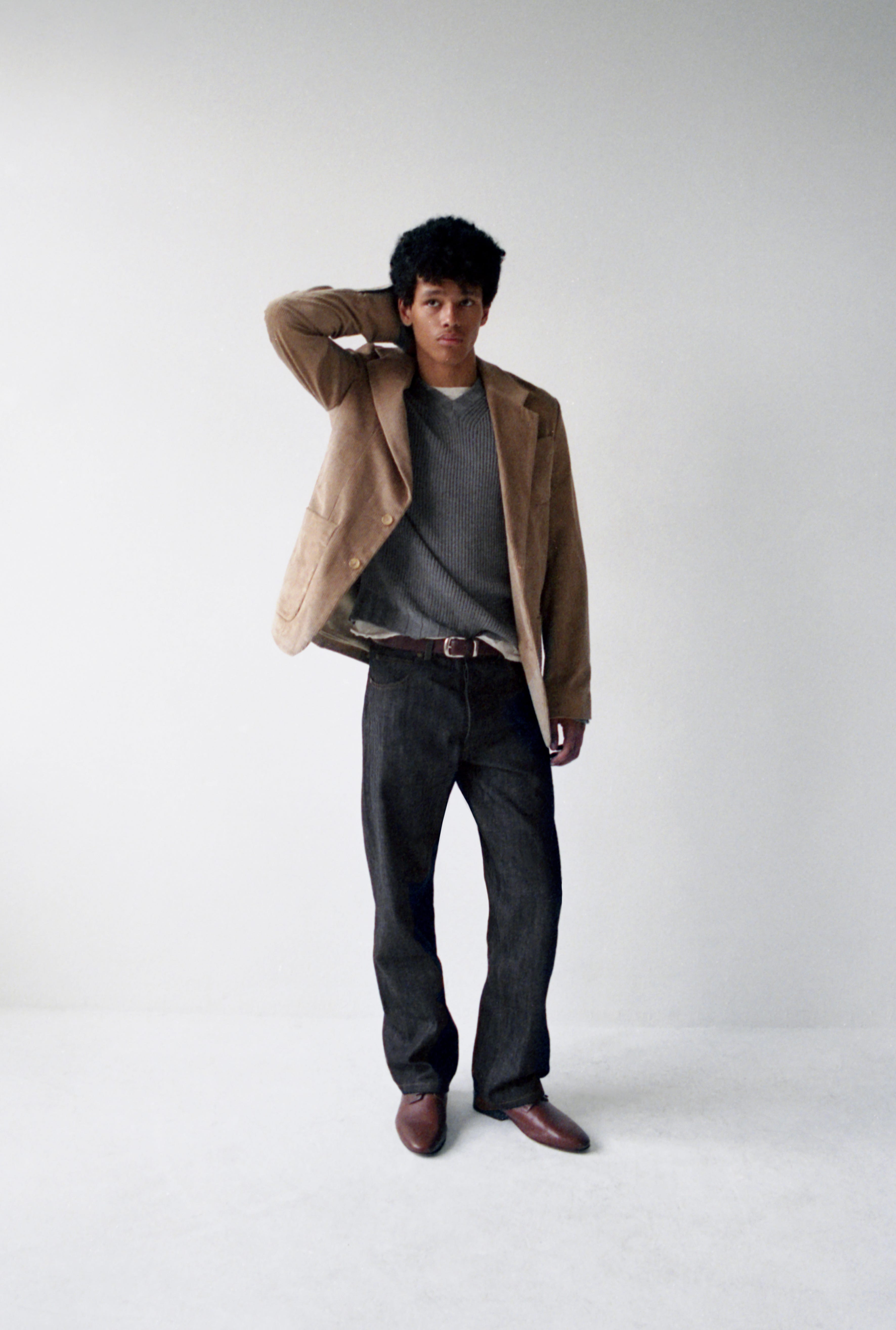
Designer Carter Altman is 28, and when I spoke with him over the summer, I could see right away how his clothes reflect him. “I’m trying to build worlds that people can inhabit and not be inhabited by,” he says.
For someone so young, he sounds like an astute, seasoned veteran of the clothing game when he describes shirting made at a mill in France or the sun-faded techniques used on the label’s Japanese flannels. Altman co-founded Carter Young with business partner Adam Kaplan.
Originally from Detroit, Altman moved to New York, where he worked with companies like Helmut Lang, Kith, Alyx, and Urban Outfitters. He launched his label in 2020, at just 21, but then the pandemic hit—forcing him to retool before officially relaunching in 2022.
If fashion were measured in dog years, you could say Altman’s label has matured accordingly. So much so that he now operates from his studio in East London. What began as a label focused on denim and sportswear, still at the heart of the collection, has expanded to incorporate Altman’s background in bespoke tailoring. “The idea of making tailoring contemporary and accessible is what really gets me going,” he says. He adds, “Denim and shirting and ripped T-shirts and tailoring—yeah, what more do you really need?”
Since the brand’s inception, Altman has dressed A-list celebrities like Ethan Hawke and Paul Mescal, as well as Belgian-British drummer and record producer George Daniel. Konrad Kay, co-creator of HBO hit series Industry, also shouted his love for the brand in our interview from earlier this year.
Although he’s now some 3,700 miles from where he grew up, that Midwestern niceness still follows him. In our conversation, we talk about the real appeal of good clothes, the blend of romanticized childhood memories and Gus Van Sant films that inspired his AW26 collection, what it means to be an American designer today, and why he hopes to open a physical space in the near future.
C/O Ellis Scott
You launched your label at just 21. Looking back seven years later, how do you think you’ve grown alongside the clothes?
I tried to launch the brand when I was 21, right when I graduated from university. It was February 2020. And then March came around, and the pandemic hit, so the brand kind of had a false start.
I think, especially with the launch of our custom tailoring offering last November and the continued expansion of our tailoring, that’s all born out of me being in a different place in my life and having different needs for the type of clothing I wear.
Ultimately, the people around me are kind of going through the same life stages as I am. Early on, we were focused on denim, shirting, and sportswear, which is still in the line and very much a part of it, I think as I’m growing older, and so is my age cohort of customers, we’re becoming interested in things that have a little bit more of a sense of occasion or a kind of classical construction to them.
Has your idea of what makes a “good” garment changed?
I think as we start to learn more about manufacturing and about who our customers are and what they want, we’re really able to approach it from a perspective of fabric, manufacturing, and garment construction first.
Whereas before, it was more centered around the aesthetic ideation; now the aesthetic is informed by the quality of the garment. I think that’s a result of the people who shop the line getting a little bit older, having a little bit more money, and us speaking to a wider customer base.
You’ve lived and worked in Detroit, New York, and now London. How has each place shaped the way you think about design?
I think being from the Midwest is the most important factor in the way that I filter information, build products, and think about the world.
When I was a kid, I always wanted to do something in the creative industries, but I didn’t really understand how you made a career out of it. It was really an abstract concept until I learned that there are people who design footwear, and the shoes that people buy represent the commercial value behind being a creative professional. Maybe I can get into that. That led me down the pathway of clothing.
But then, when I lived in New York, I learned about the fashion industry and contemporary labels. Obviously, just being connected to a global city was my first entry into fashion as a cultural medium, outside of just a product-based specification.
Then, being in London—I mean, having access to the entire European fashion system has really given me a global perspective on what I do. So I still have that same filter for processing information, but now it’s much more connected to, I guess, cultural happenings and not just product, even though the product is very important.
Detroit isn’t always part of the mainstream fashion conversation. What do people misunderstand about style or creativity in the Midwest?
In major cities, you have the media apparatus, which gives more visibility to creatives putting out work in major cultural hubs. But it doesn’t mean that there’s a dearth of talent anywhere in between. I think it just means that there’s less infrastructure to support and amplify those voices.
So I think the misconception is that nothing’s happening anywhere. It’s just that no one’s necessarily there to cover it. Unfortunately, I feel like I had to move away to be taken seriously as a global creative voice, rather than if I had just stayed in the Midwest.
Your clothes feel honest and wearable, without any excess. Where does that philosophy come from?
Well, I think it was something that developed over time. When I first started, I was more concerned with building out a fashion product that told a story and had a character. And that’s not to say I’ve completely foregone that. I’ve started to realize that if people are going to spend money on clothing, they want something that’s going to be utilized in a way that creates an equal value exchange for what they’re buying.
Some people look for a product where they’re buying into the story, and that’s great. But it didn’t feel relevant to the way I lived my life or the customer I wanted to speak to. So it really developed over time, listening to my customer and thinking about what I actually engage with.
I mean, I look at things that have been worn, worn out, and repaired. To me, that feels more interesting than just buying something new that approximates those things but then goes out of fashion with the trends.
Why do you think fashion still gravitates toward spectacle when so many people just want great clothes?
I think from a product perspective, it’s about people. The average consumer is just more aware of clothing and what goes into making it. They’re more aware of fabrics and fit, and what fits them. I think that’s kind of just been a general raising of consciousness among consumers over the last couple of years.
But also, I think it’s kind of a reaction to modern times. Media is so all-consuming and fragmented, and it kind of subsumes individual selfhood into this idea of, like, this is what everybody’s doing right now; if you’re not doing it, you’re kind of not participating.
I think people are just reacting against that and saying, like, I want to strip things back. I want to pare back the noise a little bit. I want things I know are good for objective reasons, not just because I’m told they’re good. So customers are reacting and gravitating toward things they can feel, touch, and understand with their own eyes, instead of needing someone to tell them they’re great.
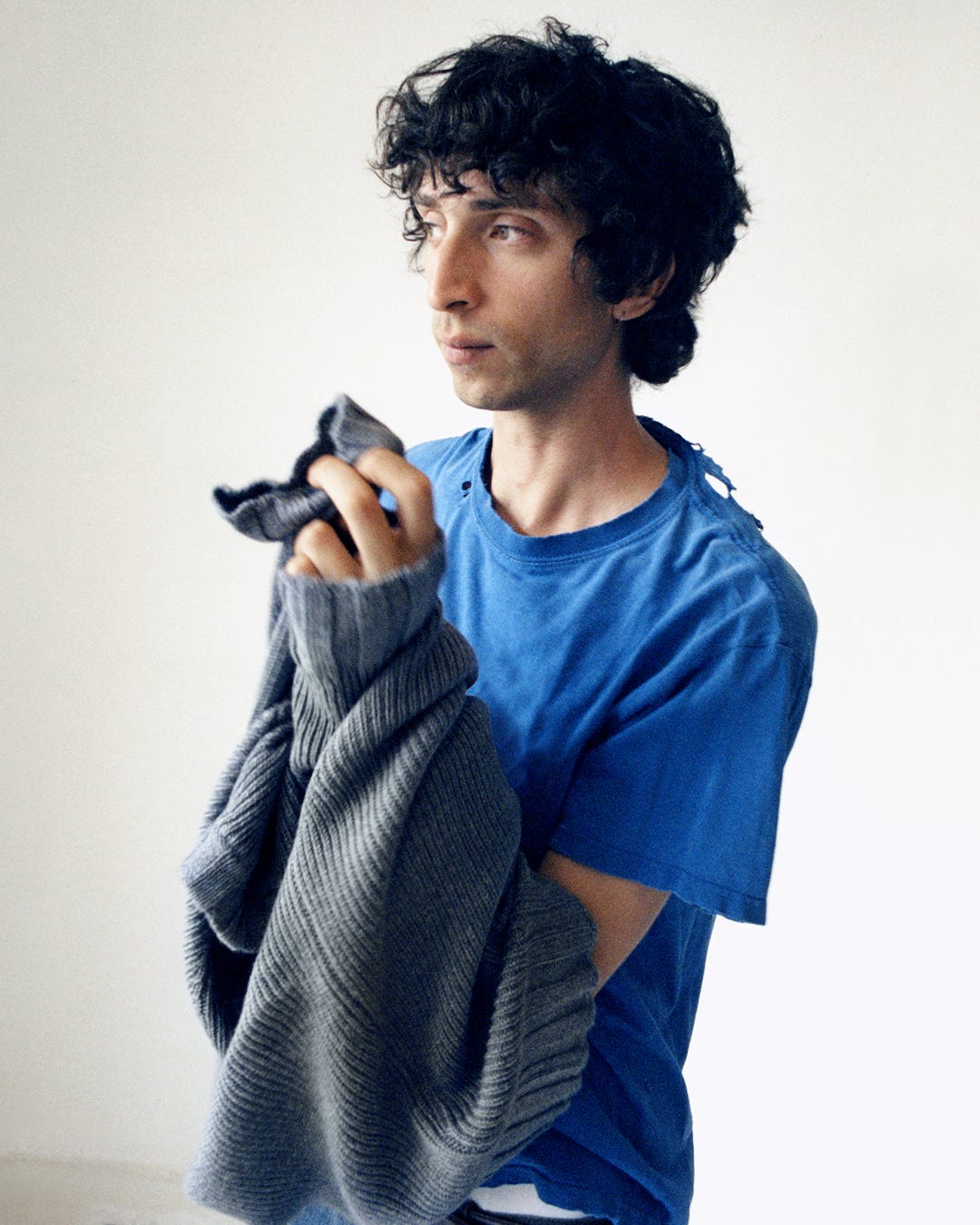
Sustainability isn’t just a talking point for you. You’ve consistently worked with deadstock and leftover materials. Why has that always been important to the brand?
There are a few reasons. When we were starting, we couldn’t command the buys at major fabric mills that a lot of other people could, which would have allowed us to develop our own custom fabrics. So it gave us an opportunity to use things that were really rare, unique, and special without paying those huge development fees or reaching those quantities.
But also, I think there’s a lot of great production in the world already. It doesn’t always need to be new to feel fresh and relevant. So I think sometimes when you find a material that’s exciting, you just take it at face value.
What story were you trying to tell with the Fall/Winter 2026 collection?
It’s kind of an amalgamation of my experience in the Midwest.
It’s a mixture of a romanticized vision of growing up and Gus Van Sant movies, but I’m really drawn to the idea of these characters in these films. They wear one jacket, and it takes them through the entire day, from morning to evening to the next morning.
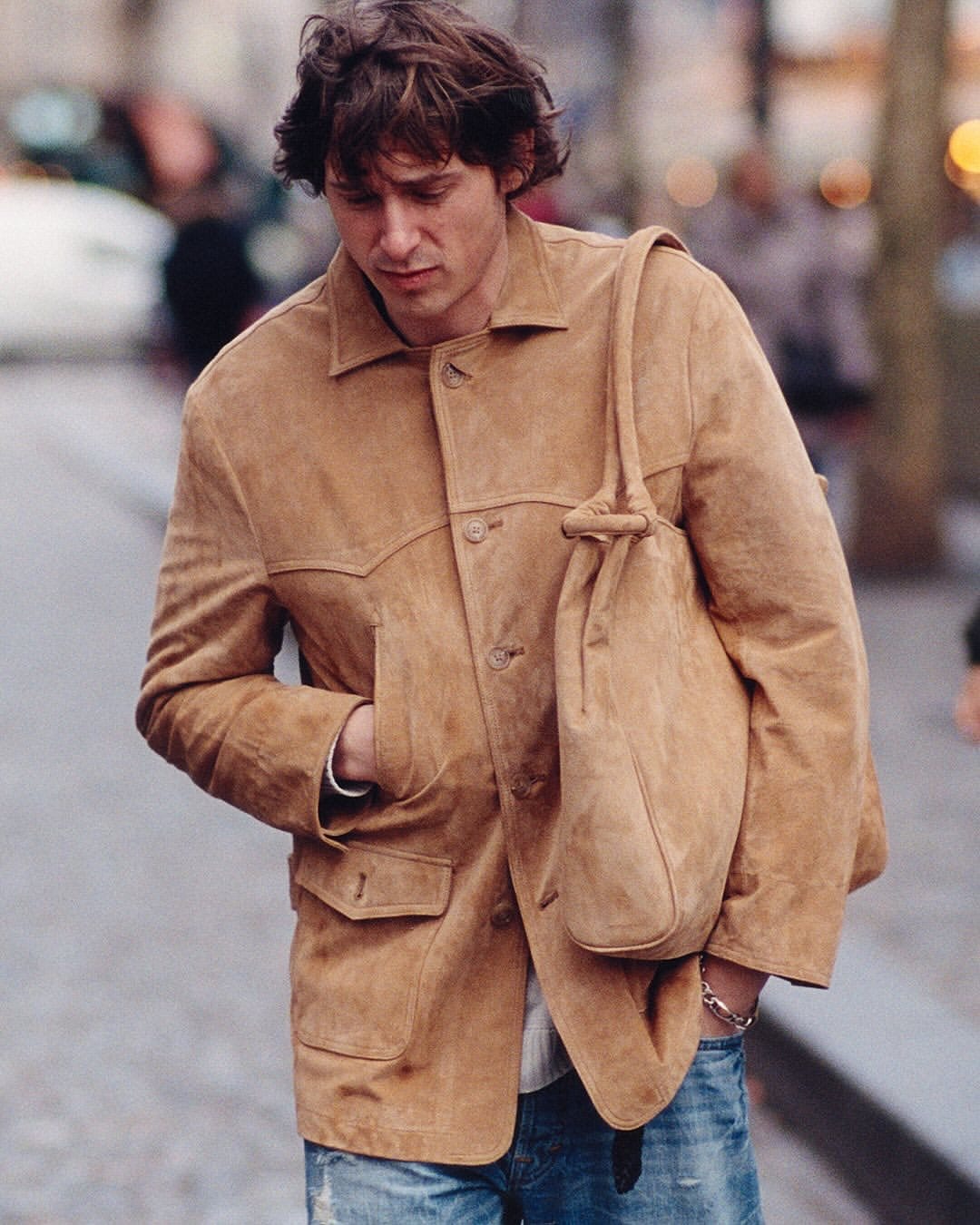
I started thinking about that mixture in terms of wearing tailoring and contemporary styling with formalwear, and how a lot of these dress styles are still relevant to modern life, but nobody really has an occasion to wear a three-piece suit with a ruffled shirt unless it’s for a very specific wedding. It didn’t feel as formal, but what felt relevant was a pair of jeans mixed with a blazer.
So I started pairing those items together, and I came up with this kind of tiered mixture.
One side of the collection is true vintage washes that approximate real vintage things in my world and my wardrobe, things that hold up over time but with contemporary detailing. The other side is clean tailoring made out of beautiful deadstock fabrics and produced in great factories. And it’s where those two things meet and collide that the collection gets interesting.
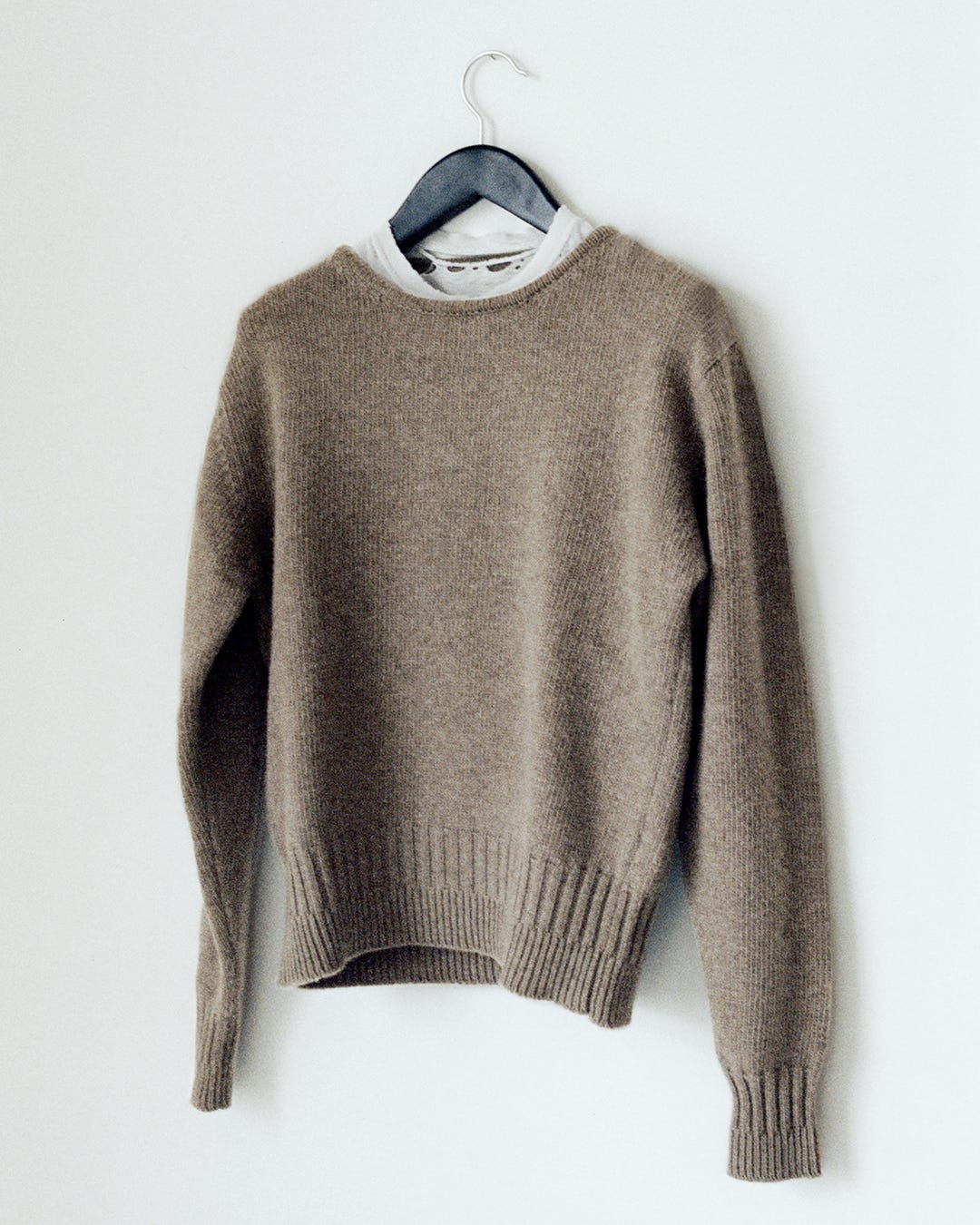
All of the shirting is from this great mill in France, which makes these handloom fabrics with incredible baubles and textures in the yarns. So it’s kind of classic shirting, but with this great, homespun feel. And then there are all these vintage washes we’ve done, like our vintage-wash Japanese flannels with a sun-faded technique that really makes them feel worn and broken in.
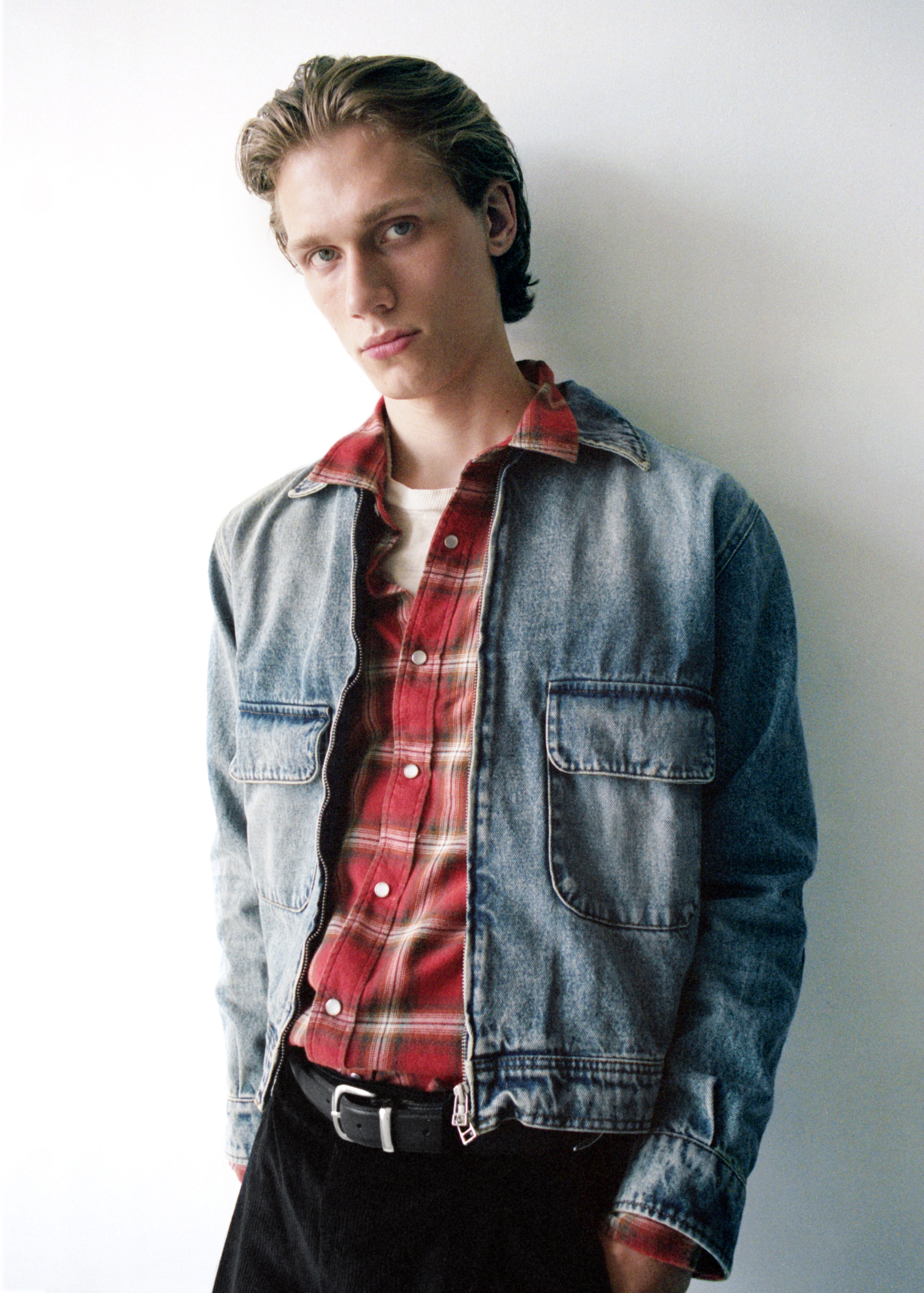
You describe your work as a kind of “New Americana.” What does that phrase mean to you, if anything?
I think what it means to me is that we’re engaging with the cultural canon of American imagery and American style, but we’re not just a vintage reproduction brand. We’re trying to add something to that language without feeling trend-driven or unfocused. I mean, we’re really focused on trying to build something in contemporary dialogue.
What does it mean to be an American designer working today, especially while living abroad?
It’s a unique mantle because I do feel like, given where media attention is focused in the rest of the world, there’s not a lot of American talent being championed, and I guess I’m thinking about the platform that I think a lot of American designers deserve.
You’ve dressed people like Paul Mescal for Wimbledon and George Daniel for his wedding to Charli xcx. How do you approach those one-off moments without losing the identity of the brand?
I think that is the brand’s identity: the ability to help someone’s individual style show through. The idea of making tailoring contemporary and accessible is what really gets me going. My background is in bespoke tailoring, so denim and shirting and ripped T-shirts and tailoring—yeah, what more do you really need?
Finding a way to work with each client to channel their best version of themselves is key. Suiting is seen as the platonic ideal of the menswear pyramid, so figuring out how to express someone’s individual character through something with so many rules and perceived archetypes is kind of the brand’s vision.
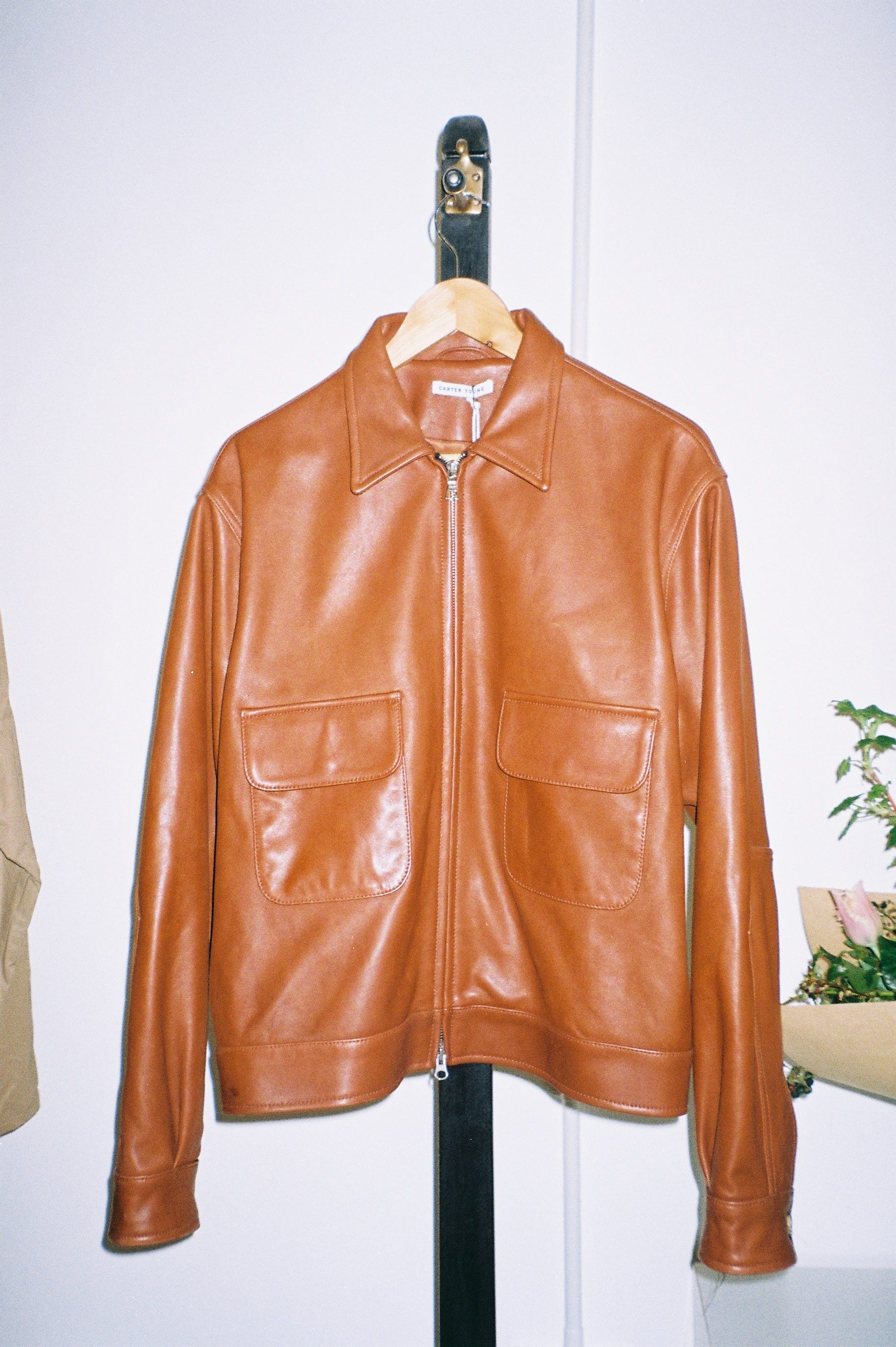
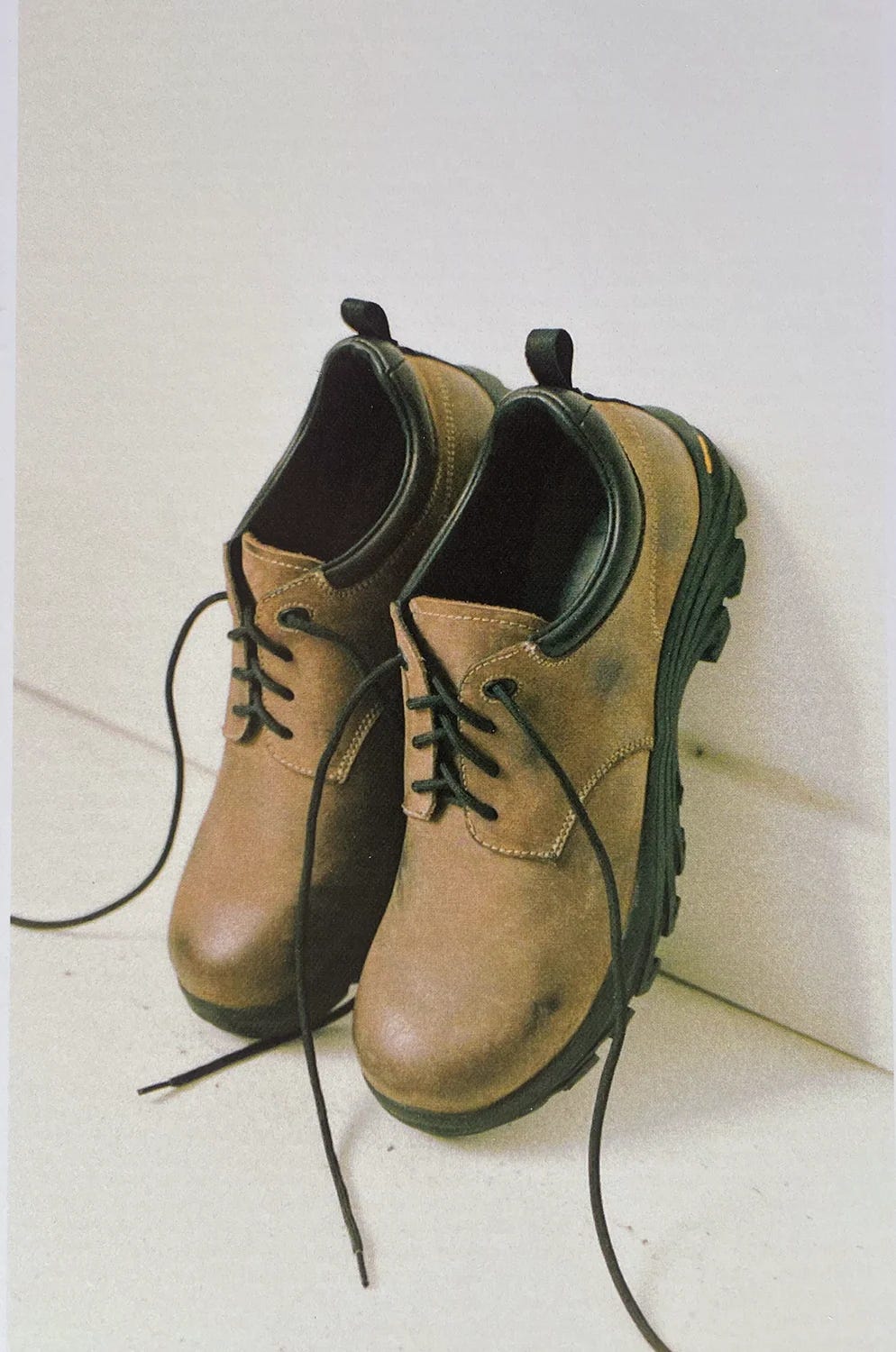
You also collaborated with the Madrid-based footwear brand Paracia. How did that relationship come together?
Well, my girlfriend was in Spain, and she came across the store. I think she was just walking around Malasaña one day and was like, “Wow, these are really cool shoes,” and sent me the Instagram. This was a couple of years ago. Over time, I met up with Knu in Paris, where we have this mutual friend, Manuel, who runs Camiso’s Manolo, and I was a big fan of his work.
I think over time we just started talking about what it could look like to do something together. Specifically, with the first shoe we did, the non-safety, I was thinking a lot about Keanu Reeves and the way he wears suiting with beat-up work boots. I felt that was very much in our world.
So I asked Knu if he’d be open to a pre-distressed version of his non-safety shoe, and then we turned that into a derby version for the next season—something a little more formal, but still with the weird proportions and beautiful leather. So it was quite natural. It wasn’t really that strange for me. I mean, my first love is shoes, so it was exciting to get to try something else.
As the brand keeps growing, what still excites you the most? What feels like the next challenge?
Honestly, what excites me most is this iterative process we’ve fallen into every season. We now know what our customer is looking for. We know our core shapes and styles, and we’re able to further expand on the brand’s archetypal silhouettes. Then, as newness comes in, there’s custom tailoring and new denim washes.
I know it doesn’t necessarily sound like the most exciting thing, but iterating on something I know people love and finding new ways to make it exciting and relevant feels like an even more exciting challenge as a designer than designing from a blank slate.
I think we want to keep making products that people care about and expand our custom tailoring offering. It’d be great if we could establish a physical presence somewhere. I don’t have any news on that yet, but it’s something we’re actively working toward. Finding ways to engage more deeply with our customers around those kinds of products is what we’re really excited about.