

5 years ago, I sat across from Andrew Chen in the back of 3sixteen’s store in Nolita and showed him a hoodie sample I’d been working on; it was a mix of vintage Navy sweaters and something you’d see from Number (N)ine.
He gave me some advice on sizing, production & sampling, and on how to commit to and chase that dream.
I never ended up making any of those sweaters.
Instead, I started writing about menswear and clothes, silly articles about expensive coats, how being a dad was cutting into my #jawnz budget, and how guys are too scared to dress like people did in the 70’s.
Although the dream changed from producing a product to writing about it, the advice Andrew gave me of working hard at whatever I set my mind to stayed the same.
5 years later, almost to the day, I got to sit in that same back office and ask him about his journey as a co-owner of a trusted menswear brand and how they’ve grown it over the last +20 years.
Andrew Chen is not the kind of person who’s going to tell you he always knew 3sixteen would become what it is.
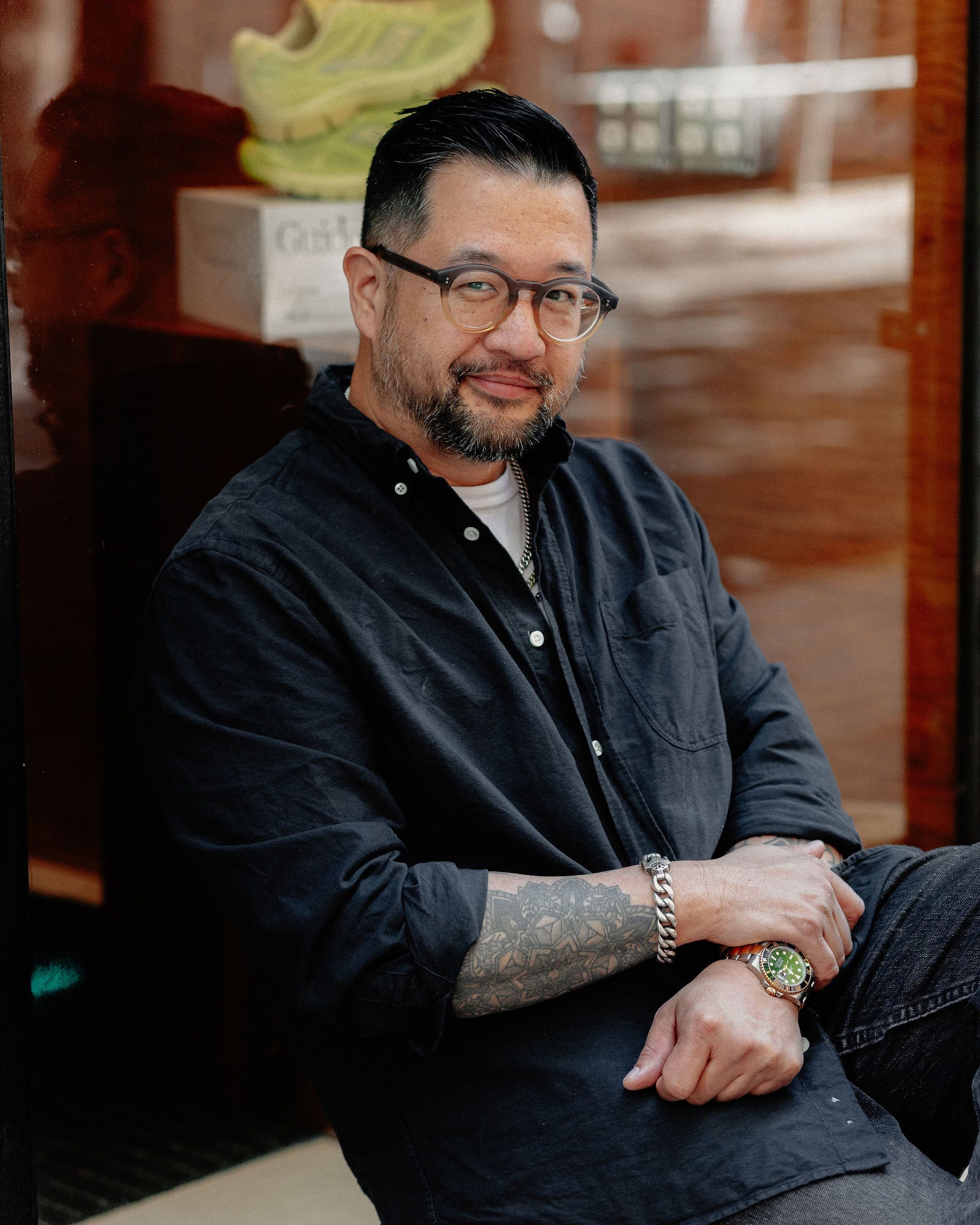
When I sit down with him at the New York store (surrounded by raw selvedge, sample bins, and one particularly beautiful hunting jacket he’s been quietly revisiting), he’s measured, honest, and unbothered by the idea of playing it cool.
He’s a guy who, with co-owner Johan Lam, spent over two decades making things he believed in and ended up building one of the most quietly respected names in American menswear.
I asked him early whether he thought the brand would ever become what it is.
ANDREW
“Of course not. No. I remember every milestone that Johan and I hit. One milestone was his ability to take a salary. The next step was for me to be able to take a salary. After that was hiring our first employee, getting our first office space, and moving stock out of his garage.
Opening our first retail store in LA nine years ago. New York, five and a half years ago. These are all big steps.
But at the beginning, we had no idea.”
He pauses, then adds something that stuck with me.
ANDREW
“Starting the brand, it was just important for it to be seen and appreciated by people we didn’t know. We were waiting for the first web store order to come in from an unfamiliar name.
Anybody who’s made anything knows that feeling… I have no idea who this is. How did they find out about it. That’s so cool that they bought it.”
From t-shirts to selvedge
3sixteen started in 2003 with graphic T-shirts, the easiest entry point for anyone who wants to be creative in apparel.
Andrew was in Chicago working at the edges of what he loosely calls “streetwear 2.0”: a new crop of young brands out of New York and LA, created by designers, musicians, and creatives trying to make something you couldn’t find at the mall. They found footing there.
Then in 2008, they launched a full head-to-toe collection of shirts, jackets, fleece, and raw selvedge denim made in the USA from Japanese fabric.
The denim wasn’t supposed to be the centerpiece. It just turned out that’s where they could make the clearest statement.
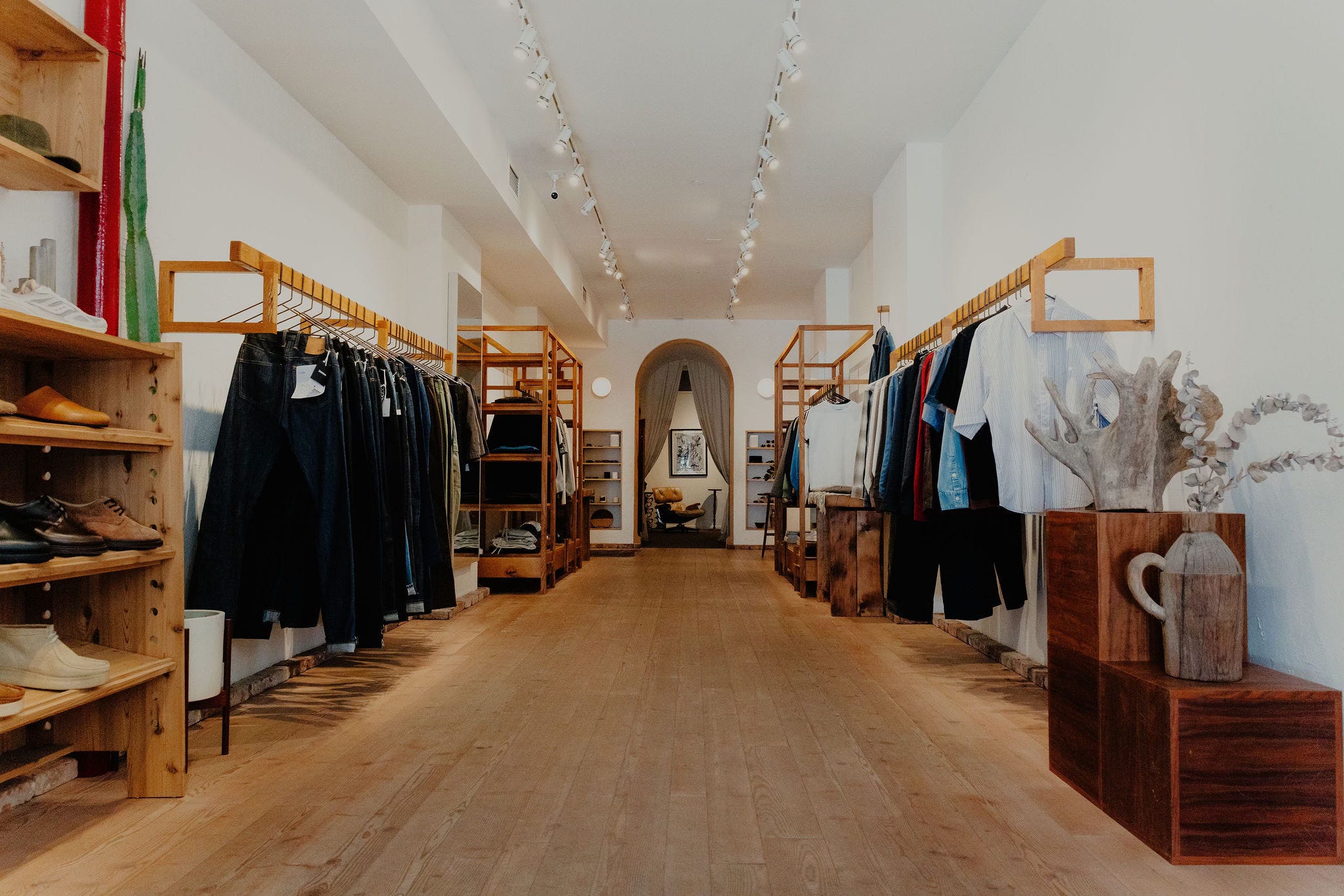
A relationship with Self Edge, which became a genuine partnership, gave the jeans legitimacy early and connected 3sixteen to mills and producers in Japan that let them level up in ways they couldn’t have managed alone.
About three years into making jeans, they took the next risk: developing their own fabric from scratch.
ANDREW
“Minimum quantities were high. We were worried about whether we would ever use it all at first; it was a little scary to take that plunge. But that was the only way we could truly say that our product was truly original.
No one else would be able to make those jeans because they wouldn’t be able to make that fabric.”
I push him on the question every emerging brand seems to ask itself: Was there a gap in the market they were trying to fill? He’s pretty direct about it.
ANDREW
“I don’t fault any brand for taking on the perspective of ‘this doesn’t exist, so we should make it.’ But at the end of the day, everything already exists. Unless we’re talking about new technology, like someone inventing Uber.
We didn’t bring anything legitimately new to the conversation. A lot of DTC brands will say ‘we looked at the market and couldn’t find it, so we made it.’ And a lot of times it feels very soulless. Like you’re trying to meet a need, and once the need is met, where do you go from there?
But if you look at it from another direction, we liked it. Then there’s a lot of runway. There is tons of inspiration, tons of room to grow.”
Building a wardrobe
One of the things that draws people to 3sixteen is how cohesive everything feels. You can pick up two pieces from different seasons, and they work together; you can mix them with things you already own, and it all works.
It doesn’t feel like a brand trying to sell you an outfit off a lookbook; it feels like a wardrobe that builds on itself. I tell Andrew this. He appreciates it, then explains how much work it actually takes.
ANDREW
“Everybody wants to show you a lookbook of how that season’s stuff works together. But very few people are coming into the store to buy for the whole season. They’re probably buying two, maybe three pieces.
And it has to go home with them, and it has to not only fit in with the rest of what they own from us, but hopefully fit in with the rest of the stuff that they buy that isn’t from us.”
“I can’t see into your closet. But I can hopefully see that you appreciate a certain design perspective.
If you like that we’re into vintage military, if you like that we have a little bit of workwear and western influence that pops up here and there (that strange mix we have) then the other stuff you buy is probably going to work with it.”
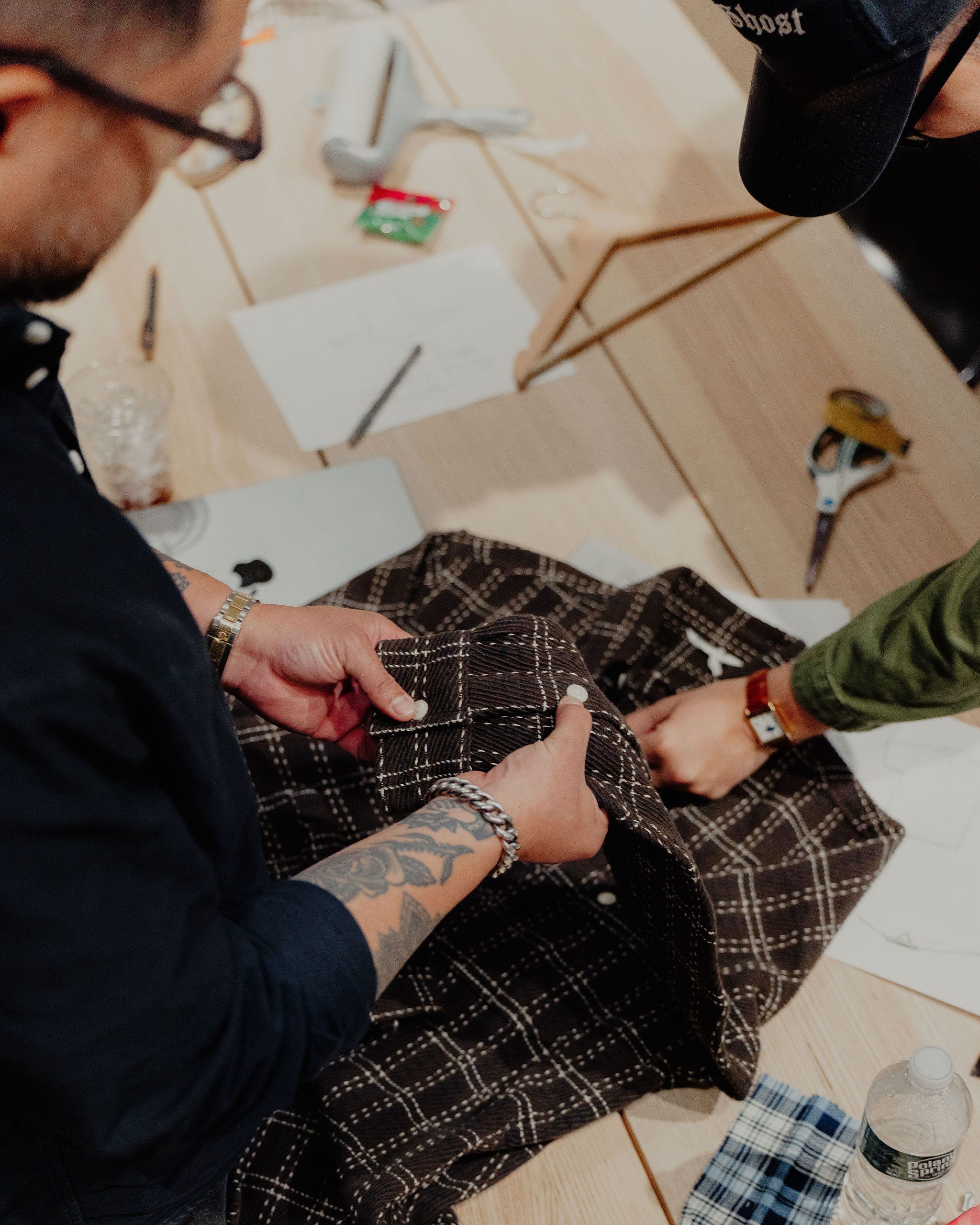
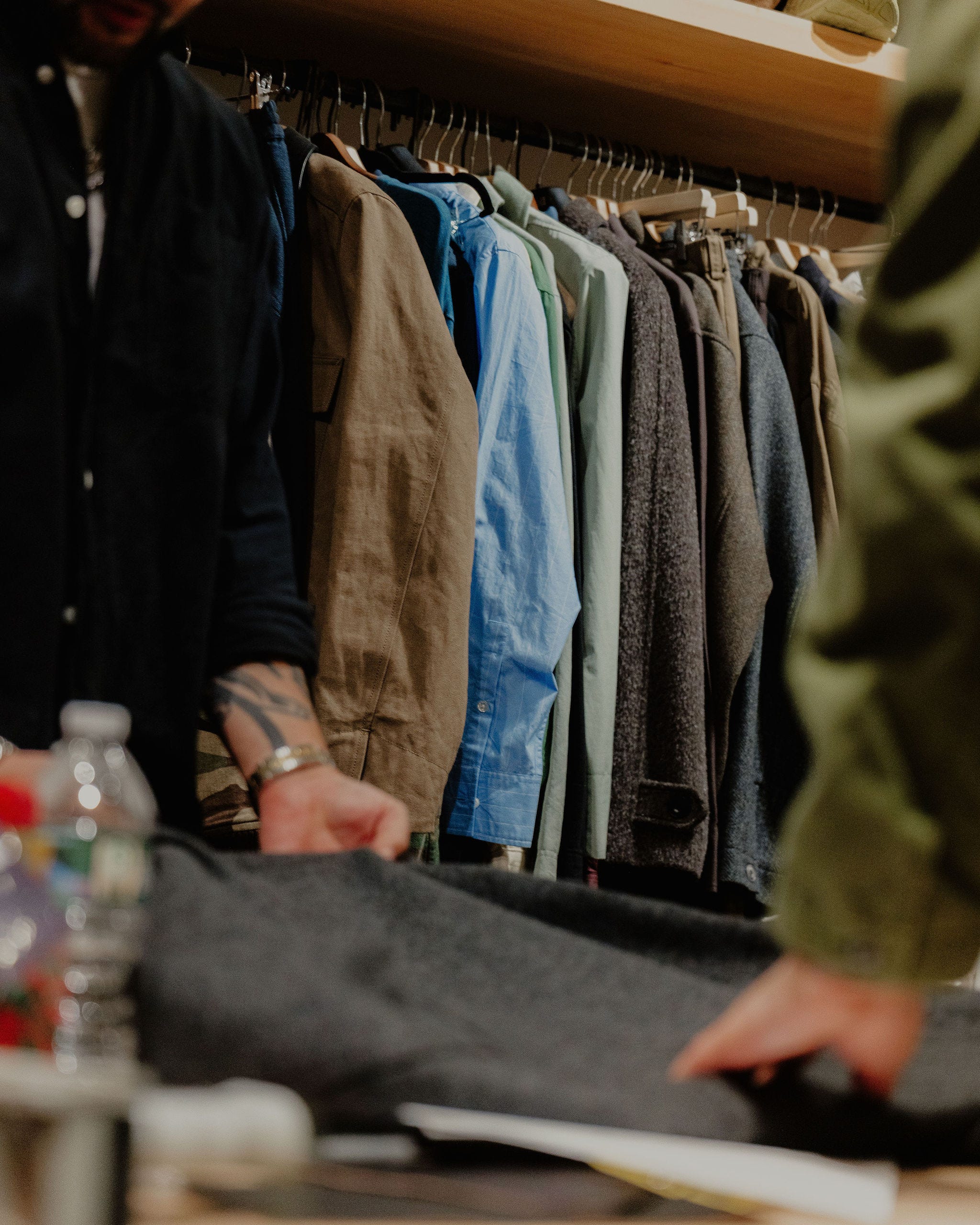
This is their Utility Flannel, a relaxed fit workshirt featuring a heavyweight brown flannel fabric with a textured twill pattern. It almost feels like wearing a blanket.
The technical side of that is real; he mentions the idea of an overshirt that won’t bind at the armhole when layered over a sweater, silhouettes that don’t compete, and color palettes that hold across seasons.
There are a few higher-degree-of-difficulty pieces (Andrew mentions the leopard cargos with a grin), but the baseline is clear, and almost nothing in the line asks you to rethink your whole wardrobe to make it work.
I tell him about a friend of mine, an accountant newer to the menswear space, whose wife has started buying him pieces from here for his birthday without even asking what he wants. She just knows it’ll work. Andrew nods.
ANDREW
“We really try to be a resource to people who are worried about how something fits or how something works with their personal sense of style. There are people who come in with a very distinct perspective on how they dress and have no questions. That’s great.
But we have customers who are like, how would I style this? And we love when people ask. Please ask.
We can show you the whole shop; you don’t have to buy any of it, but you probably have something at home that looks like this shirt. We’ll help you figure out how you can wear it.”
Finding your voice as a brand
The brand’s social presence has quietly become its own kind of entry point. I’ve had multiple people send me their (Jean)uary videos, sometimes people who had no idea what 3sixteen was, or even that they made jeans, who stumbled onto a Reel and watched it start to finish.
One of them thought Andrew was just another well-dressed menswear guy educating the internet about denim care.
Andrew takes that seriously. The output and the communication about that output are both in their control and both have to match.
ANDREW
“If I or any of our team members are talking to you on social, it should be in the exact same voice as if you came into the store. That has to be our guiding principle. It can never be different from that.
If we can give you a little piece of our in-person experience through the videos, we’ve done our job. Because hopefully you’ll make it in one day, and you’ll see that it’s consistent.”
The humor in those videos is real. It might start as a joke in the back office, and sometimes it has legs. What it’s never been is an attempt to go viral or build personal platforms.
ANDREW
“It is serious, because it’s how we make our living. But it’s also not serious. And hopefully people kind of get a little bit of that. A lot of these start as just jokes, like “it’d be funny if ______.”
Sometimes the idea has legs, and we just roll with it.”
In 2003 it was underground hip hop message boards and import car forums. Then Hypebeast forums, Superfuture, Style Forum.
Then Reddit with the raw denim subreddit where they’d host jean-fading contests where a group of people all started a fresh pair at the same time, checked in monthly, and posted progress photos.
Andrew describes what those threads actually looked like.
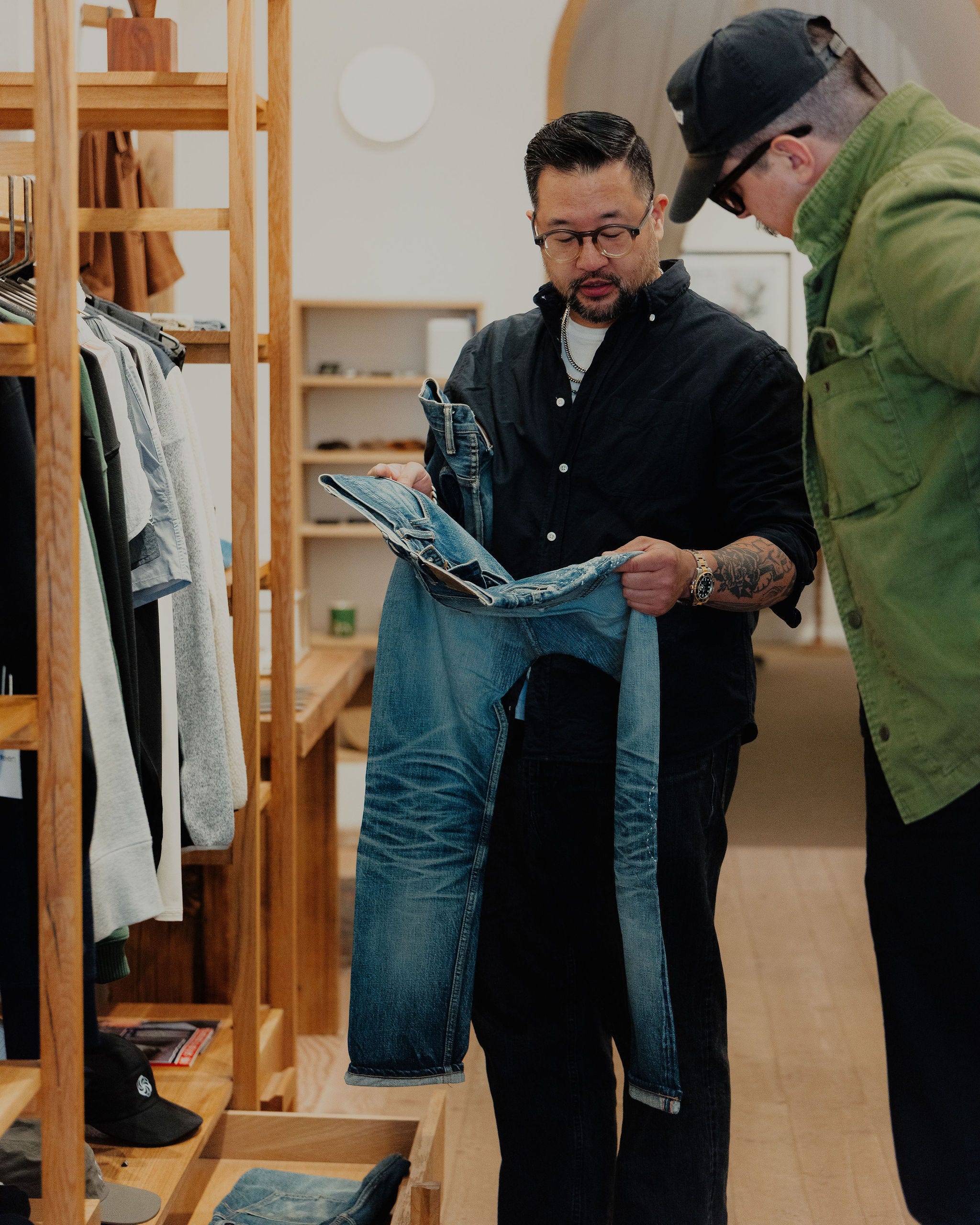
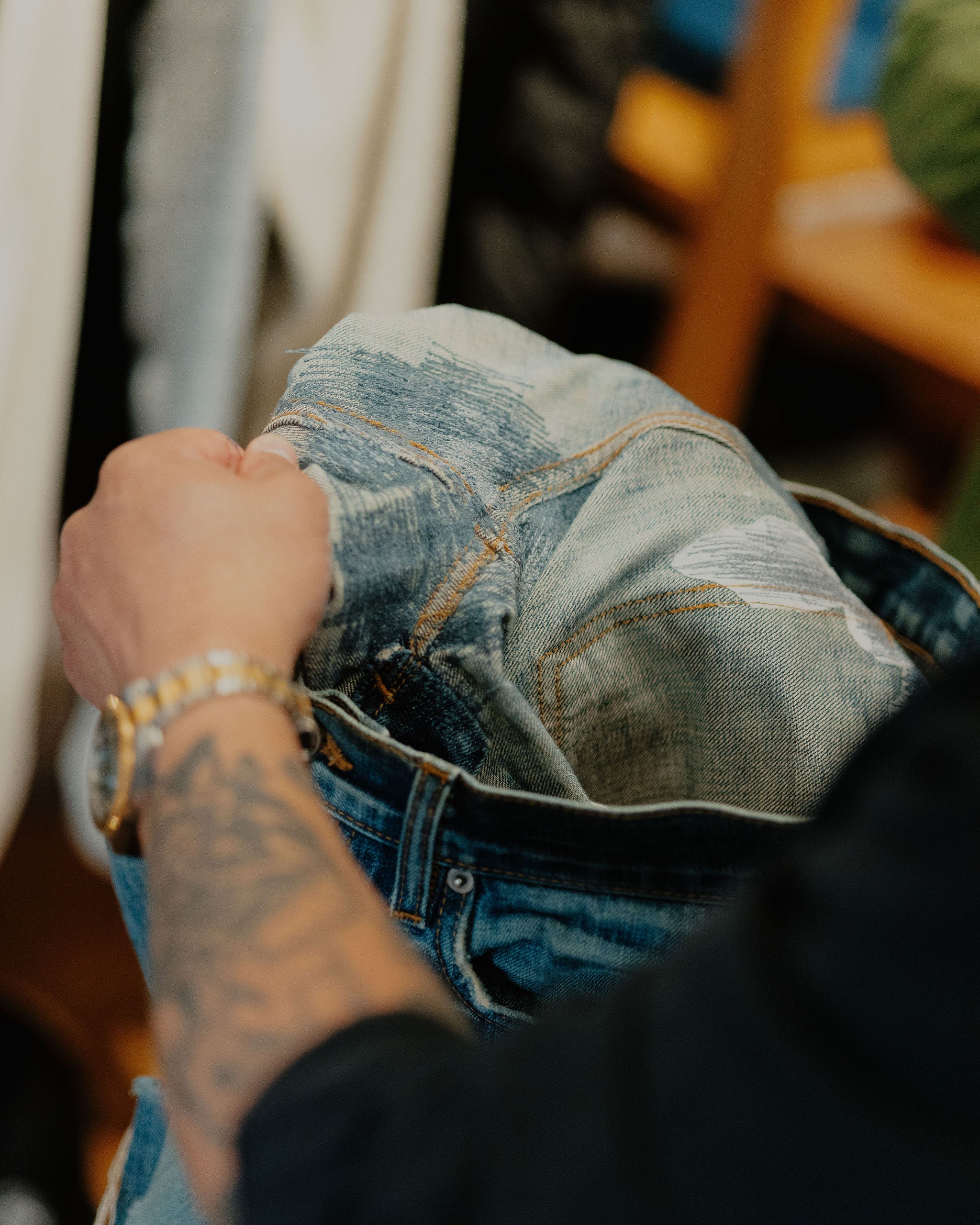
The store has a drawer of aged denim you can ask to see as a reference point. Every jean tells a story and through the fades and patches, Andrew is able to tell me how the jeans fit the person and how they were worn.
ANDREW
“We would post a monthly check-in, and people would take some pictures of their jeans but they’d also be like, this is what happened to me. I graduated from grad school. I took them on a road trip through Big Sur. Just normal, everyday things. If there’s an avenue for connection, that’s what people want.
They want to feel like what they’re into is something other people also enjoy. Maybe where you live, nobody is into your niche interest— but you can find somebody across the country who is. You can talk with them about it.”
Now it’s short-form video, newsletters, and the occasional discovery through an internet search. Andrew says new customers still name new channels every week when they come in and get asked how they found the brand.
The landscape keeps changing but the voice stays the same.
Building a community
The first pair of shoes 3sixteen ever made was a mule. The brief was simple: something cleaner and more streamlined than a Birkenstock Boston, something you could throw on to run to the bodega but also wear to work without feeling out of place.
A connection through their friend Chris Echeverria of Blackstock & Weber led them to a footwear factory in Portugal. There, they described the leathers they wanted, the factory understood, and they made a first run of 100 pairs of natural veg tan and 100 pairs of black.
ANDREW
“The first release flew. They sold out in like two days, and we were like “there’s something good here.” So we rolled out a restock and started doing some seasonal leathers, some hairy suedes.
We did a slate blue one with Mule Boys, they threw a party here where you weren’t allowed to attend unless you had mules on. Obviously we didn’t enforce it, but some people came in with cooked shoes and let us saw the backs of them off.
At a certain point it wasn’t really about the shoes. It was just people coming together to have a good time.”
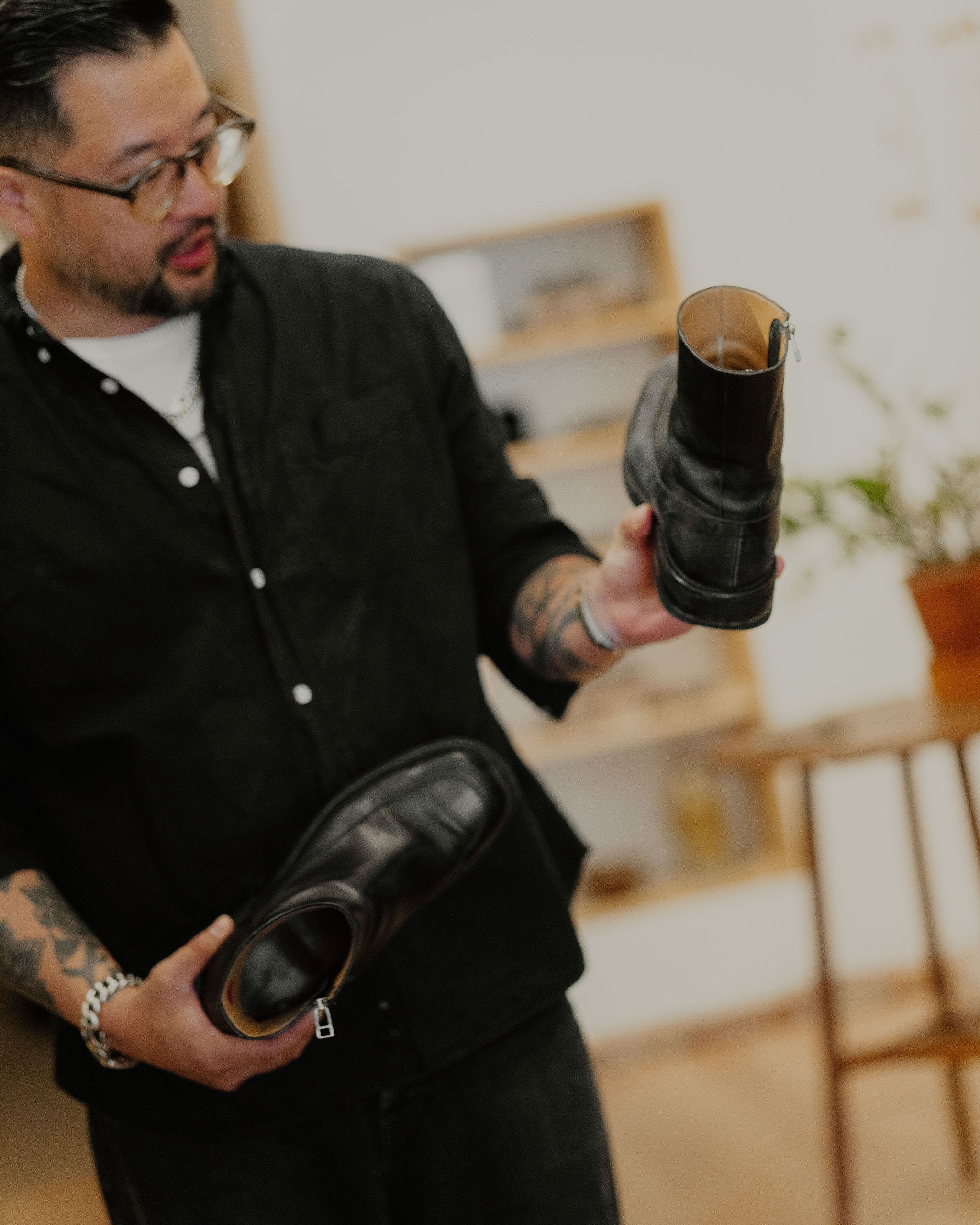
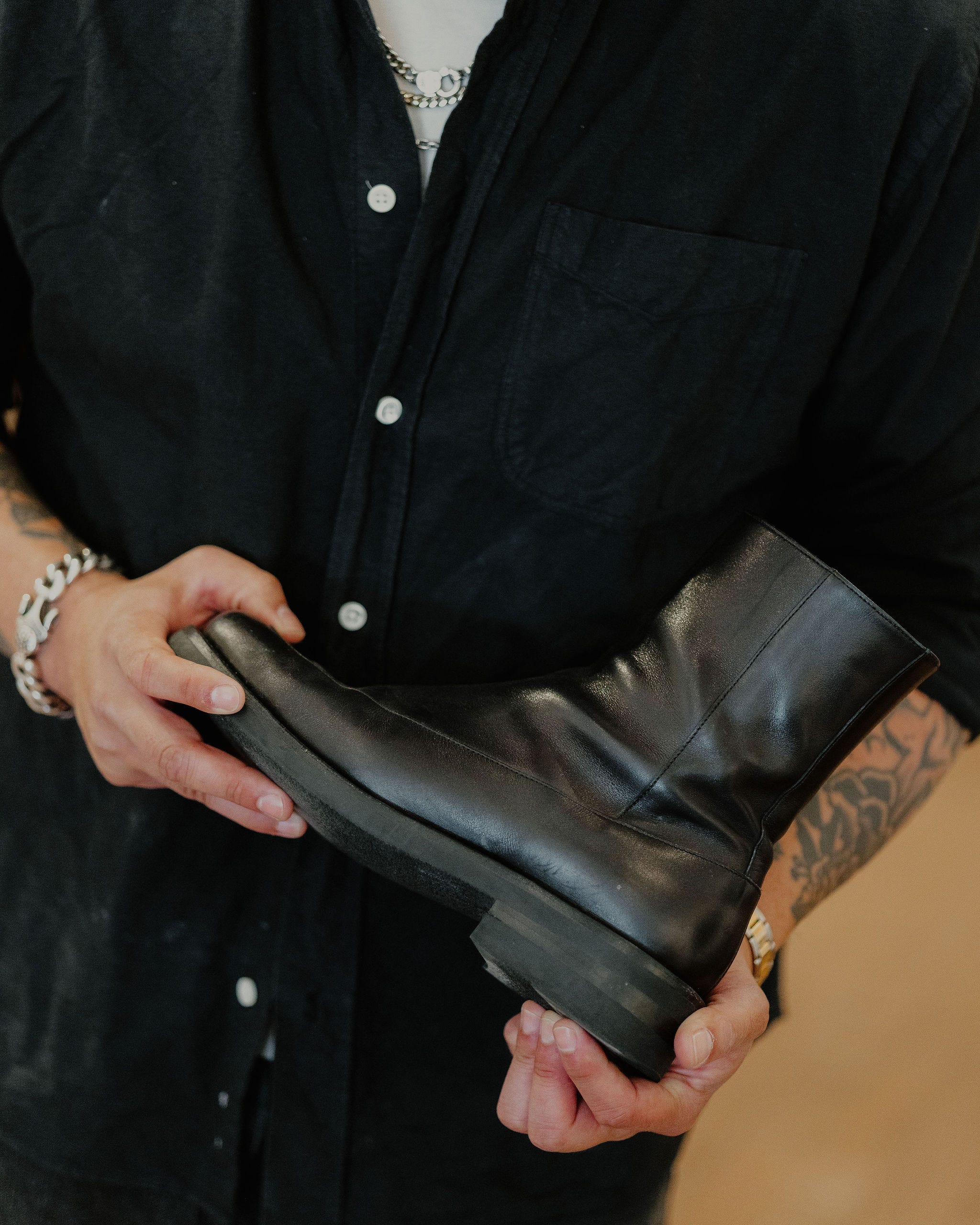
The elusive side zips. They come in both black and brown leather, and will be available in the coming week.
The boots came next. Lead designer Wes had carried a clear vision for a particular square-toe silhouette for years, they just didn’t have the right manufacturing partner to execute it properly.
When the Portugal factory proved themselves on the mules, 3sixteen brought them the idea.
These might be the most sought after boots in the current menswear space, so much so that when I went to the sample sale I was getting DM’s from random accounts asking if I could pick up a pair for them.
I ask Andrew if he saw that coming.
ANDREW
“No. It was honestly insane. Wes had a very clear perspective on this boot style for years and years, and we just didn’t have a way to make it.
So when we started working with this manufacturer and they knocked it out of the park with the mules, we were like, listen, we’ve had this idea. And they really, really understood. We made a hundred pairs to start, and I don’t remember how quickly the first run sold out. It was quick from the first draw.”
They’ve scaled deliberately and at their own pace. The boots are Goodyear welted, made at a family-owned factory that’s been at it for generations. Other manufacturers have approached them with cheaper builds and the first suggestion is always to move off the welt construction. 3sixteen keeps passing.
ANDREW
“Margin and output are not of interest to us when we’re making this category. We make it because we love it and because we want customers to have things they’re into. But it’s also not easy.
For brands to be able to wholesale and make a ton of units, you’ve got to make some choices. We’re just not making those choices.”
The next boot drop is coming sometime between the end of June / beginning of July.
Start with one simple thing
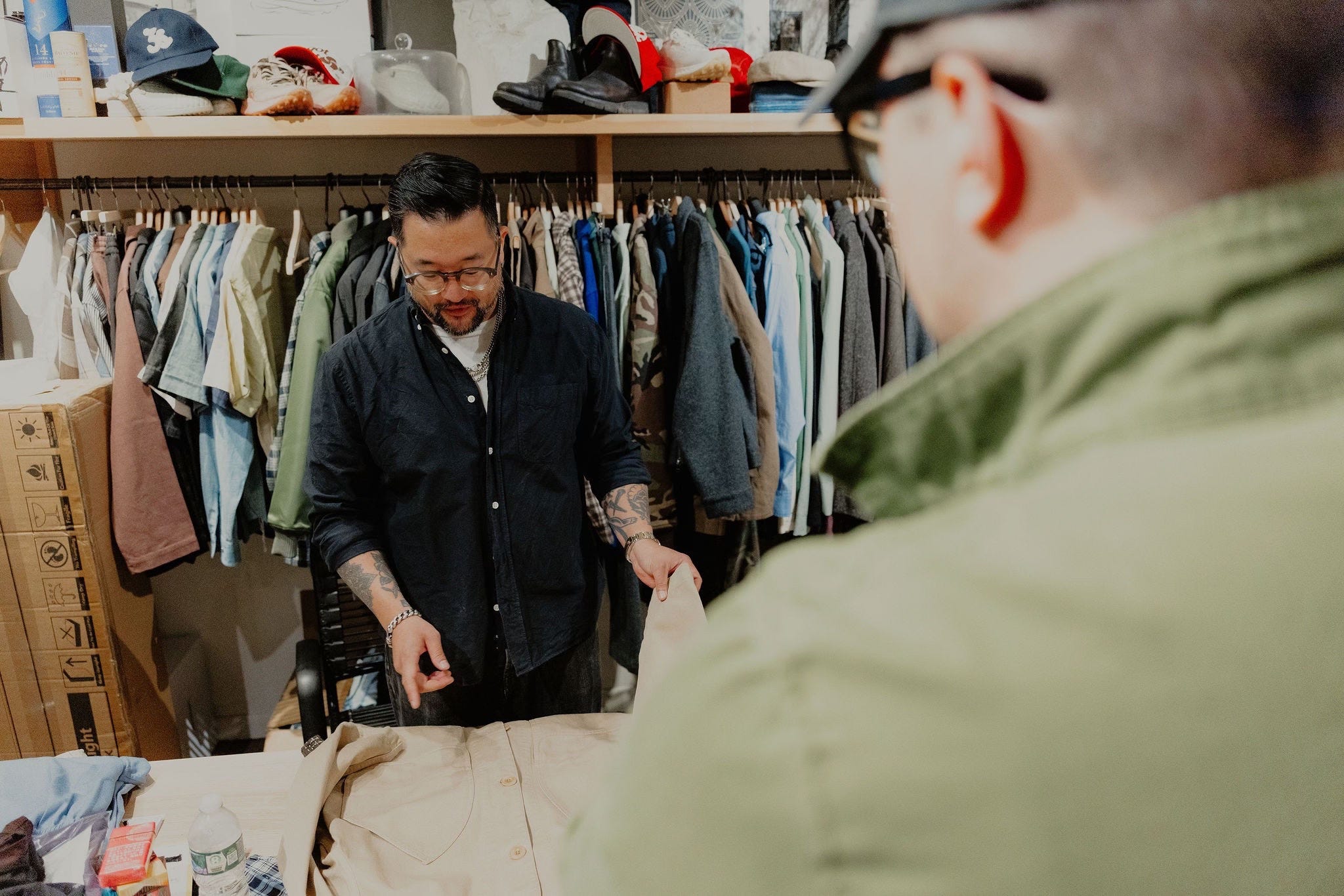
We close on value, something Andrew feels clearly, but frames carefully. He doesn’t want to be in the business of convincing anyone their stuff is worth buying.
What he is interested in is the person who’s already decided they want to invest in something and just needs help knowing where to start.
ANDREW
“My advice would be: pick the one thing that really means a lot to you. Something you wear every single day. If you’re obsessed with sneakers and you have no problem spending money on sneakers, then it makes sense to get a nice pair of shoes.
Something versatile that you can wear all the time but is really made well. Not a mall shoe. Something where they make it in house, start to finish — not a footwear designer, but a footwear producer.”
“For some people, it’s gonna be jeans. You wear jeans every single day and you’ve never really thought twice about it, but how come they fall apart every six months and you just go buy another pair?
What would it be like if you just tried on a really nice pair of jeans? And then go to that maker, or that brand, or a retailer that carries that brand, and ask. Just be like — the pair I have cost forty bucks. The pair you’re selling is two-fifty. That’s a big difference. What’s happening here?”
He walks me through what the answer to that question actually looks like.
ANDREW
“Our markups are way lower than luxury brands. We need to produce our goods at a price where we can accommodate wholesale, because we have wholesale partners and they have to be able to buy it and still sell it for profit.
So there’s margin built for that. But if you talk about the luxury brand selling a thousand-dollar pair of jeans…there’s a point where the product cannot get more expensive. After that, it’s markup.
And it’s not disingenuous or wrong for them to have that markup, they need to pay for magazine ads, billboards, celebrity placement, stylists, all of it. We don’t do those things. So the bulk of it goes into the product.”
I tell him about a friend who went to Self Edge to buy his first real pair of jeans. He walked in skeptical, walked out completely converted, having tried on three pairs before landing on the one the staff had already pulled for him before he even asked. Andrew smiles.

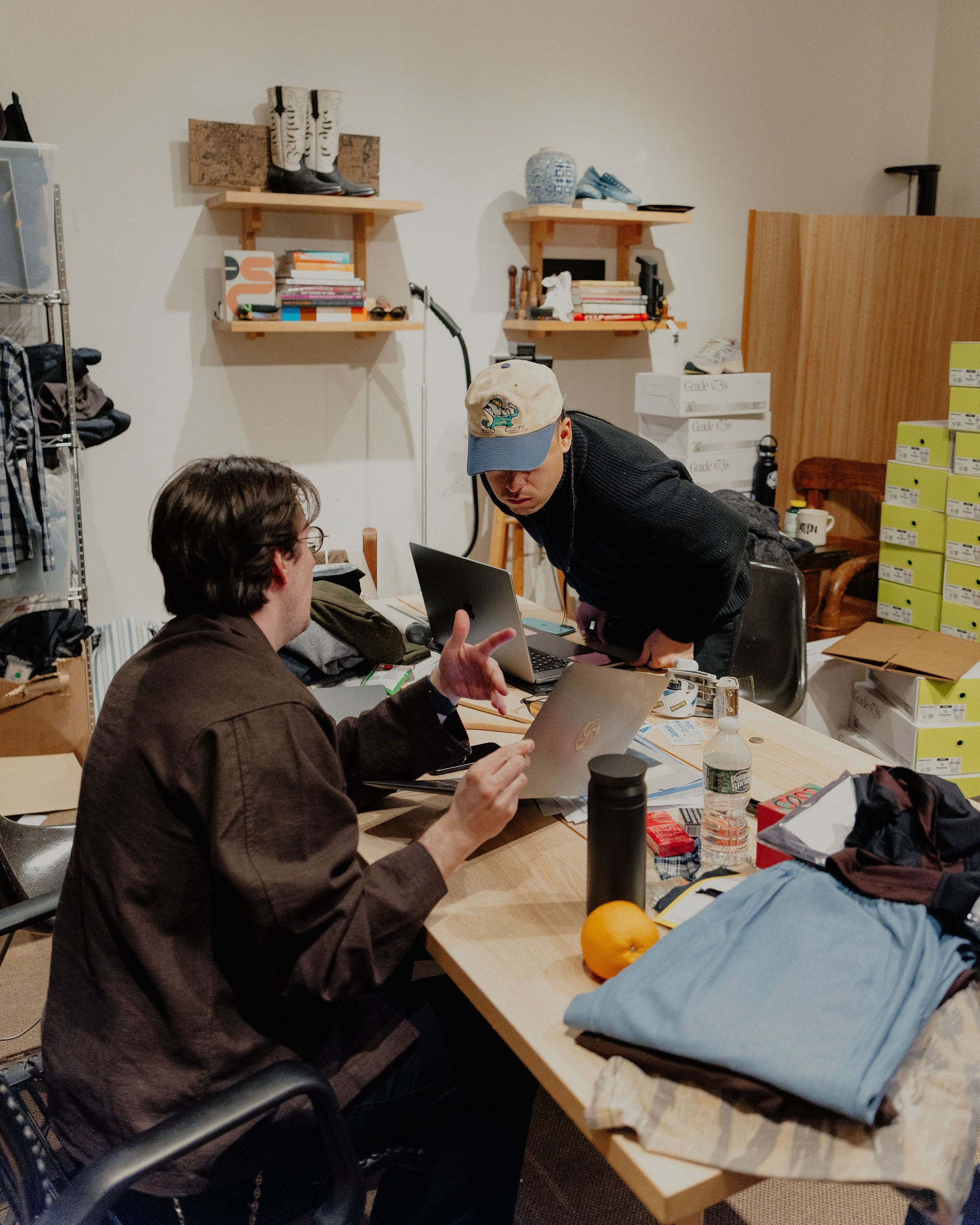
Some of the team that makes it happen, from design to social media to in-store consulting.
ANDREW
“There are absolutely no AI chatbots behind our info emails. These are real people guiding you through and trying to decipher, without even being able to see you in person, what’s going on. Because we know the product inside out. We may not know you, but we can try and figure it out.”
“Some people just view jeans as a utility to fill a need. But other people want to buy from a brand that’s into the things they’re into, and espouses similar values, or sees life through a similar lens.
We printed these zines, just to help people understand what’s important to us. That stuff costs money. And no, you don’t have to pay for it, we pay for it. But it goes into helping an end customer understand more about who we are.”
Twenty-plus years in and 3sixteen is still making things they believe in, still talking about those things the same way they always have.
Just before we wrapped up, he said the thing that stuck with me most.
ANDREW
“At the end of the day, it’s just jeans and tees and boots and jackets, and you can get them elsewhere. You come to us, hopefully, because you mess with the way that we do it and not just for a product in a white box.”
Editor’s note
Major thanks to Andrew & the NY team for being so hospitable. Visit them online at 3sixteen.com or in person at their New York and Los Angeles stores.
Also special shout out to Dan Chen for holding it down with the camera shoot that day. You can support his work on his Instagram @feelslikedan or on his site.
Andrew is a legend. I feel like he does business in a way that is really principled, has a point of view and also gracious.
One of the best to do it!